Get Full Government Meeting Transcripts, Videos, & Alerts Forever!
Get email alerts on the Municipal Finance topic
No spam. Unsubscribe anytime.
Laredo council orders temporary moratorium on new unbudgeted city spending to align with LEAP efficiency review
Summary
The City of Laredo approved a time-limited moratorium on new, unbudgeted general-fund spending through Aug. 31, 2025, to give city staff time to complete an accelerated LEAP (Laredo Efficiency and Innovation Program) study and to prioritize core services after a failed bond vote.
The Laredo City Council on Monday voted to initiate a temporary moratorium on new unbudgeted general‑fund commitments, effective immediately and running through Aug. 31, 2025. The moratorium is intended to preserve fiscal headroom while staff completes an accelerated efficiency review called LEAP (Laredo Efficiency and Innovation Program).
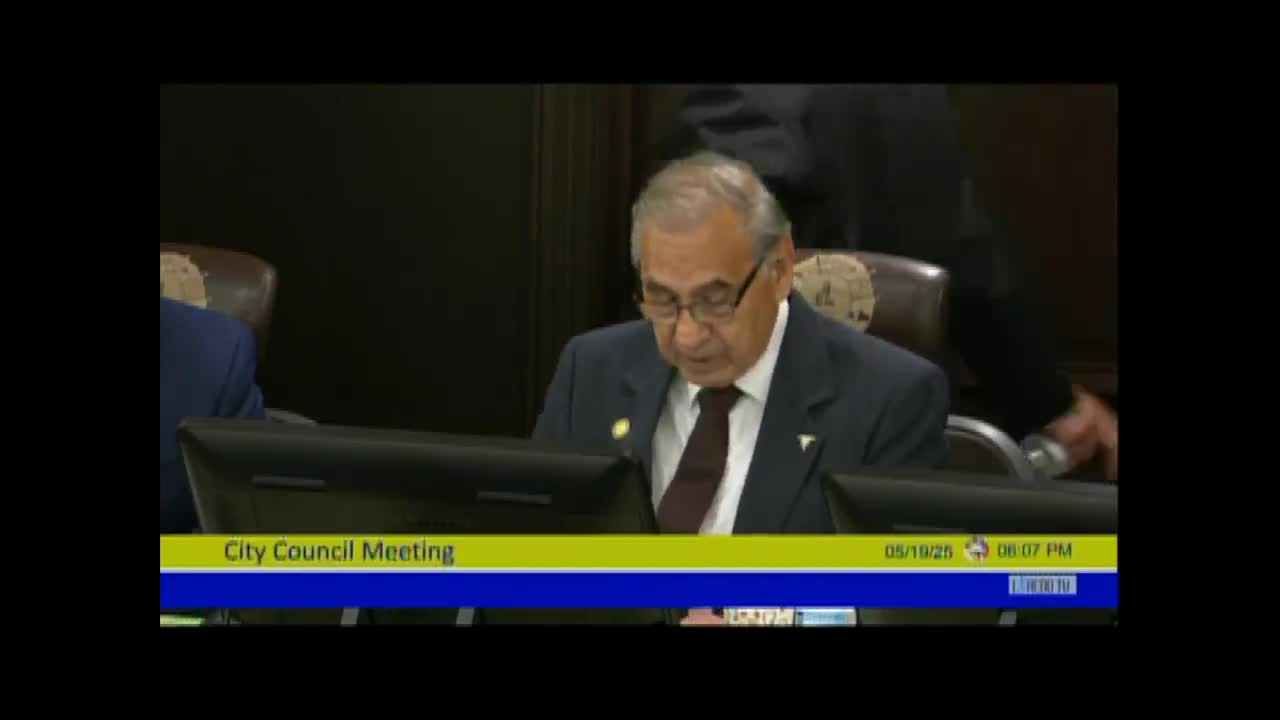
Council members said the pause follows the recent bond referendum results and aims to ensure the city prioritizes core services such as streets, sidewalks and public safety. Mayor Victor D. Trevino introduced the LEAP item and the council moved and approved the moratorium after a period of discussion; the motion passed on a council voice vote.
City Manager Marty Neff said departments are already conducting internal reviews to identify programs and positions that could be deferred or consolidated. He asked councilmembers to give staff two weeks when an item with financial impact is placed on the agenda so staff can prepare a full analysis of budget effects. Neff described the moratorium as “balanced,” with explicit exceptions for emergency needs approved by the city manager, ongoing budgeted capital projects and limited use of council discretionary funds if councilmembers choose to cover projects from their own allocations.
Under the moratorium the city will: 1) pause new unbudgeted general‑fund commitments; 2) continue already budgeted capital improvement plan projects; 3) allow emergency expenditures with city‑manager approval; 4) freeze non‑essential, unadvertised hiring while continuing essential public‑safety recruitment; and 5) pause new consulting contracts and feasibility studies not already underway. The moratorium also establishes an intake process for deferred proposals so staff can bundle requests for the fiscal‑year 2025‑26 workshop.
Neff and several councilmembers emphasized the move is meant to be temporary and to preserve resources for higher‑priority work, including water and street projects flagged by residents. Neff said the city’s finances remain sound but noted a decline in bridge revenues of about 5 percent and warned the administration must adjust priorities to reflect actual revenue trends. Neff also said any savings realized by the moratorium can be rolled into the next fiscal year’s beginning cash to fund critical needs.
Council members asked for frequent updates; Neff agreed to provide regular revenue and spending reports as LEAP analysis proceeds. The moratorium passed with council approval; council directed staff to present more detailed proposals at a special LEAP workshop scheduled for May 28.