Get Full Government Meeting Transcripts, Videos, & Alerts Forever!
Get email alerts on the Parks And Recreation Impact Fees topic
No spam. Unsubscribe anytime.
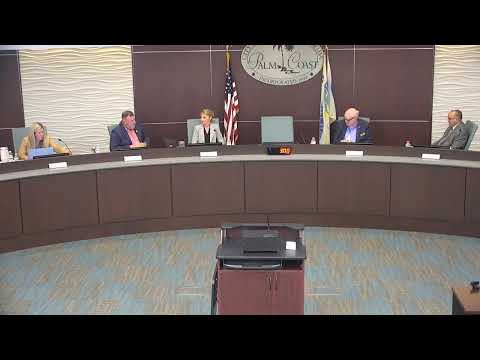
Palm Coast officials weigh large parks-and-recreation fee increase, debate which projects to include
Summary
Palm Coast — City staff and consultants on Tuesday presented a parks and recreation impact-fee study that would raise the residential parks impact fee to roughly $3,620 per single-family dwelling, a near doubling of the current fee, and asked council for direction on which long-range projects to include in the fee calculation.
Palm Coast — City staff and consultants on Tuesday presented a parks and recreation impact-fee study that would raise the residential parks impact fee to roughly $3,620 per single-family dwelling, a near doubling of the current fee, and asked council for direction on which long-range projects to include in the fee calculation.
The study, led by consultant Sean Ocasio of Raftelis Financial Consultants with staff presentations from Eric Gebo, an architect in the Stormwater and Engineering Department, reviewed about $236 million in planned parks capital through build-out and several large projects in the city’s 10-year capital improvement plan. The consultant’s calculation produced a $3,620 per-dwelling-unit fee that Ocasio said would represent about a 98% increase from the current parks fee.
Why it matters: Impact fees are charged to new residential development to pay the proportionate share of capital facilities that growth requires. If the city adopts the higher fee, developers and home buyers would face significantly larger upfront charges; if it does not, the study estimates existing residents would have to make up a $17.8 million shortfall on planned park projects through 2035.
Most of the meeting’s debate focused on two practical questions: which projects to include in the fee calculation and whether the city should pursue the full, “extraordinary-circumstance” fee now or phase in an increase under statutory limits. Ocasio told the council the study used a standard methodology that nets grant-funded projects and spreads remaining capital cost across projected population to derive a per-person cost that is converted to a per-dwelling-unit fee using an occupancy factor.
Key projects discussed included completion of the Long Creek Nature Preserve improvements (a multi‑phase project that includes a nature center and classrooms), expansion of the waterfront park on the Intracoastal Waterway, an expansion of the Palm Coast Tennis Center and associated parking, a proposed sports complex, additional neighborhood parks and a skate park, and Phase 2 of the Graham Swamp Trail (a 12-foot multi-use path funded in part by an FDOT SunTrails grant).
Council and public reaction: Council members pressed staff on which projects could be deferred or removed to reduce the fee and on the grant assumptions that reduce the net capital total. Councilman Miller asked whether the $9.2 million in grant funding netted from the plan represented confirmed awards or placeholders; staff said the number includes three current grants and one hopeful/grant‑application amount for construction of a trail segment and that grant receipts are updated at the next rate study. Councilman Gambaro and others raised the sports-complex item as a major cost driver and discussed whether the city should fund land acquisition now or wait for a county or private partner.
Public commenters urged caution. Tony Amaral, a Palm Coast resident, said residents need detail on the locations and scopes of proposed “neighborhood parks” and asked for answers about ongoing maintenance costs. Anna Maria Long, executive officer of the Flagler Home Builders Association, urged the council to prioritize near-term projects and to avoid overreaching with build‑out assumptions that may never occur.
Direction from the dais: After discussion, council gave staff the following policy directions to refine the study for the June follow-up materials and to proceed toward ordinance language: - Proceed with adoption work for parks and fire fee increases with immediate implementation (no phased delay) rather than a four‑year statutory phase-in, per staff recommendation; council members asked staff to model a phased option as an alternate but signaled a preference to begin collection as soon as permitted. - For parks, staff was asked to re-run the fee table showing a scenario that retains Growth/DRI-related units but removes one or more of the largest discretionary future facilities (staff presented options that removed a proposed cultural/performing arts facility and an additional city-operated recreation center; removing those projects lowered the calculated fee to about $3,166 per single-family dwelling in one scenario). Council did not direct removal of DRI projects tied to anticipated growth. - Staff should present tiered single‑family fee options (different fees by home-size bands) to reduce impact on smaller, more affordable homes.
What staff said about funding assumptions and timing: Gebo and staff confirmed that the Long Creek purchase (purchased in 2008 with Florida Community Trust and Flagler County Environmentally Sensitive Lands grants) and other existing grants have conditions and are accounted for in the net investment. The presentation listed a 10‑year CIP sum of about $90 million of parks projects (gross) and noted roughly $9.2 million of assumed grant funding that reduced net cost in the consultant’s model; staff said the grant line will be updated and clarified in the next packet. The sports-complex land-acquisition figure in the packet was shown as $8.4 million in one slide; Track 17 (a separate city‑owned tract discussed later in the meeting) was noted as roughly 103 acres with about 65 upland acres.
Costs and maintenance: Council repeatedly asked for clearer projections of annual maintenance and operating costs for new facilities (staff said parks operations and maintenance come from the general fund and the parks master plan identifies a staff shortfall of roughly nine maintenance positions). Staff emphasized that impact fees pay capital only and do not fund annual operations; new facilities will create general-fund cost pressure for staffing and utilities that must be budgeted separately.
Next steps and timeline: Staff will return with revised worksheets and comparisons that: (1) show the parks fee under alternative project sets (including the scenarios discussed), (2) provide a tiered single‑family fee option, (3) clarify the grant assumptions and which grant amounts are awarded vs. anticipated, and (4) show the estimated ongoing maintenance and staffing obligations associated with new facilities. Council asked staff to include the revised transportation fee numbers and the combined “total impact-fee per new home” estimate in the next packet so members can see the aggregate effect of all proposed fee changes.
Ending note: The council did not take a final vote on the parks ordinance at the meeting; the discussion produced clear direction to staff on scenarios to present at the next review. Council members said they want the revised numbers before a first reading to evaluate trade-offs between near‑term community priorities and housing affordability.