Get Full Government Meeting Transcripts, Videos, & Alerts Forever!
Get email alerts on the Transportation Inner East Loop topic
No spam. Unsubscribe anytime.
Residents urge pause on proposed Inner East Loop as county consultants outline multi-hundred-million-dollar plan
Summary
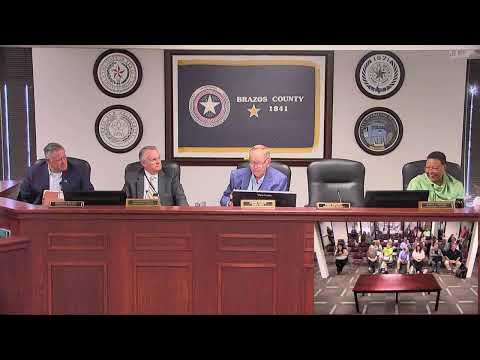
Scores of residents and landowners urged the Brazos County Commissioners Court on Wednesday to pause work on the proposed Inner East Loop, saying the project would destroy farms, wineries and planned residential developments and that the county should first explore improvements to existing roads.
Scores of residents and landowners urged the Brazos County Commissioners Court on Wednesday to pause work on the proposed Inner East Loop, saying the project would destroy farms, wineries and planned residential developments and that the county should first explore improvements to existing roads.
The concerns came during the meeting’s public-comment period and in a subsequent presentation by consultants managing the county’s 2022 bond transportation program. Residents repeatedly asked the court to pause the Quiddity contract that funds the corridor feasibility and environmental work; consultants said the county is in the environmental-assessment stage and expects a completion milestone in mid-2026.
Why it matters: The Inner East Loop is the county’s most contested bond project. Consultants told the court the construction estimate for a preferred alignment is roughly $350 million and that the county has funded feasibility and initial environmental work through the bond program. Opponents say the alignment threatens long‑established farms and planned housing developments and that the county should instead invest in widening and improving existing routes such as FM 1179 and Highway 6.
Residents’ statements and concerns
Merrill Bonarico, owner of Messina Hof Vineyards, said the alignment as shown in recent maps would encompass the family vineyard and disrupt an agricultural tourism business that she said brings about 200,000 visitors and $20 million in annual economic impact. "There is no need to confiscate anyone's home, homestead, family, business, or productive crop land for an unnecessary roadway," Bonarico said.
Steve Pittman, a landowner and commercial broker who said his group is developing a master-planned community near FM 1179, told the court that planned local improvements and projects under TxDOT’s work plan could address mobility without building a new super‑arterial. "Why not look at saving a tremendous amount of time and money by utilizing roads that we already have and making improvements to those roads?" Pittman said.
Other commenters — including speakers who said they own long‑held family property that would be bisected by the alignment — urged transparency around the 2022 bond materials and demanded a public workshop before the county spends additional bond funds or preserves a corridor.
Consultants’ presentation and what the county is funding
John Polster of Innovative Transportation Solutions (ITS) and representatives from the county’s selected consultants, including Quiddity, briefed the court on the bond‑program work plan and the four projects ITS has prioritized for early work: the Inner East Loop corridor, a SH 47/21 interchange project, and widening/improvement projects on FM 1688 and another county arterial. Polster said the bond program selected projects in coordination with TxDOT, the Metropolitan Planning Organization (MPO), Texas A&M and local cities and that the county’s role is to accelerate planning and environmental clearance where state consultant budgets are constrained.
Polster said the interloop environmental assessment (the current task for Quiddity) is expected to produce the need-and-purpose documentation, alternative analyses and technical reports required for federal review. "Current estimate is $350,000,000," Polster said of the project’s construction cost. He added that environmental‑study work commonly leads with a schematic and that, if the project advances beyond environmental clearance, additional phases (right‑of‑way acquisition, utility relocation, design, construction) would require further procurement and funding decisions.
Polster also described the project’s public‑engagement and technical steps: public meetings (two have occurred to date), right‑of‑entry letters for survey work, value‑engineering reviews, and third‑party validation of traffic‑model assumptions by the Texas A&M Transportation Institute (TTI) as required by state and federal reviewers.
County and consultant timeline and next steps
Quiddity and ITS representatives said they were refining alignments to reduce impacts and expected to post new macro traffic information on the county website imminently. Polster said the environmental clearance milestone the team is aiming for is mid‑2026, contingent on completing the technical reports and meeting TxDOT and FHWA (Federal Highway Administration) review requirements. The consultants said they are working to reduce an initial estimate that 81 parcels would be affected by a preferred alignment by tightening curves and lowering design speeds where feasible.
Discussion, requests and no formal decision
Multiple commenters requested that the court pause Quiddity’s contract or schedule a dedicated workshop so newly seated commissioners could review the project scope. Several residents said that the 2022 bond materials did not make the Inner East Loop’s scope clear at the time of the vote. Commissioners and staff did not take formal action on the Inner East Loop during the meeting; consultants offered to publish monthly reports to commissioners and post updated materials to the county website.
Ending note: The county’s consultants plan further public engagement and technical work through the environmental‑assessment process. No vote to alter the corridor‑preservation work or to stop the Quiddity contract was recorded in court minutes from the meeting.