
Ithaca Common Council adopts ADU ordinance without owner‑occupancy requirement
Get AI-powered insights, summaries, and transcripts
Sign Up Free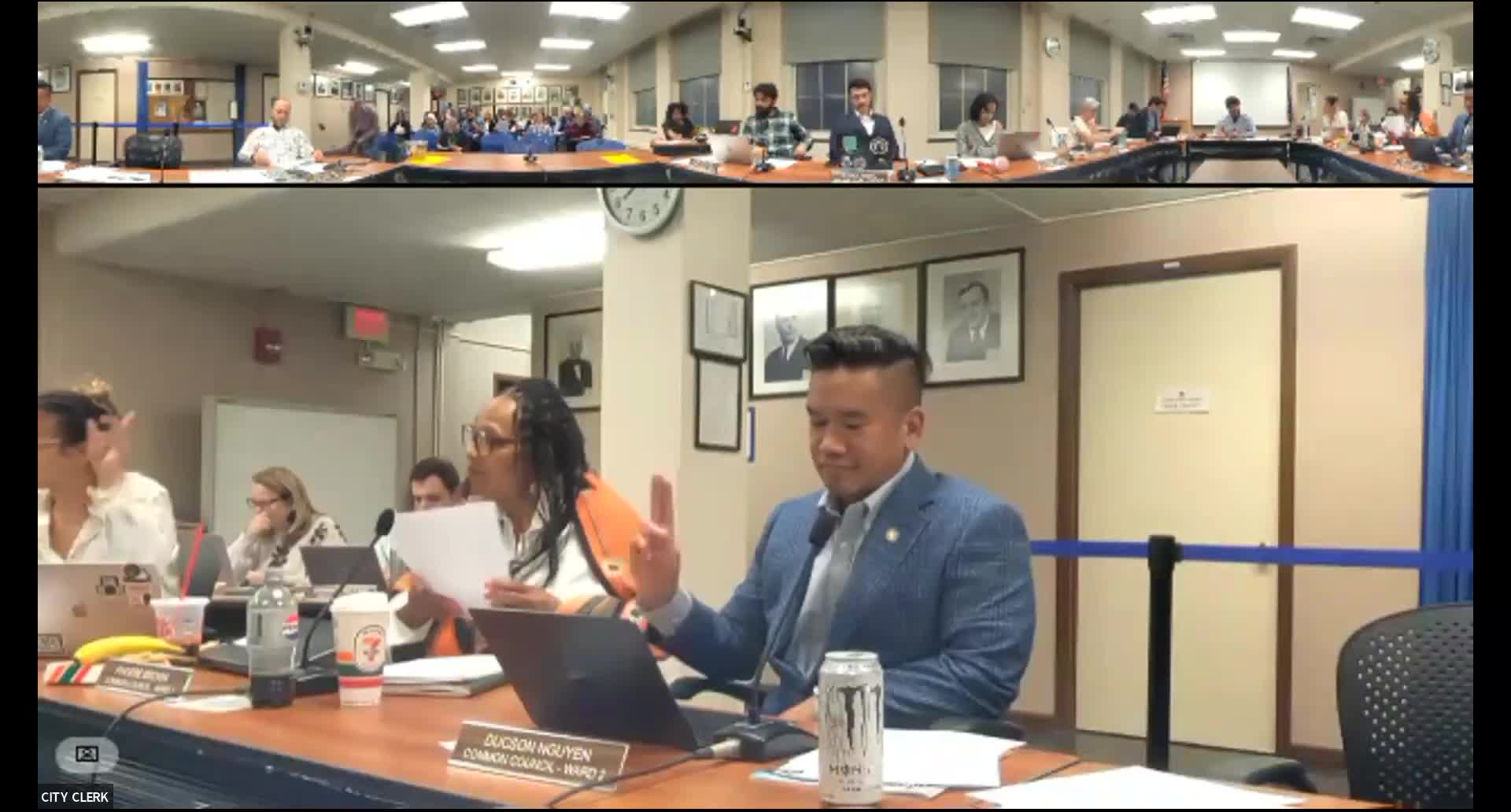
Summary
After months of debate and public comment, the council voted to legalize accessory dwelling units (ADUs) by right in qualifying zones and remove an owner-occupancy requirement; amendments proposed on the floor failed and the ordinance passed by roll call vote.
The Ithaca Common Council adopted an ordinance on May 7 that legalizes accessory dwelling units (ADUs) in qualifying R‑1 and R‑2 residential zones without a citywide owner‑occupancy requirement.
“I move that we...legalize their construction by right if they meet a number of prescribed requirements, one of which is not owner occupancy,” Alderson Winn said when moving the ordinance for a final vote. Council debate followed a lengthy public comment period in which neighbors, housing advocates and longtime residents urged differing approaches.
Supporters told council ADUs can be a modest way to add housing capacity, help aging homeowners create income streams and provide small, infill housing without changing neighborhood scale. Opponents and some neighborhood residents urged protections for areas under high student‑housing pressure, warning that removing owner‑occupancy could accelerate conversions to absentee‑owned rental properties.
Council members discussed those concerns on the floor and several amendments were proposed, including a time‑limited reevaluation clause and targeted residency provisions for specific overlays. Council rejected the proposed amendments in roll call and floor votes after debate. The ordinance ultimately passed on a roll‑call vote recorded in the minutes as unanimous among members present (10–0 with one member listed as absent earlier in the meeting).
The ordinance will allow ADUs that meet numeric site and building criteria (including an 800‑square‑foot size limit referenced in discussion) and does not require additional parking for ADUs. Staff told council that lot coverage and stormwater rules remain governed by existing zone regulations and that the planning department is preparing technical assistance measures — including a $50,000 initiative to create pre‑approved design templates — to help homeowners navigate permitting.
Councilmembers and public speakers raised equity concerns, asking the city to pursue complementary measures such as financing partnerships, contractor lists, tax abatement opt‑ins and technical design assistance to make ADUs accessible to lower‑wealth homeowners. Council referred related policy and implementation items to committee work for follow‑up and staff were asked to present implementation steps and outreach plans.
The passage concludes an extended period of committee hearings and public testimony; the ordinance will become city law after the required administrative steps are completed and any effective‑date provisions in the local law take effect.