Get Full Government Meeting Transcripts, Videos, & Alerts Forever!
Get email alerts on the Public Safety Disability Ptsd topic
No spam. Unsubscribe anytime.
Committee hears push to ease PTSD accidental-disability filing rules for Massachusetts public safety workers
Summary
Witnesses told the Joint Committee on Public Service that Chapter 32, Section 7’s accidental-disability rules do not match how PTSD presents and urged changes to allow incident reports and extend filing windows for public safety employees seeking benefits.
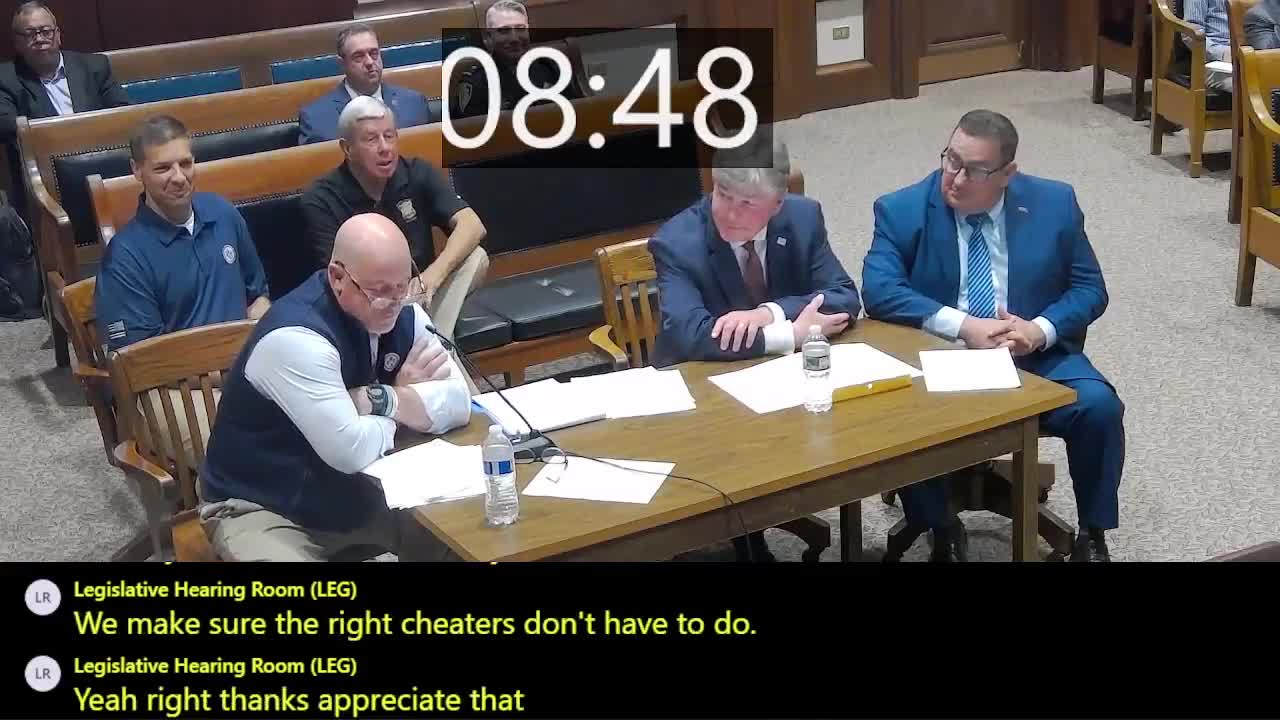
The Joint Committee on Public Service heard testimony calling for changes to Massachusetts’ accidental-disability application rules so that police officers, firefighters and other public safety workers with post-traumatic stress disorder can more easily apply for benefits.
Supporters told the committee that current requirements in Chapter 32, Section 7 of Massachusetts law—including a two-year application window and a rule that an injury report must be filed within 90 days or an injury recorded in official department files—do not reflect how PTSD and other psychological conditions emerge after traumatic events.
"As such, we are in full support of any legislation that says, when it comes to PTSD protection and a presumption, any legislation that says we can do better, we are in full support of such things," said Jamie Kiddeley, a testifier who addressed the committee remotely.
Bill Keith, executive director of PARAC, told the committee the proposed legislative changes would not automatically grant accidental disability but would alter application requirements to match the condition’s nature. "This bill does not automatically grant accidental disability. It just changes the application requirements to match current times and the nature of this condition," Keith said.
Keith and other witnesses explained the mechanics of the current statute: public employees seeking accidental disability typically must apply within two years of an injury or have an injury report filed within 90 days; proof of receiving workers' compensation fulfills the injury-reporting requirement. For employees in certain retirement groups who do not receive workers' compensation, a record of the injury or incident must be in the department’s official records. Witnesses said courts have recently required a specific injury report rather than a general incident report, which creates difficulty for PTSD claims because symptoms often appear later.
The bills discussed would allow an incident report describing direct involvement in a traumatic event to be considered in an accidental-disability application even if PTSD was not cited at the time of the incident, and would permit incidents older than two years to be evaluated in the application process. Witnesses emphasized that applicants would still need medical reviews and retirement-board approval: the application process requires review by three doctors and approval by the retirement board administering benefits.
Committee members asked questions about implementation and paperwork requirements; witnesses said they had worked with stakeholders, including retirement-board attorneys and staff, to build consensus on the language and that they would submit written testimony and additional details to committee offices on request.
No formal committee vote or directive was recorded in the transcript segment provided; testimony was presented for committee consideration during the hearing.