Get Full Government Meeting Transcripts, Videos, & Alerts Forever!
Get email alerts on the Fish Restoration topic
No spam. Unsubscribe anytime.
House passes bill to expand incubator (STEP) Chinook programs in Coos County with ODFW oversight
Summary
The House passed Senate Bill 221 to expand and regulate Salmon and Trout Enhancement Program incubator (hatch box) projects in Coos County, requiring ODFW compliance, egg caps and reporting of returns.
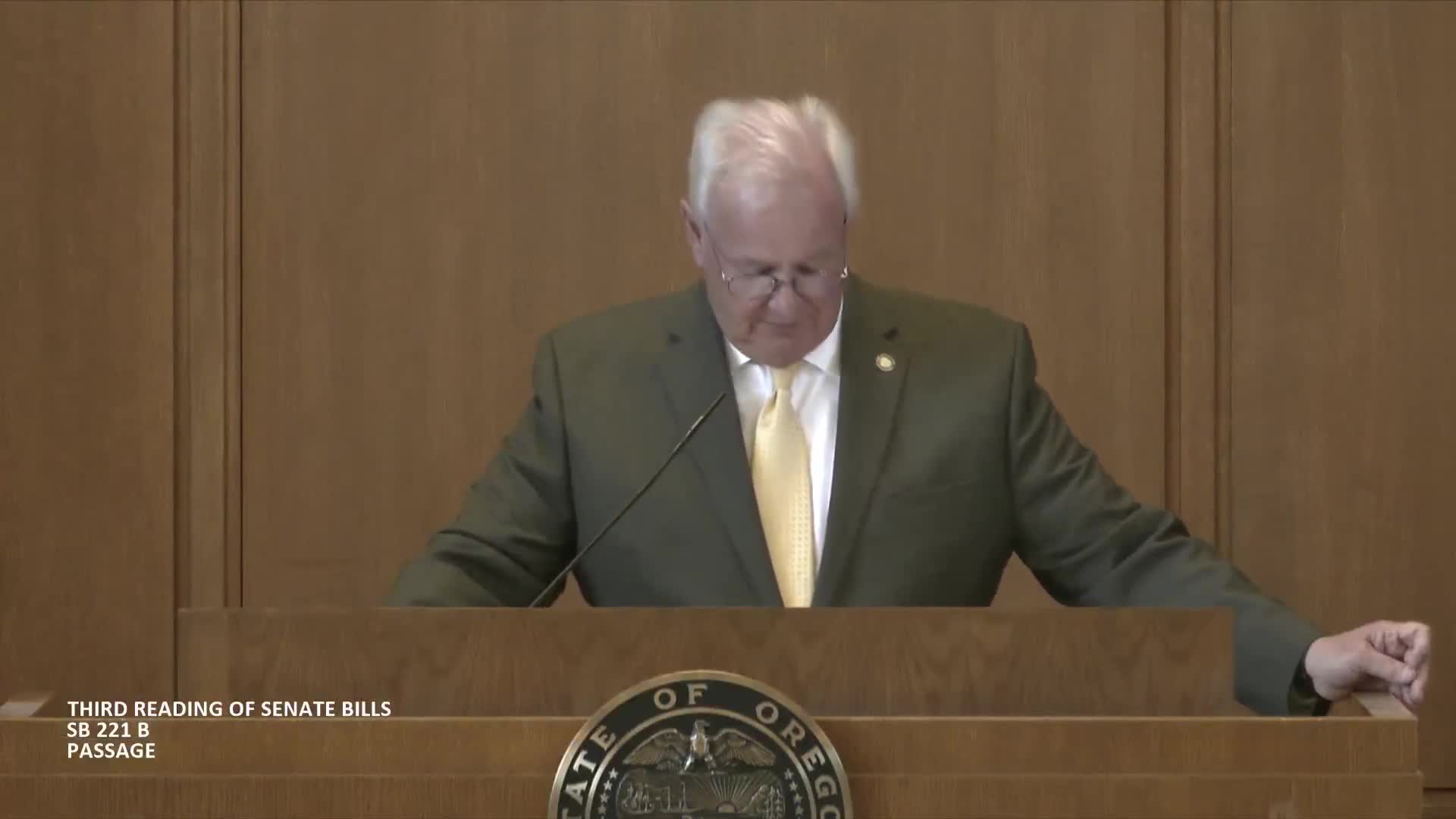
The Oregon House on Tuesday passed Senate Bill 221, which supports Salmon and Trout Enhancement Program (STEP) incubation (hatch box) nurseries in Coos County and requires those programs to operate under Oregon Department of Fish and Wildlife (ODFW) policy.
Representative McDonald, the bill sponsor, told colleagues the Coquille fall Chinook population has declined dramatically: annual returns once averaged 8,000 to 10,000 adults but fell to a low of 275 and a high of 900 between 2018 and 2021. SB 221 authorizes STEP incubator work in Coos County, requires conformity with ODFW rules, caps the number of eggs allocated to STEP projects, designates sources for broodstock eggs and requires participating programs to report egg usage and adult returns.
Supporters described incubator boxes as a volunteer-driven method that returns fry directly to streams, helps rebuild wild populations and provides public education. Representative Boyce and others said the program complements tribal and state research and acknowledged the Coquille Tribe’s role in local restoration work.
The House adopted SB 221; the clerk declared it passed after the vote. Sponsors said the bill is intended to support volunteers and private landowners in restoration efforts under state oversight and in partnership with tribal research, not to replace traditional hatchery operations.
The measure includes reporting requirements and limits to ensure STEP projects align with ODFW science and broodstock policies.