Get Full Government Meeting Transcripts, Videos, & Alerts Forever!
Get email alerts on the Local Preparedness topic
No spam. Unsubscribe anytime.
Washington County, Hillsboro describe local plans for fuel, water, shelter and department operation centers
Summary
Washington County and the City of Hillsboro briefed a Senate committee on May 27 about local emergency plans: an emergency fuel plan, water-distribution contingencies, mass-care planning, and Hillsboro's department operation center (DOC) arrangement that feeds situational awareness to the city EOC and county.
John Wheeler, manager of Washington County Emergency Management, told the Senate Committee on Veterans, Emergency Management, Federal and World Affairs that county planning assumes post-earthquake fuel will be the fuel already in ground storage and that transportation and utility networks could be critically damaged.
Wheeler described an emergency fuel plan developed through the Regional Disaster Preparedness Organization that prioritizes allocation of limited fuel supplies, and he said the county has worked on emergency drinking-water distribution plans and mass-care/shelter planning with community-based organizations because the Red Cross capacity can be exceeded during large incidents.
"We're going to have a pretty limited level of capacity at least in those first few days to help our community out," Wheeler said, stressing neighbor-to-neighbor assistance, CERT teams and community organizations as immediate sources of resilience while official response stabilizes.
Wheeler also described an emergency transportation-route assessment and water-system vulnerability work in the Portland-metro region and said recent tabletop exercises have helped refocus regional Cascadia planning. He noted Washington County estimates (from a March 2018 assessment): about 38,000 long-term displaced and 8,000 casualties under certain scenarios.
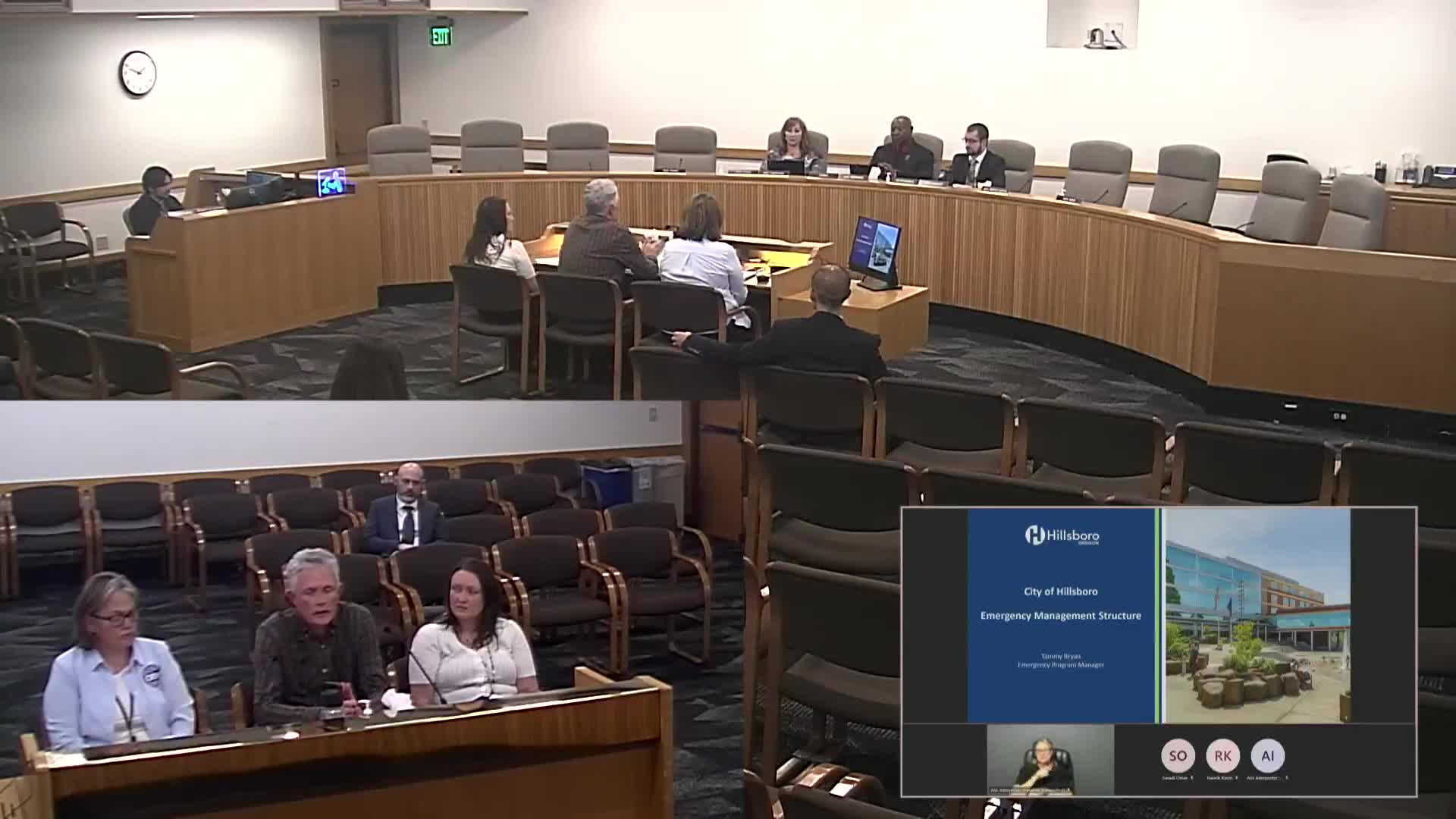
Tammy Bridal, emergency manager for the City of Hillsboro, explained Hillsboro's operational structure: five department operation centers (public works, water, police, fire and building) that manage field operations and provide liaisons to the city EOC when it opens. Bridal said Department Operation Centers open far more often than the city EOC and that the EOC has opened for only one real event in the last decade — the COVID response — though exercises often simulate larger activations.
Bridal described indicators that drive EOC activation (an event exceeding a DOC's capability, multiple operational periods, or a declared state of emergency), the use of WebEOC for cross-jurisdiction information sharing, and regular county-wide exercises to align plans and mutual-aid resources.
Both local officials emphasized exercises, coordination with county partners, community-based organization relationships, and continued investment in infrastructure resilience.