Get Full Government Meeting Transcripts, Videos, & Alerts Forever!
Get email alerts on the Pharmacy Benefit Managers topic
No spam. Unsubscribe anytime.
Pharmacists urge Oregon lawmakers to adopt HB 3,212 dash-6 amendment to curb PBM contract practices
Summary
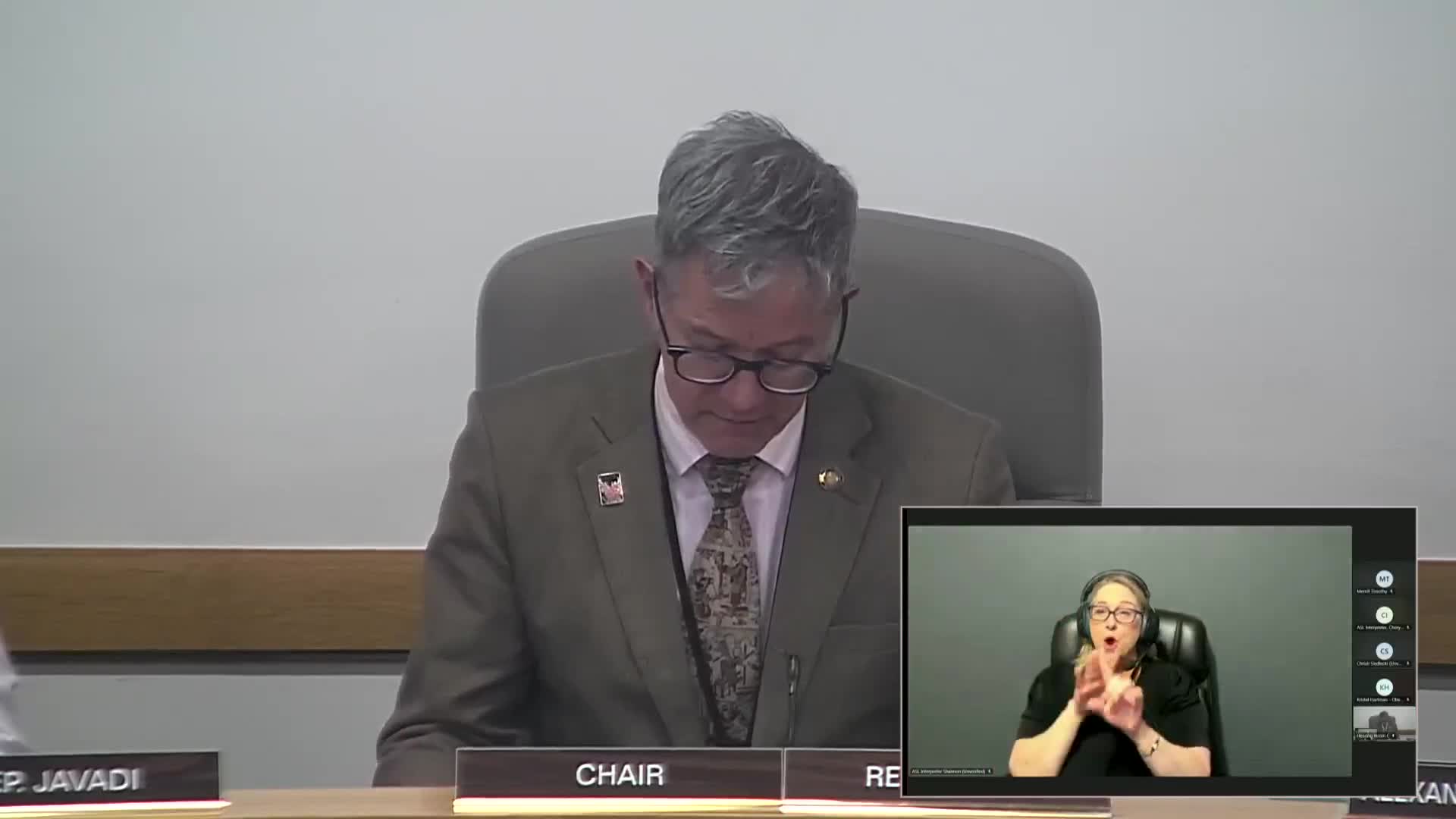
Chair (House Committee on Behavioral Health and Health Care) opened an informational hearing on House Bill 3,212, asking the policy committee to advise the Rules Committee whether the posted amendment should move forward for scribe time.
Chair (House Committee on Behavioral Health and Health Care) opened an informational hearing on House Bill 3,212, asking the policy committee to advise the Rules Committee whether the posted amendment should move forward for scribe time.
Pharmacists and owners from independent and critical-access pharmacies told the committee the dash-6 amendment is necessary to preserve in-person pharmacy access across rural and urban Oregon. Amanda Meeker, president of the Oregon State Pharmacy Association, said pharmacists want PBMs to reimburse at or above the true cost of dispensing and argued that prior offers from PBMs—described at one point as a 50¢ increase—are inadequate when the Oregon Health Authority’s cost-to-dispense study shows an average cost near $12 per prescription.
"Their offer relies on codifying into law the maximum allowable cost or MAC pricing model, the very system they control and manipulate," Amanda Meeker said. "If locked into statute, it will force pharmacies to continue eating costs."
John Murray, pharmacist and owner of Murray Drugs, described operating pharmacies across eastern Oregon and stressed that independent pharmacies deliver services that larger chains and mail order do not, including free prescription delivery to seniors and vaccination clinics. He said dash-6 provisions that ban contracts obligating pharmacies to dispense at a financial loss, require clearer reimbursement transparency, and prohibit unilateral contract terms would protect fragile local services that serve frontier communities.
Kim Reisner, a pharmacy owner who operates multiple critical-access locations, recounted contract negotiations with Express Scripts and said selective continuation of contracts by PBMs left some locations open only when convenient to the PBM. She said that practice, and differential reimbursement for PBM-owned pharmacies, has pushed patients to travel as far as 30 miles after recent pharmacy closures.
Owners described specific draft dash-6 provisions that they say would add guardrails: bans on "all-or-nothing" contracts that force pharmacies to accept loss-making book(s) of business; prohibitions on post-sale payment reductions; rules forbidding contracts that reimburse below the pharmacy’s stated cost to dispense; and language to prevent PBMs from paying affiliated pharmacies more than unaffiliated ones. Amanda Meeker described other draft protections aimed at administrative burdens and retaliation by PBMs.
Representatives from insurers and PBMs, including Rick Blackwell of PacificSource and Marianne Cooper of Regence Blue Cross Blue Shield of Oregon, said the pricing system is complex and warned that changing it could shift costs to consumers. Regence outlined a prior “dash-5” framework that proposed MAC plus a 50¢ dispensing fee for drugs subject to MAC pricing as an opening offer; Regence said the proposal was intended as a limited, tailored change designed to balance consumer cost and pharmacy viability.
Noomi Bridal Griffith, Senior Policy Advisor, Department of Consumer and Business Services (DCBS), said DCBS analyzed pharmacy-provided case data and found that, for that sample, switching to NADAC-based pricing would be roughly revenue-neutral for the example pharmacy. DCBS cautioned that the data came from a limited case sample and recommended a more rigorous, statewide analysis.
Committee members asked about specifics: how MAC lists are constructed, why pharmacies reject small dispensing-fee offers, how often PBMs make unilateral contract changes, and whether provisions would let pharmacies decline Medicaid business. Pharmacy witnesses said they do not want to stop serving Medicaid patients but need the ability to decline unsustainable contracts to force plan-level renegotiation. PBM and carrier witnesses said concerns such as accreditation and audit recoveries also needed careful drafting to avoid unintended consequences.
No formal action or vote was taken. The committee closed the informational hearing on House Bill 3,212 and the Chair asked members to provide guidance to the Rules Committee on whether to advance the bill and the posted amendments.
Ending: The hearing produced sharply contrasting positions: pharmacy owners pressed for statutory guardrails they say will protect local access, while insurers and PBMs urged caution, citing patient cost risks and data limits. Committee members asked staff and stakeholders for more analysis and real-world data before making a recommendation to Rules.