Get Full Government Meeting Transcripts, Videos, & Alerts Forever!
Get email alerts on the Corporate Activities Tax Healthcare Exclusion topic
No spam. Unsubscribe anytime.
Senate committee hears hours of testimony on bill to exclude public‑payer healthcare receipts from corporate activities tax
Summary
Senate Bill 125 would exempt reimbursements from public programs and certain physician‑administered drugs from Oregon’s corporate activities tax (CAT). Supporters say the change protects independent providers and patient access; opponents warn it will cut Student Success Fund revenue unless paired with revenue offsets.
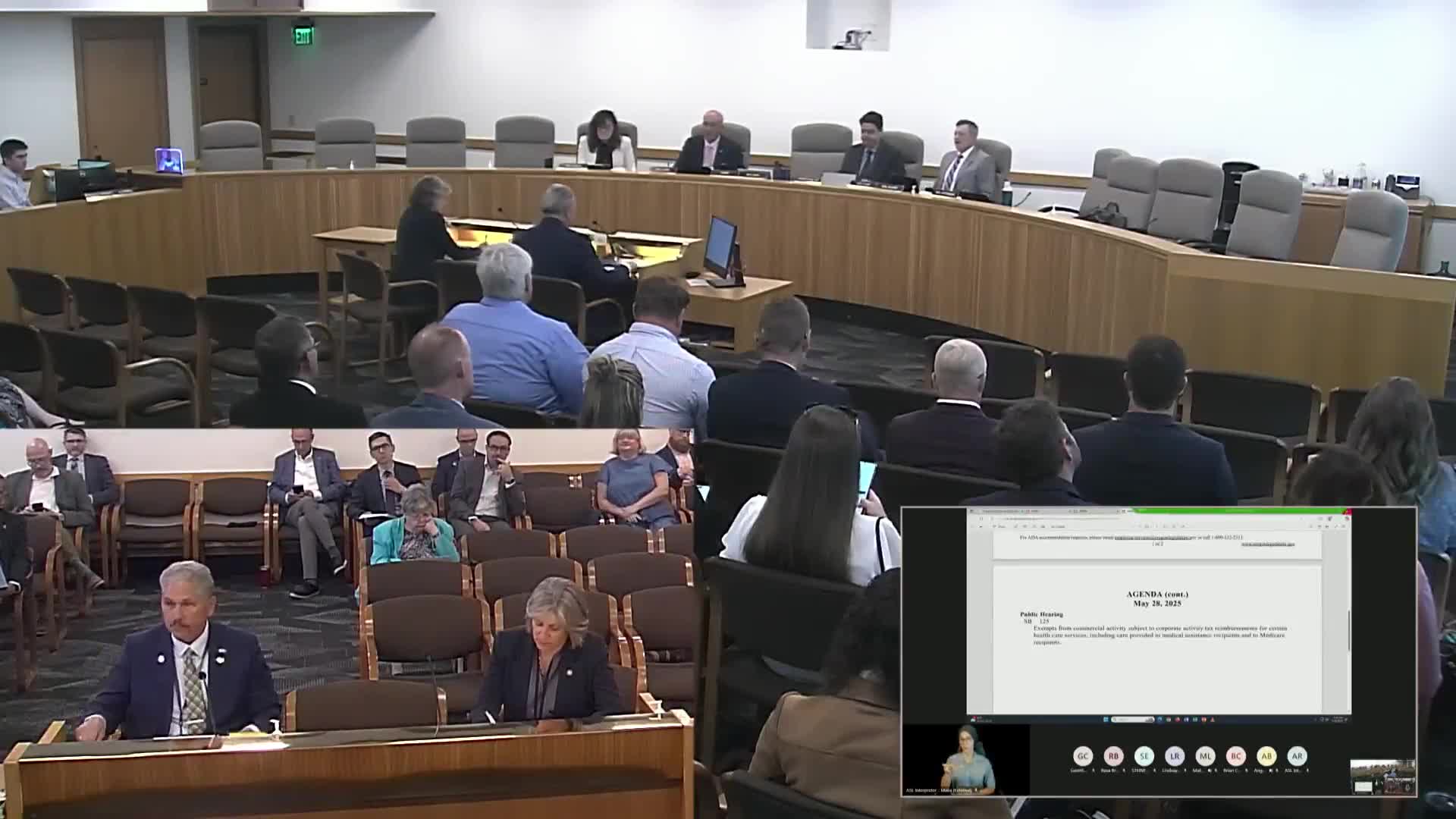
Senator Mark Meek, chair of the Senate Committee on Finance and Revenue, opened a public hearing on Senate Bill 125 on May 28, 2025, saying the bill would exempt reimbursements from public programs and certain clinician‑administered drugs from the corporate activities tax (CAT).
The bill, Meek told the committee, would “exempt reimbursements from public programs like the Oregon Health Plan, Medicare Advantage, TRICARE, and others from the CAT,” and would apply to tax years beginning on or after Jan. 1, 2026, and before Jan. 1, 2032.
Supporters — including independent physicians, oncology and specialty clinics, and health‑care trade groups — said taxing public‑payer reimbursements and high‑cost administered drugs is forcing independent practices to close or be absorbed by hospital systems, reducing local access to care. “Our cost for that drug is $6,873. Medicare reimburses us $7,010, leaving us with a margin of $147,” said Dr. John Schuler, a radiation oncologist, arguing that the CAT taxes the full drug amount even when providers operate at a loss. Dr. Schuler and other witnesses cited clinic closures and longer travel distances for patients as evidence of the impact.
Physician witnesses also emphasized the concentration of CAT liability on clinics while many hospitals and long‑term care providers are exempt. “Independent practices are being brought, bought up by hospitals and private equity groups at record levels,” Meek said in his opening remarks, linking consolidation to higher health‑care costs and reduced local access.
Opponents — including teachers, school officials and education unions — warned the bill would reduce funding for the Student Success Fund, which is financed by the CAT. Angela Bonilla, president of the Portland Association of Teachers, said the proposal “would lead to about $70,000,000 in funding loss for the Student Success Act and for our schools per biennium,” and urged the committee to pursue revenue reforms that raise revenue from large corporations instead of reducing CAT receipts.
Multiple witnesses proposed a revenue‑neutral alternative: exempt the targeted health‑care receipts while offsetting the lost revenue by increasing the CAT rate for very large corporations or by other rate adjustments. Daniel Hauser of the Oregon Center for Public Policy outlined one replacement option, saying an increased rate targeted at corporations with more than $100 million in Oregon receipts could make the change revenue neutral.
The Legislative Revenue Office estimate referenced during testimony put the specific exemption for clinician‑administered medications at roughly $2 million per year; witnesses differed on broader biennial estimates for the bill’s full scope. Committee members and witnesses repeatedly urged agreement on revenue offsets if the bill moved forward.
Chair Meek closed the hearing saying the committee would continue work on the measure and that “failure to act this session is not acceptable to me,” signaling further work sessions and negotiations in coming weeks.
The committee took no final vote on SB 125 during the hearing; the matter will be worked further by the committee and staff, with options including phased implementation or targeted revenue offsets.
Supporters and opponents asked the committee to consider concrete offsets and timing so that relief for providers would not reduce services funded through the Student Success Fund.