Get Full Government Meeting Transcripts, Videos, & Alerts Forever!
Get email alerts on the Controlled Substances Hemp Thc topic
No spam. Unsubscribe anytime.
Nebraska senators reject regulatory compromise, advance bill restricting hemp-derived cannabinoids
Summary
After extended floor debate, Nebraska senators rejected a regulatory compromise and advanced LB316, a measure that would restrict many hemp-derived THC products; proponents said the bill targets synthetic cannabinoids, critics warned it could criminalize ordinary consumers.
Nebraska senators spent more than two hours debating LB316, a bill that would change state law on hemp-derived cannabinoids and how the state treats products derived from hemp. Lawmakers rejected a regulatory compromise proposed on the floor and ultimately advanced the original bill.
The bill and the floor fight drew a large and vocal turnout in the chamber: proponents said LB316 closes a legal gap and addresses dangerous synthetic drugs, while opponents — including small-business operators and other senators — said the bill would outlaw a broad range of currently legal hemp products and could create new felony penalties for ordinary consumers.
Author and floor sponsor Senator Kaut (carried on the floor by Senator Kautz in parts of the transcript) framed the debate as a distinction between “synthetic cannabinoids” and “hemp-derived THC.” “Synthetic cannabinoids are chemicals that are manufactured and are different than plant-derived,” the sponsor’s floor remarks said, and the Legislature already bans many synthetic products in statute (citing the Uniform Controlled Substances provisions in Nebraska law as previously amended). The sponsor told the body: “If your goal is to ban synthetics, those are banned already.”
Regulatory alternative fails: Senator John Kavanaugh offered AM15-21, a compromise floor amendment that would have banned synthetic (non–plant-derived) cannabinoids while creating a state regulatory regime for other hemp-derived products (licensing, testing, packaging, age verification and an excise tax). “15-21 bans the bad stuff and then it requires stores to get licensed… It legitimizes the industry,” Kavanaugh said. Supporters of the amendment argued regulation — not a broad ban — would protect consumers while preserving legitimate small businesses. Kavanaugh said the amendment would “ban synthetic delta‑8” while allowing regulated sales of other products.
Opponents of AM15-21 mounted a successful effort to defeat the compromise. Critics urged a full ban and expressed health-safety concerns about hemp-derived THC products and their packaging and labeling. Senator Kautz and others argued “these are dangerous products” and urged rejection of the compromise amendment.
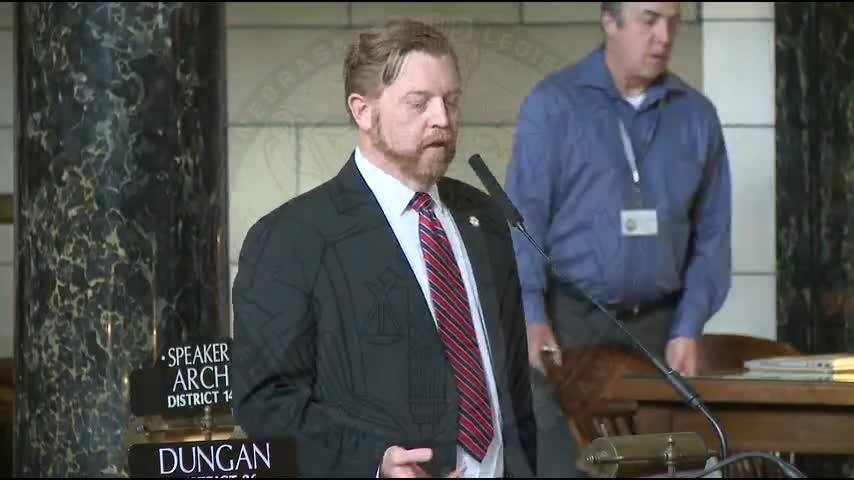
Criminalization concerns: Opponents of LB316 warned that the bill’s definitions could turn currently lawful purchasers into felons. Senator Dungan and others repeatedly pressed the point: under the bill’s draft language, the statute removes an explicit statutory carve-out that currently treats hemp as an agricultural commodity and not a controlled substance, and that could make possession of small or residual amounts of certain hemp-derived cannabinoids a felony. “We are making an entire industry … into felons,” Senator Dungan said. Senators pressed for clarity on whether the bill would criminalize otherwise lawful conduct and warned that proposed “affirmative defenses” would be ineffective because defendants would have to be arrested and try the defense in court.
Stakeholders and hearings: Multiple small-business owners and hemp-industry operators testified at the Capitol and in town halls. Brett Mayo of Sweetwater Hemp Company sent a written note that was read on the floor describing his investment and saying LB316 “will shut down our business.” He told senators his company uses cold-water extraction and said their products test below 0.3% THC. Supporters of a regulatory approach said the amendment would preserve those businesses while targeting illicit products.
Floor votes and outcome: The floor rejected AM15-21 (the regulatory compromise) in a roll-call vote (final recorded tally: 16 ayes, 27 nays). Later the body advanced LB316 to E & R (engrossing). Several other amendments and motions were proposed and withdrawn during the session.
Why it matters: The vote presses Nebraska toward a regulatory posture or a prohibitionist posture depending on later action. Supporters of regulation argued the state can protect consumers and collect revenue by licensing, testing and limiting sales to adults; supporters of a ban argued synthetics and some hemp-derived products pose public-health risks. Opponents warned that the bill’s language as drafted risks criminal penalties for ordinary consumers and uncertainty for farmers and retailers.
What’s next: LB316 was advanced to engrossing for further drafting and final steps. Because major amendments were rejected, stakeholders and legislators said they will continue to press for clarifying language or further changes in the next stages of the process.