Get Full Government Meeting Transcripts, Videos, & Alerts Forever!
Get email alerts on the Shield Law Updates topic
No spam. Unsubscribe anytime.
Senate committee hears calls to tighten 2022 shield law to protect abortion and gender-affirming care
Summary
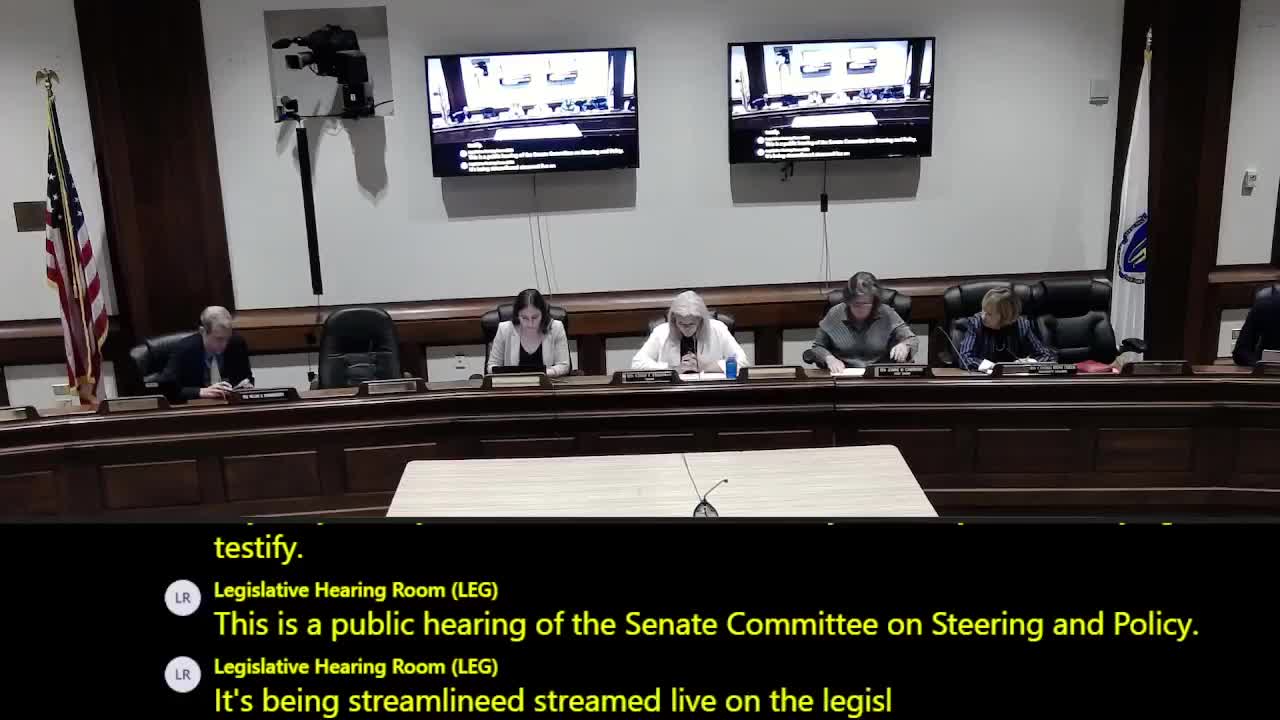
The Senate Committee on Steering and Policy convened a public hearing, streamed on the legislature's website, to gather testimony on proposed changes to Massachusetts’ 2022 shield law intended to strengthen protections for reproductive and gender-affirming health care against out-of-state investigations and hostile federal action.
BOSTON — The Senate Committee on Steering and Policy convened a public hearing, streamed on the legislature's website, to gather testimony on proposed changes to Massachusetts’ 2022 shield law intended to strengthen protections for reproductive and gender-affirming health care against out-of-state investigations and hostile federal action.
Testifiers representing the attorney general's office, civil-rights and health-care organizations, clinicians and community providers urged lawmakers to close legal and technical loopholes they say leave patients and providers vulnerable. Many witnesses pressed for explicit enforcement authority for the attorney general, stronger limits on data sharing by state agencies and third-party vendors, and narrower reporting to the state Prescription Monitoring Program for medications used in reproductive and gender-affirming care.
"When Massachusetts passed its shield law in 2022, it was the first of its kind in the nation," said Allison Slater, director of Attorney General Andrea Campbell's Reproductive Justice Unit, describing the law as a foundational protection that nevertheless contains gaps to be fixed. Slater told the committee the attorney general's office is "watching these cases closely" where other states have attempted to prosecute providers and urged several statutory changes, including giving the attorney general explicit authority to enforce the shield law and extending the law's bar on law-enforcement cooperation to "all state and local agencies and their officers or employees."
The ACLU of Massachusetts recommended similar expansions. "There are so many touch points in state government for health-care information, including most obviously the Department of Public Health," Gavi Wolf testified, recommending that protections "beyond law enforcement" be added so providers and patients can trust that "their information will not be voluntarily shared with hostile out-of-state entities." Wolf also urged that prescription data for reproductive and gender-affirming care be excluded from the state Prescription Monitoring Program unless the Department of Public Health determines the data are necessary to protect public health.
Clinicians described technical pathways that can expose sensitive care. "With a click of a button, providers can access medical records from every facility a patient has ever been to that also uses Epic," said Dr. Megan Evans, an OB-GYN testifying for the Massachusetts section of the American College of Obstetricians and Gynecologists, explaining that interoperability can allow out-of-state providers to access details of a Massachusetts patient's abortion, IVF or gender-affirming care without the patient’s clear, specific consent.
Several witnesses proposed concrete fixes to reduce that risk. Suggestions included: requiring electronic medical record systems or facilities to segregate notes and medication records tied to abortion, miscarriage, IVF and gender-affirming care so those items are shared only with explicit written patient authorization; allowing prescriptions to list a practice name rather than an individual clinician; excluding certain reproductive and gender-affirming medications from the state's Prescription Monitoring Program; and creating a state analog to the federal Emergency Medical Treatment and Labor Act (EMTALA) to require emergency departments to provide stabilizing care that includes abortion when medically necessary.
"Our hotline often fields questions from patients who call in and say, 'I'm considering traveling to Massachusetts for abortion care. What happens when my provider at home asks about my pregnancy?'" said Claire Taylooni of Reproductive Equity Now, recounting calls that highlight patient concern about whether treatment received in Massachusetts will be recorded and later used in hostile jurisdictions.
Representatives of community providers described operational pressures that intersect with legal vulnerability. Julia Kehoe, CEO of Health Imperatives, said her organization operates seven reproductive-health clinics and described difficulties obtaining insurance coverage and malpractice protection when plans excluded abortion-related care or offered prohibitive pricing. Kehoe told the committee her nonprofit received quotes that would have charged up to half a million dollars for a carve-out covering medication abortion — a cost she said jeopardized continued service provision in under-resourced parts of the state.
Trans-health advocates also urged expanded protections. "The trans community is frankly in the fight of our lives," said Grant Drain, chief of staff for Trans Health in Northampton. He and other witnesses pressed for explicit statutory safeguards for clinicians, attorneys and parents who support gender-affirming care for minors, and for statutory language preventing out-of-state child-abuse findings from being used to penalize families in Massachusetts.
Panelists described legal and technical precedents in other states and recent incidents that animate their concerns: prosecutorial actions in Texas and Louisiana against a New York provider; a House reconciliation bill described by the committee chair as seeking to defund Planned Parenthood and ban Medicaid coverage of gender-affirming care; and federal executive actions and agency letters the witnesses said have chilled providers.
Committee Chair Cindy Friedman told testifiers the committee will use the testimony to draft bills and will solicit public comment on any proposed legislation. "The Commonwealth can use the testimony, and information collected today to craft legislation. Once crafted, public comment can be solicited for that legislation, and we will keep you up to date," she said at the hearing's opening.
No formal legislative action was taken at the conclusion of the hearing; the transcript records a motion to close the hearing that was moved and seconded but does not record a roll-call vote or final minute when a formal vote occurred.
The testimony lays out recurring legislative options for members to consider in drafting updates to the shield law: explicit AG enforcement authority, statutory limits on intergovernmental and third-party data sharing, PMP exclusions, prescription-label anonymity, EMR segregation and patient-directed consent mechanisms, and a state EMTALA requirement for emergency stabilization including abortion care.
Lawmakers signaled interest in technical engagement with health-record vendors and insurers. Several senators suggested meetings with electronic medical record providers and with hospitals and insurers to determine the feasibility and operational design of EMR firewalls or patient-directed consent flags.
Next steps: the committee will accept written testimony and use today’s oral testimony to inform bill drafting. Members said they plan follow-up briefings with technical vendors, the attorney general's office and provider groups as bills are prepared for committee consideration.