Get Full Government Meeting Transcripts, Videos, & Alerts Forever!
Get email alerts on the Criminal Justice Vulnerable Adults topic
No spam. Unsubscribe anytime.
Senate committee adds 'intentional' to bill making cruelty to people with infirmities a felony‑murder predicate
Summary
The Senate Committee on Judiciary C voted to report House Bill 14 with an amendment inserting the word “intentional,” narrowing when cruelty to persons with infirmities can serve as a predicate for felony murder. Supporters said the change protects vulnerable people; a defense group urged tighter language on intent.
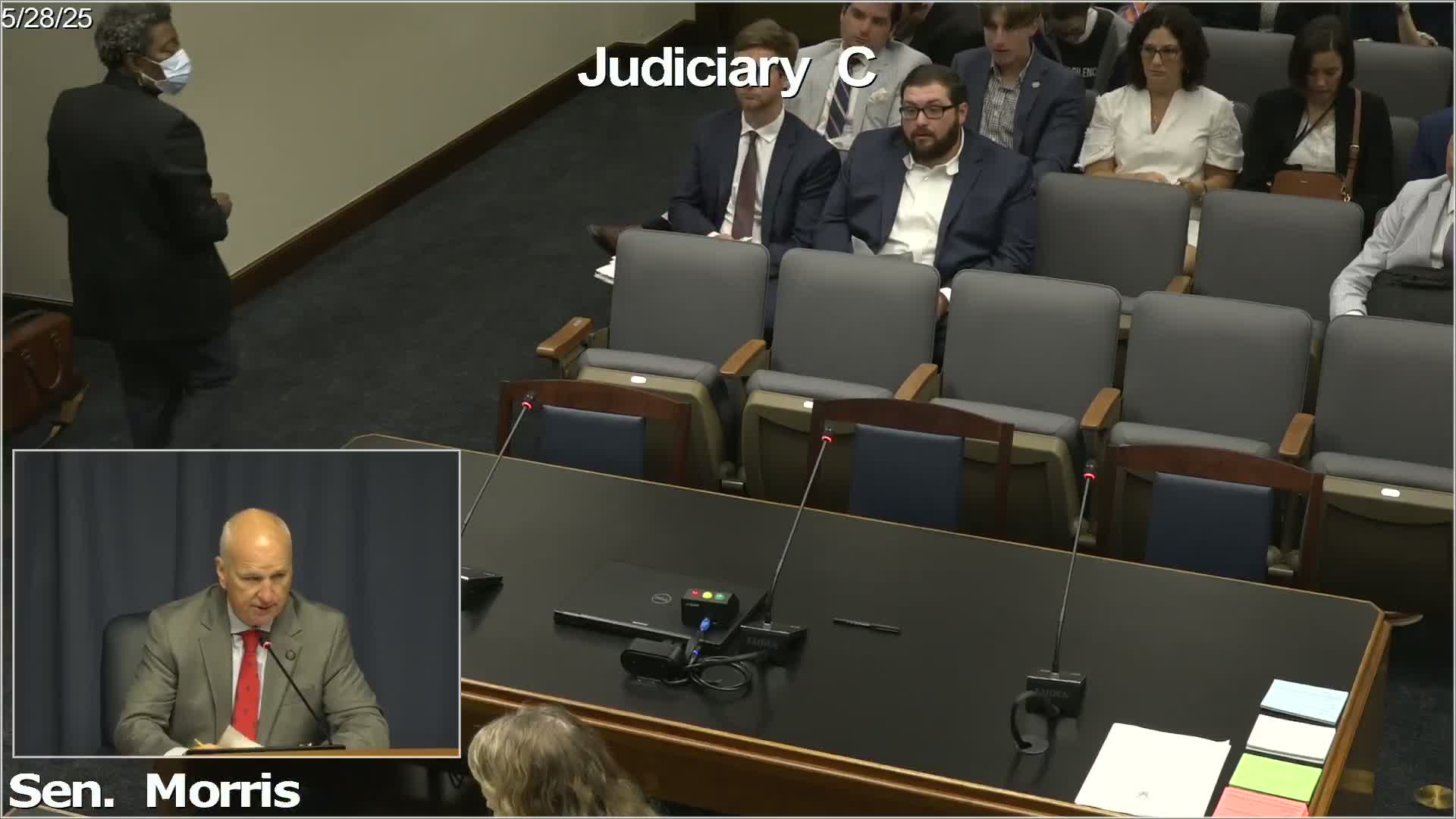
BATON ROUGE, La. — The Senate Committee on Judiciary C voted May 20 to report House Bill 14 with amendments that add the word “intentional” to the statute making cruelty to persons with infirmities a predicate offense for felony murder.
The bill, sponsored in the House by Representative Cox and discussed in committee by prosecutors and advocates, would mirror an earlier provision that made cruelty to juveniles a felony‑murder predicate. Supporters said the change is intended to ensure deaths caused by abuse or severe neglect of dependent adults can be charged at a higher homicide level when appropriate.
Representative Cox, one of the bill’s House sponsors, told the committee the measure “just adds cruelty to persons with infirmities to the list of crimes” that can serve as predicates for felony murder. Darren Aleman of the Jefferson Parish district attorney’s office said the change was prompted by a local case in which an adult with a severe intellectual disability was “horrifically mistreated” and died; prosecutors were limited to manslaughter charges in that case. “Persons with infirmities ... are also uniquely dependent on their caretakers,” Aleman said, arguing the statute would protect future victims.
Brandy Melissa, an advocate who identified herself as a former caregiver, delivered emotional testimony describing long periods of hands‑on care for a loved one and urging the committee to close what she called a “fatal loophole.” “This bill ensures that when a person with infirmities from abuse dies from abuse or neglect, the justice system treats that death with the seriousness it deserves,” she said.
Megan Garvey, representing the Louisiana Association of Criminal Defense Lawyers, raised a narrow statutory concern about mens rea. Garvey recommended expressly adding intentionality to the second‑degree murder predicate, arguing that some elements of the cruelty offense contain negligence language and that homicide charges carrying life sentences should clearly require intent. “I would just ask that we tighten this bill up to do what it seems like the sponsor and the DAs are hoping it will do,” she said.
Committee members and witnesses cited Louisiana Supreme Court precedent in State v. Small, which the D.A.’s office described as limiting the use of negligent failure to supervise as a predicate for murder, while permitting more direct acts of neglect — such as starving or malnourishment — to support a murder charge. Aleman told the panel that, under existing law and State v. Small, the legislature can make certain acts of neglect that result in death punishable as murder, but negligent failure to supervise is not a permissible predicate.
To address the defense concern, the committee adopted an amendment offered in concept to insert the word “intentional” before “cruelty” in the relevant line of the felony‑murder list. There was no recorded objection to adopting the amendment in concept. The committee then moved to report House Bill 14 with amendments; the motion carried without recorded opposition in the committee proceeding.
Discussion versus formal action: committee debate and witness testimony constituted discussion; the committee formally adopted the in‑concept amendment and voted to report the bill with that amendment. No floor vote on the bill was taken in committee; next steps include printing the amendment language formally and sending the measure to the Senate floor for consideration.
Supporters at the hearing included the Jefferson Parish district attorney’s office and members of the Louisiana District Attorneys Association; the Louisiana Association of Criminal Defense Lawyers registered a narrow objection focused on intent language and the committee addressed that concern through amendment.
If enacted, the bill would add cruelty to persons with infirmities to the enumerated list of offenses that, when committed in the course of certain felonies resulting in death, can elevate the homicide charge. The hearing record notes the committee’s intent to mirror earlier statutory treatment of cruelty to juveniles while shifting the bill language to require intentional cruelty where it triggers the more serious offense.
The committee did not specify a statutory effective date during the hearing. The bill will proceed to further legislative steps with the adopted amendment in place.