Get Full Government Meeting Transcripts, Videos, & Alerts Forever!
Get email alerts on the Biosecurity Legislation topic
No spam. Unsubscribe anytime.
House committee rejects bill criminalizing intentional release of self‑spreading pathogens after scientific and civil‑liberties concerns
Summary
HB 419, which would criminalize intentionally releasing engineered, self‑spreading pathogens without informed consent, failed to pass the committee after opponents cited detection, federal preemption and due‑process issues; the author agreed to an amendment changing ‘expose’ to ‘release’ but committee ultimately voted down reporting the bill.
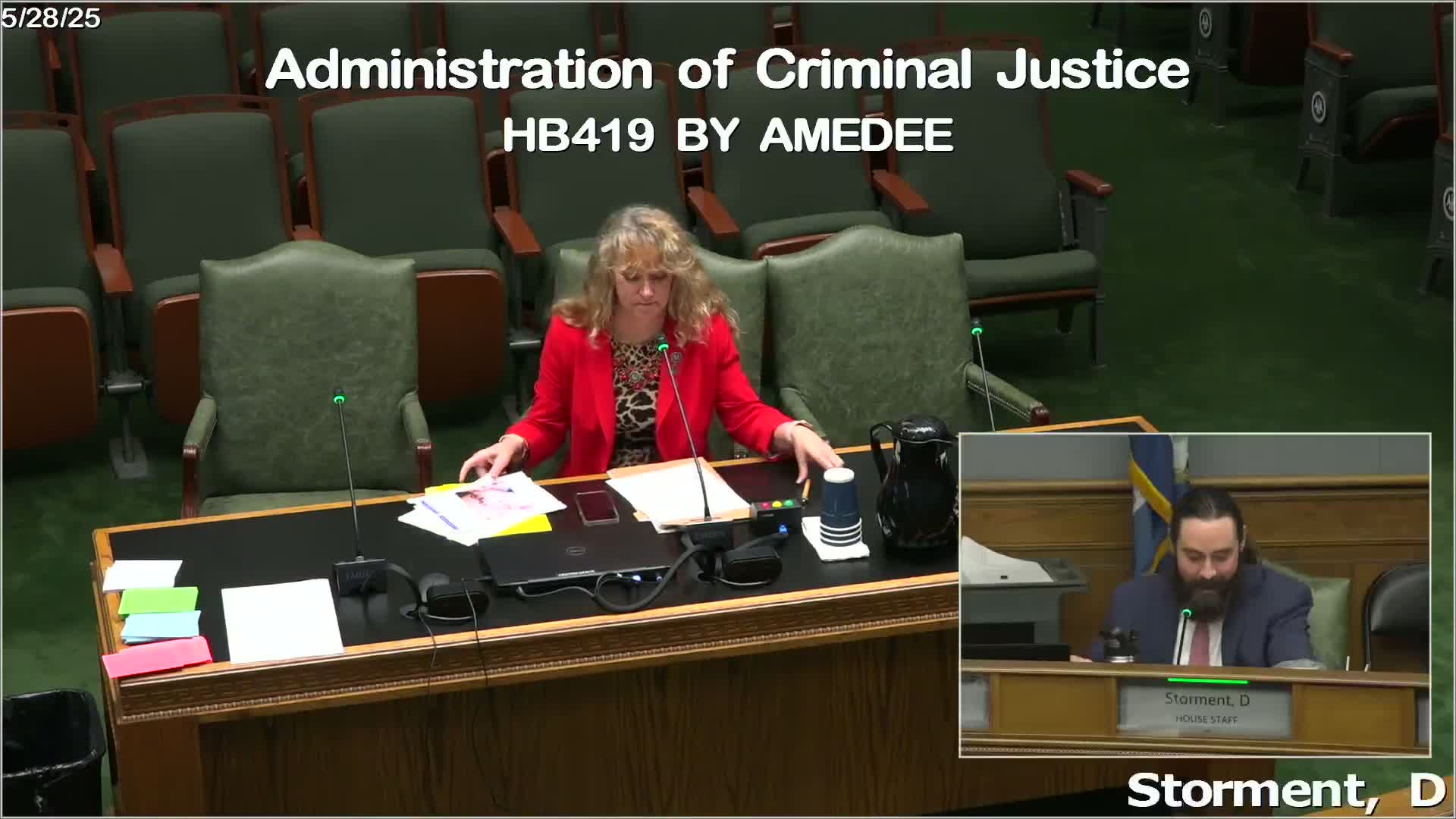
Representative Amadei brought HB 419 to the committee seeking a narrowly tailored statute to criminalize intentionally releasing engineered, self‑spreading pathogens — a category the bill described as viruses or bacteria designed to self‑disseminate and self‑replicate.
The bill’s sponsor said the measure would protect bodily autonomy and would not halt research or lawful use of medical products where informed consent is obtained. He described hypothetical delivery modes such as aerosolizing a self‑spreading vaccine via building HVAC systems or contaminating a water supply and said the measure targets intentional release without consent.
Supporters including Jill Hines of Health Freedom Louisiana said the law would fill a gap in state statute and guard against misuse of emerging biotechnology. Hines told the committee such pathogens “present an unprecedented bioethical and biosecurity risk” and that state law did not currently criminalize intentional release in a way that directly addresses engineered, self‑spreading agents.
Opponents raised scientific and legal objections. Zach Daniels of the Louisiana District Attorneys Association cautioned that distinguishing engineered pathogens from naturally occurring agents could be legally and scientifically fraught, and that existing statutes (battery, homicide, bioterrorism federal statutes) may already address intentional release that causes harm. Other witnesses warned the bill’s language could cast too broad a net, potentially criminalizing ordinary conduct if left imprecise.
Because committee members worried about ambiguity in technical definitions, Representative Amadei agreed to an amendment proposed in committee that replaced the word “expose” with “release” to clarify the targeted conduct. Despite that change, the committee voted on the motion to report the bill; the clerk announced the roll call and the committee vote failed, with 2 yeas and 10 nays.
Outcome: HB 419 was not reported out of committee (motion to report failed). Members who opposed asked for more drafting and clarity on definitions, interaction with federal law and how proof of a pathogen’s engineered origin would be established in court.
Next steps: the author and members signaled willingness to continue research and stakeholder consultation; the committee recorded testimony and the failed vote on the floor record.