Get Full Government Meeting Transcripts, Videos, & Alerts Forever!
Get email alerts on the Domestic Abuse Vehicle Access topic
No spam. Unsubscribe anytime.
Bill would require automakers to disconnect remote access on request after protective orders; committee adopts amendments
Summary
Law enforcement and victim advocates told the committee that abusers use vehicle apps to stalk and harass survivors. The committee adopted an amendment that creates a process for victims to submit protective orders to manufacturers and requires a timely response with AG enforcement for noncompliance.
The committee heard testimony on a bill aimed at preventing remote‑access features in vehicles from being used as tools of domestic abuse. House Bill 74 would require manufacturers or providers of vehicle remote access services to offer a process to suspend or disconnect app‑based remote access upon receipt of a valid protective order.
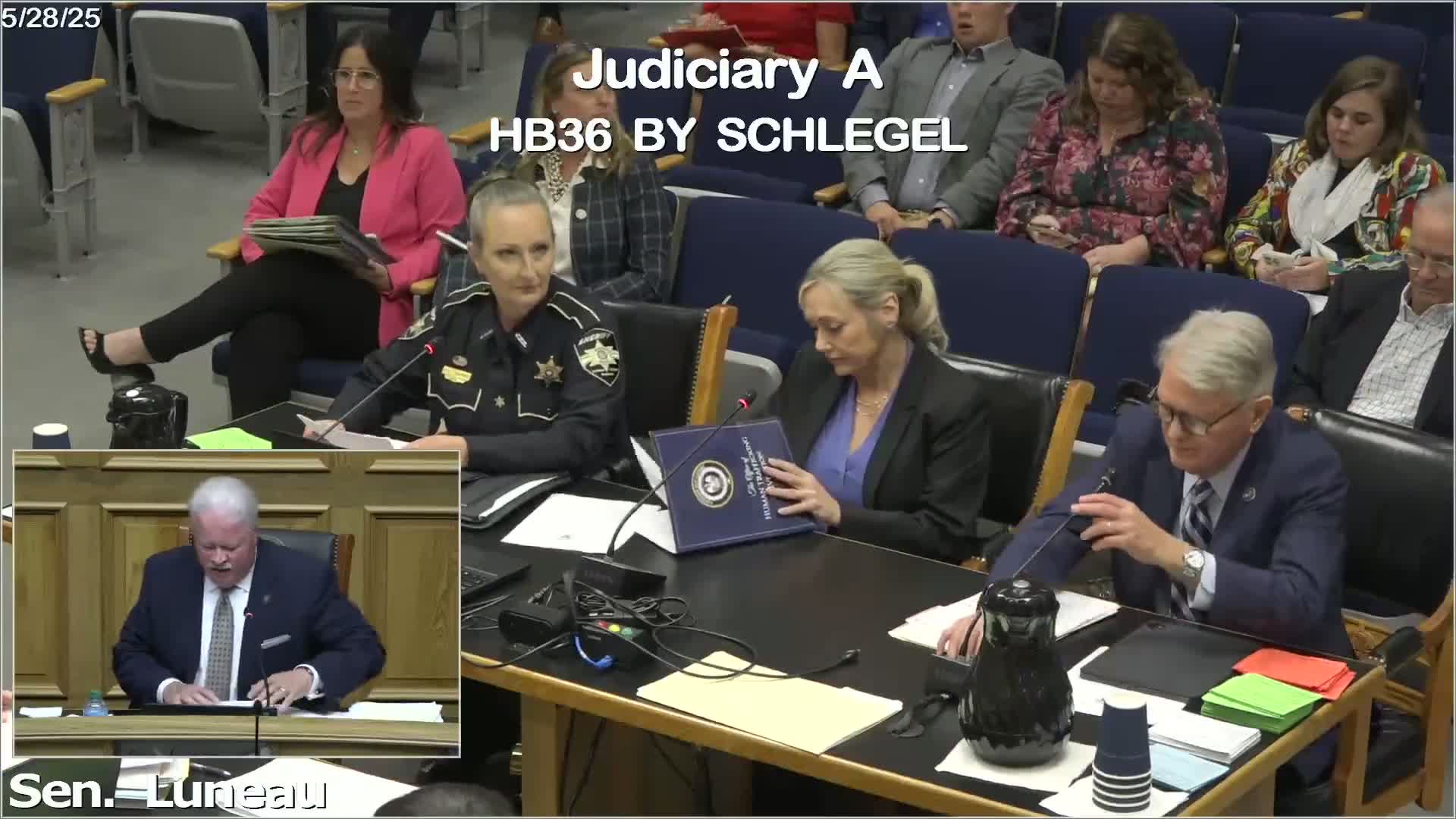
Sponsor testimony described scenarios in which an abusive partner uses a vehicle’s telematics app to track location in real time, remotely start the car, honk the horn or lock and unlock doors. Detective Kelly Downey of the Bossier Parish Sheriff’s Office said those features had been used repeatedly as a method of control, and that manufacturers in several investigated cases refused to disconnect access even after producers were provided protective orders and court documentation. “Specific cases have been made aware of the temporary restraining order and were made aware of the sole and exclusive [use] yet have refused to terminate the app use,” Downey said.
The bill’s adopted amendment (22‑33) lays out an operational process: manufacturers must publish a visible link titled “How to disconnect remote vehicle access” and provide a submission form; a requester must supply a certified copy of a protective order and proof of ownership or an ownership interest in the vehicle; the manufacturer would then have two business days to comply. The amendment also authorizes the Attorney General to pursue civil penalties for noncompliance, with penalties directed to a fund to assist victims.
A survivor who testified, Christine Dowell of Bossier City, described how unauthorized tracking and remote access made her feel unsafe and urged lawmakers to make disconnection straightforward and enforceable. The sponsor said manufacturers had engaged in negotiations and that the amendment reflected operational suggestions offered by the industry.
Committee action: amendments were adopted and the sponsor indicated plans to obtain a committee report. Supporters said the measure is narrowly tailored — required only after a valid protective order is submitted — and intended to close a gap in practice where survivors’ court orders were not being honored by manufacturers.
Questions remain about how manufacturers will implement the verification process, how law enforcement should be notified in emergencies, and whether two business days is sufficiently fast in urgent situations; sponsors said they would continue to refine the process with stakeholders.