Get Full Government Meeting Transcripts, Videos, & Alerts Forever!
Get email alerts on the Abortion Drugs Civil Liability topic
No spam. Unsubscribe anytime.
Senate committee advances bill creating civil penalties for out‑of‑state mail‑order abortion drugs
Summary
The Senate Judiciary Committee adopted amendments and voted to report House Bill 575, which would create a civil cause of action in Louisiana against people who knowingly send abortion‑inducing drugs into the state, extend certain filing deadlines, and exempt in‑state providers acting within Louisiana law.
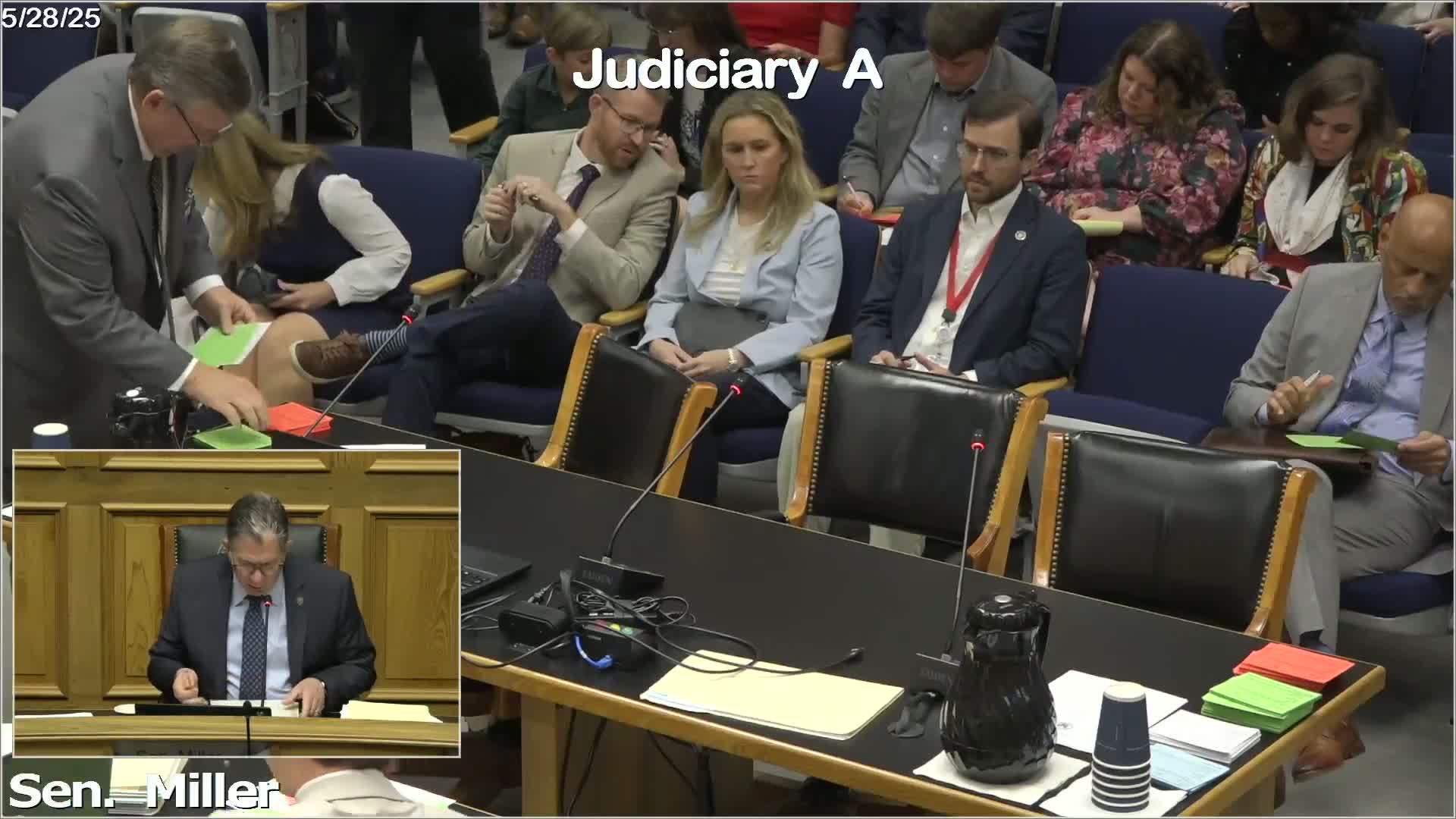
The Louisiana Senate Judiciary Committee on May 28 voted to report House Bill 575 with amendments after an extended hearing that split supporters and medical professionals.
House Bill 575, carried in the House by Representative Ventrella and presented to the committee by Representative Emerson, would create a civil cause of action against people who “knowingly” send abortion‑inducing drugs into Louisiana for the purpose of causing an abortion. Supporters said the measure is intended to close a gap they say allowed out‑of‑state providers to send the drugs and avoid prosecution in Louisiana.
The bill’s proponents told the committee they were responding to high‑profile cases in which regulators and prosecutors were unable to hold out‑of‑state prescribers criminally accountable. “We looked at that as a bit of a loophole in the law,” Representative Emerson said while presenting the measure, adding that the legislation would provide civil remedies when criminal enforcement was not possible. Erica Bales, policy director for Louisiana Right to Life, described a “network of out‑of‑state actors” and said, “This bill is not solely in response to that situation” but that recent incidents illustrate the need for civil enforcement.
Medical and public‑health witnesses strongly opposed the bill. Dr. Suzanne Welsh, an obstetrician‑gynecologist in Baton Rouge, said the proposal raises patient‑privacy concerns and could force clinicians to “relive” patients’ medical information in court. Jocelyn Wirtz, an OB hospitalist, told the committee the measure could subject clinicians who provide emergency care for a patient who took pills at home to civil liability even if the clinician’s actions were medically indicated. “If I am forced with the possibility of financial ruin, unnecessary litigation, and wasted time in court costs, or leaving the state to practice, I would choose to leave the state,” Wirtz said.
Attorney General Liz Murrell testified in support and described the bill’s intent provision as “narrow” and aimed at conduct “tethered to knowing conduct that is intended to produce an abortion.” Murrell said the language was crafted to exclude legitimate medical uses of drugs such as misoprostol and mifepristone and to focus on “knowing” efforts to cause abortions that violate Louisiana law. She also defended the measure’s constitutionality, referencing the post‑Dobbs authority of states to regulate abortion.
Committee members pressed witnesses on several technical points. Senator Luno asked about the bill’s statute‑of‑limitations language; witnesses said the amendment package extends the prescriptive period for claims that arise after an abortion to five years with a 10‑year preemptive period, citing concerns that harms may not be discovered quickly. A panelist cited R.S. 9:2817 (described during testimony as JHA’s law relating to fentanyl liability) as an example of a much longer prescriptive window in another statute.
The committee adopted an amendment set (22‑90) offered at the hearing that supporters described as narrowing and “tightening” elements of the draft (for example, clarifying who may file suit and anchoring liability to intent). Senator Mizell later offered another amendment (23‑10) that clarifies immunity for certain in‑state providers, pharmacies and licensed advocates; the committee adopted that amendment as well.
After the testimony and amendment debate, Senator Edmonds moved that the committee report House Bill 575 with amendments. The roll call was: Senator Luno — no; Senator Carter — no; Senator Edmonds — yes; Senator Mizell — yes; Chair — yes. The motion carried 3‑2 and the bill was reported with amendments.
What remains unresolved is how the bill will perform under legal challenge. Opponents warned repeatedly that the measure could chill medical decision‑making, create burdensome litigation and expand access to private discovery of sensitive medical records. Supporters said the measure is a targeted civil remedy aimed at out‑of‑state actors who send drugs into Louisiana with the intent to cause abortions and that in‑state providers acting within the law would be exempted.
Committee action: the committee adopted amendment set 22‑90 and amendment set 23‑10 and reported House Bill 575 with amendments (final roll call recorded in committee minutes).