Get Full Government Meeting Transcripts, Videos, & Alerts Forever!
Get email alerts on the Parks Recreation topic
No spam. Unsubscribe anytime.
Evanston committee advances Beck Park contract after split vote amid debate over $500,000 pavilion
Summary
The Administration & Public Works Committee voted 2-2-1 to forward the Beck Park Phase 1 construction contract to the City Council without a recommendation after members debated removing or redesigning a high-cost pavilion that could jeopardize $300,000 in state grant funding.
The Evanston Administration & Public Works Committee voted to forward to the full City Council a contract award for Phase 1 of the Beck Park expansion after a split vote on whether to keep a high-cost pavilion in the bid package.
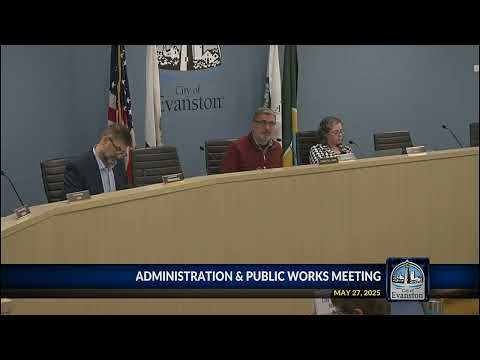
The committee, meeting in person and by Zoom, moved to send the contract with the pavilion as currently specified to council with no committee recommendation after discussion about design, cost and grant risk.
Committee members and staff spent the meeting weighing options for the pavilion — a central feature of the proposed park design — and how changing it now could affect state grant funding. "The pavilion is really intended to be an anchor to the park," Laura Biggs, city engineer for the City of Evanston, told the committee. She said locating the structure in the park center increased costs because electrical service would have to be extended and because community feedback drove a higher-amenity aesthetic.
Council member Nussbaum, who moved approval of the contract, said removing the pavilion would save an estimated $454,000 from the contract price but noted the consultant’s earlier estimate put the pavilion at about $527,000. "Either number is quite high for it's essentially, a roof with no walls," Nussbaum said. She asked whether staff could secure state grant money if the pavilion were removed. Biggs responded that the city had listed the pavilion at $300,000 in its DCEO grant application and that removing it now could jeopardize that portion of the state grant; she said the city could request clarification but would likely not get an answer in time to meet the bid-award schedule.
Other committee members proposed compromise paths. Nussbaum said she favored awarding the contract as bid and later attempting to value-engineer the pavilion through change orders, a course Biggs said could preserve the city's eligibility for the $1,000,000 DCEO grant. Council member Newsomah (mover) later amended and retracted an amendment to remove a small alternate scope item recommended by staff; ultimately the committee recorded a 2–2–1 tally and forwarded the contract to the council with no recommendation.
Members and public commenters also raised broader questions about the project. Resident Brian McCarris, who said he lives in Evanston and rents Beck Park land from the "Metropolitan Sanitary District," told the committee he was troubled by the overall cost and the pavilion price. Other speakers at public comment urged more transparency, asked to see the costs of later phases and recommended discussing whether some work could be done in-house to control long-term outsourcing costs.
City staff outlined the remaining phases: a water-feature concept for children located at the south end (phase 2) and a possible Emerson crossing or underpass to improve pedestrian access (phase 3). Biggs said phases 2 and 3 are not yet designed and would likely be included in future capital budgets if the city elects to proceed.
Motion and vote: The committee considered a motion to approve the contract with John Kino and Company for the Beck Park expansion Phase 1 project bid. The motion was moved by Council member Nussbaum and seconded by Council member Harris. The committee recorded a split vote and forwarded the matter to the full City Council with no committee recommendation.
The project team and several council members said they will seek cost reductions where feasible while trying to avoid risking the $300,000 portion of the DCEO grant, and staff warned that substantial redesigns could delay construction into the following year.
What’s next: The item will be considered by the full City Council; staff said they will continue to explore value-engineering opportunities and will seek DCEO guidance where possible before final council action.