Get Full Government Meeting Transcripts, Videos, & Alerts Forever!
Get email alerts on the Attendance And Truancy topic
No spam. Unsubscribe anytime.
House committee green-lights study group to examine truancy and possible attendance-linked funding changes
Summary
House Resolution 180 will create a study group to examine truancy, attendance-count methodology and the feasibility of tying attendance to state funding; committee adopted an amendment to add a School Boards Association representative.
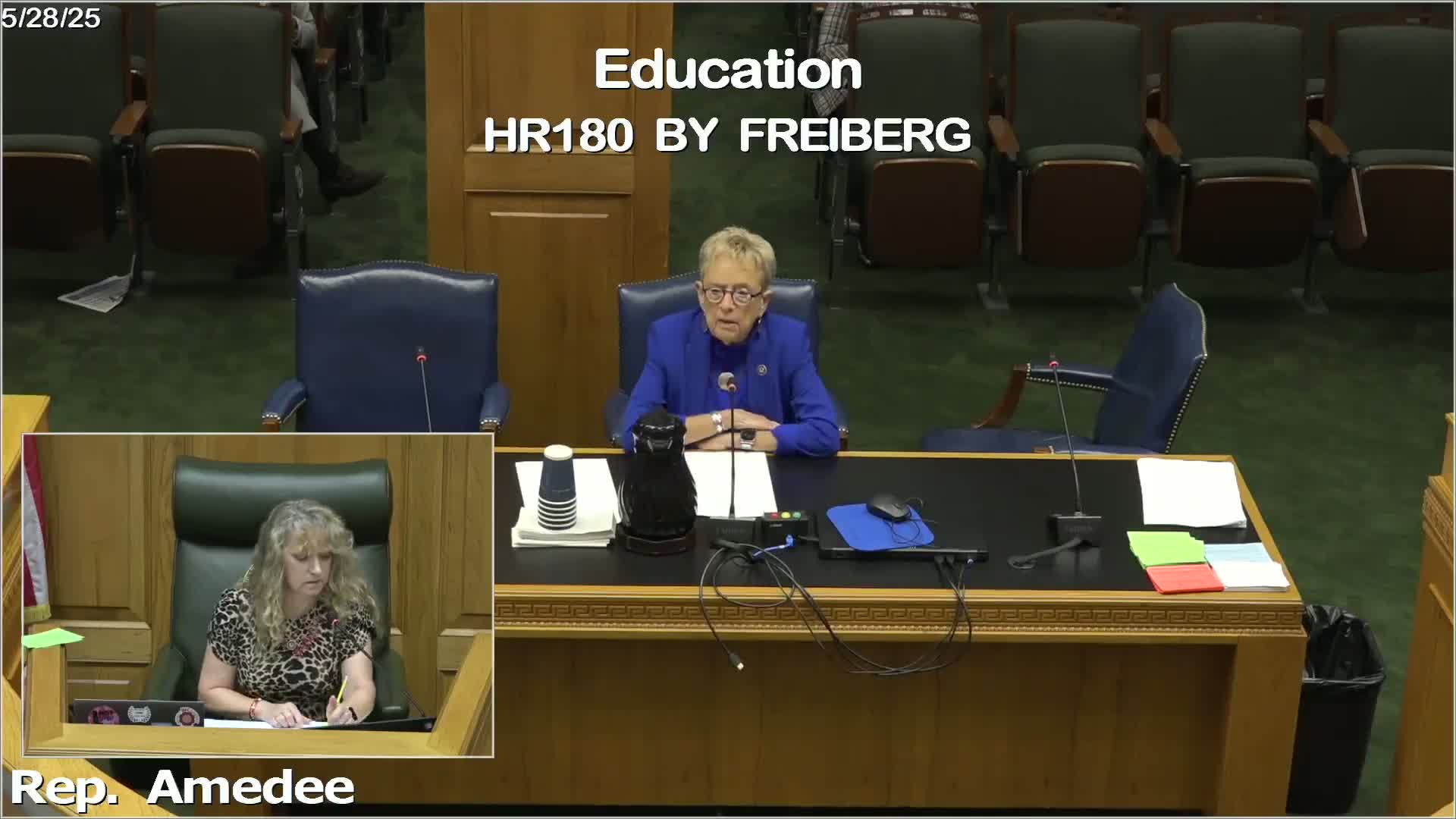
The House Education Committee voted to report House Resolution 180 favorably as amended, establishing a study group to examine truancy, attendance measures and the prospect of changing how student attendance figures into the public school funding formula.
Representative Brett Fryberg introduced the resolution as a vehicle to convene stakeholders — superintendents, counselors, child welfare officers and other education professionals — to investigate whether attendance should be linked to funding and how that might be implemented fairly across districts. The author said she had considered a direct funding tie but opted for a year-long study to gather data, avoid unintended consequences and review models used in other states.
Why it matters: Chronic absenteeism and truancy are repeatedly cited as drivers of lower academic outcomes. Authors and supporters told the committee that a careful study could identify best practices, data collection requirements and implementation steps (for example, the Texas approach of a single daily attendance snapshot) before lawmakers consider any change to funding mechanisms.
The committee adopted a one-page amendment to add a representative from the Louisiana School Boards Association to the study group roster. Testimony from Michael Falk of the Louisiana Association of School Superintendents urged careful attention to technical issues that can affect comparisons across districts, including uniform student information systems, point-in-time attendance procedures and resource disparities among districts that may affect a school’s capacity to address chronic absenteeism.
The committee reported the resolution favorably as amended and said the study group would meet publicly and provide a report that could inform potential statutory changes next session.