Get Full Government Meeting Transcripts, Videos, & Alerts Forever!
Get email alerts on the Market Update topic
No spam. Unsubscribe anytime.
Advisers: Tariff-driven imports and trade uncertainty dent GDP; bonds remain portfolio buffer
Summary
Speakers at a meeting reviewed a market overview and quarterly report, citing a 0.3% Q1 GDP contraction tied to import surges ahead of tariffs, persistent labor-market strength, and investor caution; presenters said bonds are built into portfolios to manage downside risk.
Investment advisers and meeting participants flagged trade-policy uncertainty and a tariff-driven rise in imports as key factors behind a first-quarter GDP contraction and recent market volatility, and emphasized that bonds remain a built-in risk-management tool in the portfolio.
"A little higher because of this. There's more bouncing going around, but I've noticed that the stock market is starting to get used to it," a commenter said, adding that when "he announced the 50% on Europe, it fell 1%. Stock market fell 1." The commenter described investors as taking a wait-and-see stance.
A staff member presenting handouts said, "No mic. So I have 2 handouts for you, market overview as well as the quarterly report," and noted the report is a snapshot "as of March."
Why it matters: The presenters tied the U.S. economy's Q1 contraction—reported in the meeting as a 0.3% decline—to companies front-loading imports ahead of anticipated tariffs, which raised net imports for the quarter. That trade-driven shift, panelists said, contributed to market volatility and investor caution.
Discussion highlights
- Economic indicators: The presenter summarized handout charts showing a 0.3% contraction in GDP for the first quarter and said net exports were down as companies "front running the tariffs" led to "nearly 5% more imports versus exports for the quarter." The presenter also noted past parallels to early 2022, when inflation spiked.
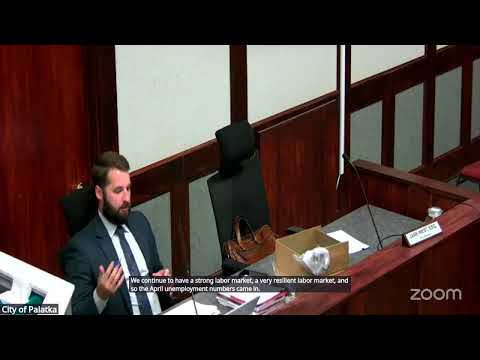
- Labor market: The presenter said April unemployment was 4.2% and reported payroll gains described in the transcript as "77, jobs" for April; the speaker also noted revisions to prior months but described three-month average payroll growth as still positive.
- Investor behavior and risk management: One commenter said investors are holding cash and waiting for clarity. The same commenter said, "we tell our clients this at Capital City, the risk management ... is built into the construction of your portfolio. And you have bonds in there." Another participant confirmed deferring to Burgess on portfolio design, saying, "I've deferred to Burgess because they're designing the portfolio."
- Market mechanics: Participants discussed how stocks and bonds can move inversely; as one commenter put it, "when stocks go down, bonds go up." Presenters stressed that the board has accepted the portfolio construction and its inherent risk-management features.
What was not decided or acted on: The transcript shows discussion and presentation of materials but no motions, votes, or formal decisions recorded during the excerpt. The staff member indicated the quarterly report is a March snapshot and provided the market overview handout for context.
Context and background
Presenters compared current indicators to early 2022, noting that inflation peaked in June 2022 at over 9% (as discussed in the meeting) and that companies previously imported heavily to hedge against price increases. Speakers also referenced U.S. political dynamics and investor preference for predictability when describing market reactions.
The participants named in the discussion included unnamed commenters and a staff member presenter; no full personal names or formal titles were provided in the transcript excerpt.
Next steps and follow-up
The presenter distributed the market overview and quarterly report and provided updated charts through the current week; no formal follow-up assignments or deadlines were recorded in the excerpt.