Get Full Government Meeting Transcripts, Videos, & Alerts Forever!
Get email alerts on the Judicial topic
No spam. Unsubscribe anytime.
Tennessee Supreme Court Hears Appeal on Sufficiency of Evidence in Forgery Case
Summary
At a Boys State oral argument, the Tennessee Supreme Court heard competing arguments over whether evidence (five checks, bank records and PayPal activity) was sufficient to sustain forgery convictions; justices questioned admissibility and the standard for reviewing bench-trial findings. The court took the case under submission.
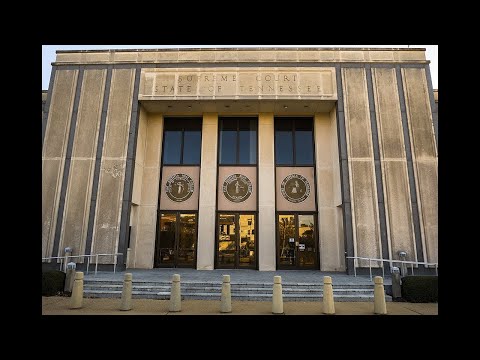
Tennessee Supreme Court justices on the bench at Boys State heard arguments over whether the evidence was sufficient to uphold forgery convictions tied to five checks and related electronic transactions.
At the center of the appeal was whether a judge acting as the fact finder could rationally conclude that the defendant cashed five checks without authorization. Defense attorney E. Kendall White IV said the evidence focused unfairly on character and unconnected transactions, arguing that "I don't understand how PayPal, which is not a forgery crime and has nothing to do with forging, is relevant to this matter, other than the character of the defendant." Prosecutor Davy Douglas told the court, "This court should affirm the judgment of the Tennessee Court of Criminal Appeals because the evidence is sufficient to sustain the defendant's convictions for forgery."
The dispute centers on several lines of evidence introduced at the bench trial: testimony by Lloyd Gordon, a co-owner of the checking account who said, "No, ma'am. I never wrote a check in my life," bank records showing the disputed withdrawals, a series of PayPal transactions (the record indicated more than 20), and the defendant's recorded statements to an investigator in which the defendant discussed a claimed $4,000 deposit and a $1,000 repayment. The state argued those items could be considered together to support an inference of unauthorized access and intent; the defense said gaps and delays in the record left too many reasonable doubts.
Justices pressed both sides on procedural and evidentiary limits. Justice Sarah Campbell noted that, "If your objection if the appropriate objection was not preserved, then yes, we do consider that evidence as part of our sufficiency analysis," referring to whether an objection under Tennessee Rule of Evidence 404(b) had been preserved. Counsel debated whether the PayPal records and checks were admitted in a way that allowed the Court to consider them on a sufficiency review. The defense also pointed to unusual trial-court steps: the trial judge initially returned a guilty verdict on Nov. 12, then withdrew that verdict and completed deliberations months later, a sequence defense counsel said created additional doubt about the court's weighing of evidence.
Both sides relied on circumstantial inferences. The state highlighted what it described as demonstrably false statements in the defendant's interview with Detective Joseph Cox (the defense disputed admissibility and weight), and emphasized post-mortem PayPal activity and checks cashed after co-account holder Rose Gordon's death. The defense stressed the account-holder dynamics — that Rose Gordon had primarily handled finances and that Lloyd Gordon was blind and largely deaf — and argued the record did not show a forgery in the statutory sense beyond reasonable doubt. Counsel also disagreed over whether evidence related to another charged but later dismissed co-defendant, Brandon (Brandon Clark), should inform the sufficiency analysis.
The trial judge had made written findings that the defendant was not credible and that the false statements were significant; the state asked the Supreme Court to draw all reasonable inferences in favor of the prosecution. The defense urged the court to view internal inconsistencies in key testimony and the absence from the record of certain bank statements and forensic traces for electronic transactions as reasons to reverse.
After more than an hour of argument and questioning about standards of review, evidentiary preservation, and what a bench trier may permissibly infer from circumstantial records, the justices concluded oral argument and said they would take the case under submission. "The case will be submitted," the court stated.