Get Full Government Meeting Transcripts, Videos, & Alerts Forever!
Get email alerts on the Employee Benefits topic
No spam. Unsubscribe anytime.
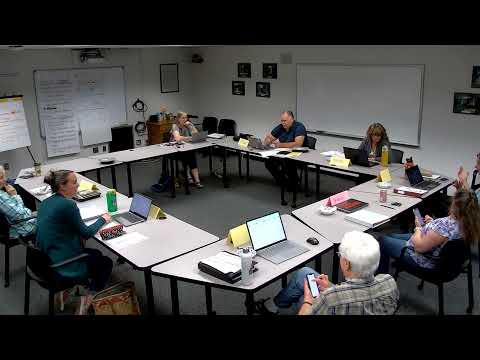
Moscow School District IBB forms study group to look at family insurance options after members raise cost concerns
Summary
After weeks of discussion about high family insurance costs, Moscow School District's IBB group voted to form a cross-representation task group to research funding models and survey benefited employees; the district reiterated its current $925-per-month contribution and warned there is no new discretionary funding to fully offset increases.
A working group of Moscow School District's Interest-Based Bargaining (IBB) team voted to form a task group to investigate alternative insurance funding models after members said many staff find family coverage unaffordable.
Why it matters: health benefits and how they are paid are a major part of total compensation, and any change to the district contribution or to plan design could affect employees differently and change the district's budget outlook.
District staff presented survey data and options. The district reported that, under the current negotiated structure, employees receive a district contribution intended for fringe benefits; the negotiated contribution cited by participants was $925 per month per full-time employee. The IBB discussion centered on whether the district should shift to a model that pays a percentage of a defined "basic plan" or add a targeted fringe stipend for employees who elect dependent or spouse coverage. Participants said that 58% of respondents to an MEA survey do not enroll spouses or children primarily because of cost, and that only 134 employees responded to that poll (out of roughly 320 employees on the district insurance), which complicates any firm conclusions about membership preferences.
Members debated three broad approaches: (1) keep the current flat-dollar stipend model and use the insurance committee to manage plan design, (2) shift to a negotiated percentage-of-premium model similar to Lewiston's negotiated agreement, or (3) maintain the district dollar contribution but add a separate, negotiated stipend or percentage specifically to offset family coverage. Board and association members also discussed the district's self-funded pool and the use of excess reserves to "buy down" premium increases in high-cost years.
On a motion brought during the meeting, participants voted to form a CAPS/working group ("caps group") to research and report back. The task group will include two IBB representatives, the district business manager, an experienced insurance-committee member, and one MEA representative. The group's charge includes: surveying benefited employees (targeting those on district plans), outlining at least three funding models (status quo, a differential stipend for family coverage, and a percentage-of-premium model), estimating first-year fiscal impacts, and summarizing pros and cons. The superintendent said he will prepare a brief white paper and supply state and local funding context to the group. The IBB timeline calls for a survey and draft findings early in the next school-year negotiation calendar; members tentatively scheduled a follow-up IBB discussion for the week of June 9'11 to review initial products.
District staff also reviewed the mechanics that constrain changes: under the negotiated agreement the board sets the dollar contribution (the stipend) and the insurance committee recommends plan design; changing whether the district pays, for example, 80% of a basic family premium would likely need to be negotiated and would change how the insurance committee and board share responsibilities. The business manager and insurance-committee members suggested any communications about options should be short, clear and accompanied by examples so employees can understand likely out-of-pocket effects.
What's next: the caps/working group will gather benchmark plans, run budget scenarios with the district's broker, and produce a short survey and talking points for insurance-committee representatives to distribute. The IBB will revisit the materials in the next scheduled meeting and use staff-provided estimates to refine negotiation positions.