Get Full Government Meeting Transcripts, Videos, & Alerts Forever!
Get email alerts on the Urban Growth Boundary Rps topic
No spam. Unsubscribe anytime.
Coos Bay staff present options for regional problem‑solving project to address urban growth boundary issues
Summary
City planners and consultant Jay Arnold reviewed options for using Oregon's regional problem‑solving (RPS) process and other tools to address areas already built at urban densities outside Coos Bay's urban growth boundary, asking the council for direction rather than seeking a formal vote.
Coos Bay planning staff and consultant Jay Arnold outlined options for an Oregon Regional Problem‑Solving (RPS) project and related Urban Growth Boundary (UGB) work, asking the City Council for direction on whether to proceed.
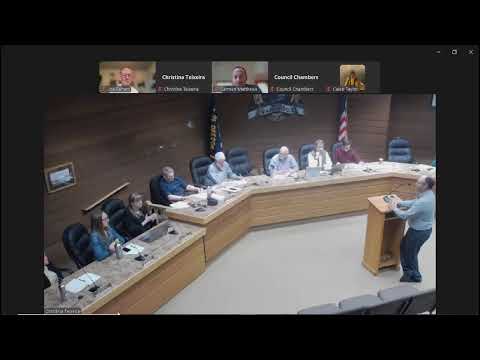
At a council meeting, Jay Arnold of CSA Planning told the council the RPS process "requires that the county and state jurisdictions all sign up to improvement to essentially do the planning work," and described four core problems the project would target: population accounting for areas already built to urban densities; how to count that population in forecasts; the resulting land‑need calculations; and limits on commercial development in some unincorporated communities.
The discussion matters because parts of Charleston, Bunker Hill and Millington sit outside Coos Bay's UGB but already contain urban‑scale housing and services. Arnold said those areas are partly served by sewer and fire districts and that the standard forecasting and land‑need processes do not capture the effect of "moving the line on the map" when already‑urban areas shift from county to city jurisdiction. He said some neighborhood densities are "north of 2 units to the acre already," and that Millington and similar communities are subject to the state's unincorporated communities rule, which the consultant described as limiting new commercial building size to roughly 8,000 square feet and a 10‑year limit of about 6,000 square feet in some places.
Arnold described five policy options presented to planning staff: keep existing regulations; run an RPS project focused on the southwest side; conduct a UGB evaluation for selected areas (Southwest, Southeast, Bunker Hill and exception areas such as Millington); or pursue an RPS/UGB combination with urban reserves for certain exception areas. He noted the southwest and southeast areas are functionally separate for services and that some areas already have sewer and water through the Charleston Sanitary District and the Bunker Hill Sanitary District.
No formal motion or vote took place during the presentation. Arnold asked the council for further direction on which option to pursue so the city and county can finalize an agreement to initiate an RPS project and submit it for state review. He cautioned that any outcome must comply with statewide planning goals, including Goal 14 (urbanization) and Goal 16 (estuary planning), and that the state review would determine which rules, if any, could be flagged for exceptions.
Council members asked clarifying questions about geographic scope and whether the city could limit an RPS or UGB evaluation to portions of the county; Arnold replied such targeted efforts are possible and said the process typically involves the city, county and other affected jurisdictions signing an agreement.
The presentation tied the technical planning discussion to local impacts: residents and property owners in affected neighborhoods could see changes in which jurisdiction provides services and which rules govern new development. Arnold noted that while some buildable land remains, much of the land in question is already developed, so the analysis differs from adding a large vacant parcel.
The council did not take a formal vote; the item remained at the direction/request stage pending council guidance to staff. Further steps identified by staff would include refining geographic scope, confirming sewer and fire service boundaries, and returning with a recommendation for whether to initiate an RPS project or pursue alternative UGB analyses.