Get Full Government Meeting Transcripts, Videos, & Alerts Forever!
Get email alerts on the School Health Policy topic
No spam. Unsubscribe anytime.
Policy subcommittee backs referral to allow trained school staff to administer medicines on field trips
Summary
The Fall River Policy Subcommittee voted to refer an amendment to Policy JCLB that would permit trained, unlicensed school personnel to administer certain medicines off school grounds after nurse approval and parental written authorization.
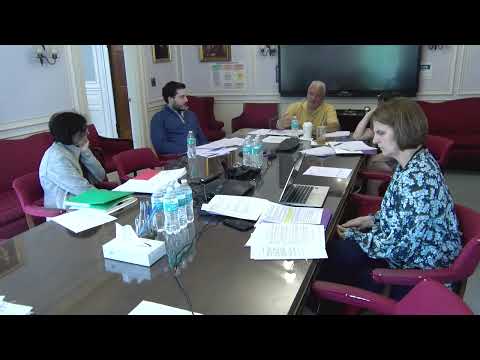
The Fall River School Committee Policy Subcommittee on May 27 referred a proposed amendment to Policy JCLB that would allow trained, unlicensed school staff to administer certain medications to students during off-site activities such as field trips.
The proposed change would reintroduce a state-approved “med delegation” process: after a school nurse approves delegation, designated staff must watch a training video and demonstrate competency before being allowed to carry and give a student’s medication on a trip, a district nurse said. The nurse described the policy as applying to oral medications and inhalers used off school grounds; insulin and some seizure medications would still require a licensed nurse.
The amendment specifies parental permission and prior notification of the designated staff member. The district nurse said the delegation application was discontinued years ago because of a state fee but that the district has since reapplied and the fee has been removed. The nurse told the committee that the Department of Public Health approves the delegation process and that the practice had previously existed in the district.
Committee members raised safety and operational questions, asking whether delegates would be a single designated chaperone who stayed near the student during the trip, how background checks and state eligibility are verified, and whether the training could be completed in time for summer programs. The nurse said the state requires district-level eligibility (adequate nursing staff and staffing data) and that the required training does not take long; she said she had already discussed offering training during professional development days.
A committee member asked that parental authorization be explicitly written in the policy; the nurse confirmed authorization is written. After discussion, a motion to refer the amendment to the full committee as a first reading was placed and recorded; committee members said the full committee could waive additional readings and finalize the policy before the next school year.
The subcommittee discussion distinguished between discussion (questions about implementation and summer-program timing), direction (the nurse will pursue training opportunities if referred), and formal action (the referral to the full committee). No new practices were implemented at the meeting; the referral starts the formal review process at the full committee level.