Get Full Government Meeting Transcripts, Videos, & Alerts Forever!
Get email alerts on the Urban Forestry topic
No spam. Unsubscribe anytime.
Committee moves to update street-tree list; members suggest removing ash trees amid emerald ash borer risk
Summary
Committee members discussed updating the street-tree list and differentiating planter-strip species; staff recommended removing ash from recommended street trees because of emerald ash borer risk and flagged three failing trees in Sankey Park for removal and replanting.
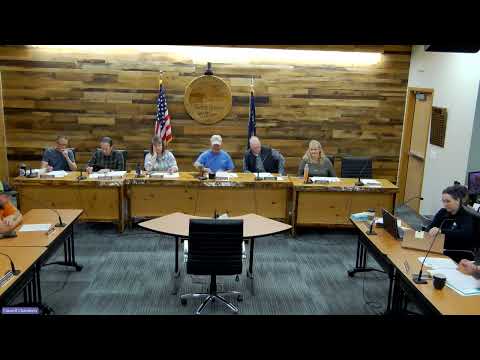
Sweet Home — On May 21 the Park and Tree Committee discussed revising the city’s street-tree list, improving the tree-inventory map, and removing ash species from recommended planting lists because of emerald ash borer (EAB) concerns.
Staff said an updated, categorized street-tree list would help developers and residents choose appropriate species for planter strips and other planting locations. A landscape architect working with a local subdivision requested guidance on species for planter strips, prompting the committee to consider separate lists for narrow planter strips versus larger planting areas.
Committee members said the city’s tree inventory is already in the cloud and covers parks and main streets; staff offered to generate targeted reports for specific neighborhoods. Staff also agreed to update the recommended species list based on recent plantings and lessons learned since the last formal list was drafted.
Emerald ash borer and tree removals
Several committee members urged removing ash trees from the recommended list because of the risk from emerald ash borer. Staff said they have identified three ash trees in Sankey Park believed to be failing and said the committee should plan for removal and replanting with alternative native species such as white oak.
Next steps
Staff and committee members said they will (1) update the street-tree list and classify species by appropriate planting strip width; (2) confirm access to and generate neighborhood-specific reports from the existing tree inventory; and (3) obtain cost estimates for removing and replacing the identified failing trees in Sankey Park.