Get Full Government Meeting Transcripts, Videos, & Alerts Forever!
Get email alerts on the Wastewater Budget topic
No spam. Unsubscribe anytime.
Coos Bay budget panel hears large wastewater capital and permit costs; rate consultant recommends 7.5% sewer rate increase
Summary
Budget committee reviewed the Water Quality Division budget, which includes higher permitting costs tied to new NPDES permits, a multi-year capital improvement plan for aging pumps and equipment, SCADA/server upgrades after a cybersecurity breach, and a rate consultant—recommendation to raise sewer rates to 7.5% for fiscal 2027.
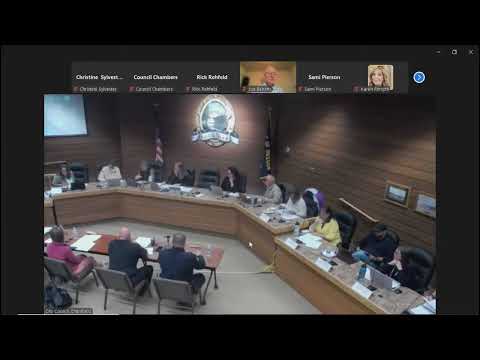
The City of Coos Bay Budget Committee on Tuesday reviewed the Water Quality Division's proposed Fund 3 budget and heard officials say aging equipment, new National Pollutant Discharge Elimination System permits and a recent cybersecurity incident are driving higher near-term costs.
Water Quality Superintendent Bridal Alotta told the committee the division manages 90 miles of sewer pipe, about 10 miles of force main, 50 miles of storm lines, 22 pump stations, two treatment plants and that the city resumed in-house operations and maintenance in July 2021. "We have 90 miles of sewer pipe, about 10 miles of of, force main sewer pipe, 50 miles of storm, and 2 treatment plants," she said. She described a recently completed condition assessment and a resulting 3–5 year capital improvement plan that increases capital outlay for above‑ground equipment replacement.
The nut graf: the committee was told the combination of new five‑year NPDES permit testing requirements, aging pumps and long parts lead times, and IT security investment will push Fund 3 costs higher, prompting staff and a rate consultant to recommend rate adjustments and phased capital spending.
Committee members were shown specific budget impacts. Nicole (City Manager/Finance Director) said the budget was prepared at 5.5% but that rate consultant Steve Donovan "would recommend a 7 and a half percent" increase to provide capacity for the Pump Station 27 loan and other contingencies; Nicole reported Donovan's advice without initiating a formal vote on a rate change. Alotta emphasized budgeting for wet winters after an unusually dry season and said some equipment replacement was cheaper than repair. She said permitting line items will rise to meet new NPDES testing requirements that come with the updated permits.
Plant 2 was identified as needing significant IT investment after an incident earlier this year. "Two months ago, Plant 2 was hacked and compromised," Alotta said; contractors were able to shut down and restore systems but recommended server and firewall upgrades. Committee members were told the SCADA/server program is a multi‑year effort estimated at roughly $400,000 in total, with about $180,000 proposed this year focused on servers and firewalls and the balance staged in subsequent years.
Committee discussion clarified how two satellite customers (Charleston Sanitary District and Bunker Hill) are charged: allocations are based on flow and load testing, not only flat meters, and those contributions can fluctuate depending on capital projects at those districts. Staff also noted Fund 29 (water quality capital fund) will carry major projects and emergency reserves.
No formal rate increase was adopted at the meeting; the committee received the recommendation and budget materials to forward to council. Staff were directed to reflect the new permit and capital needs in the proposed budget presented to council and to continue coordination with the rate consultant on affordability and debt capacity.
Ending: The Water Quality Division budget will advance to the City Council review with documentation of the new NPDES permit costs, the phased SCADA/server investment and the consultant's 7.5% rate recommendation for further consideration.