Get Full Government Meeting Transcripts, Videos, & Alerts Forever!
Get email alerts on the Infrastructure Resilience topic
No spam. Unsubscribe anytime.
Army Corps, Norfolk staff update council on coastal storm risk project; Freemason alignment and funding timeline draw concern
Summary
City staff and the U.S. Army Corps of Engineers briefed Norfolk City Council on progress and next steps for the Coastal Storm Risk Management (CSRM) project, focusing on Phase 1 design, expected 30% design milestone in early 2026, funding constraints and neighborhood opposition to a Freemason alignment.
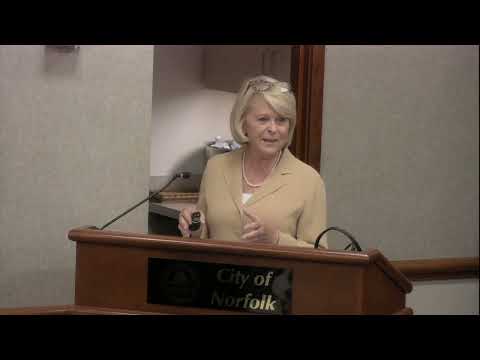
Deputy City Manager Doug Beaver and U.S. Army Corps of Engineers Acting Deputy District Engineer Keith Lockwood updated Norfolk City Council on May 20 about the Coastal Storm Risk Management (CSRM) project and the phase‑by‑phase design timeline for structural and nonstructural flood protections.
Beaver and Lockwood said design work is advancing on Phase 1 (subdivided into multiple subphases), with the Army Corps scheduling a detailed design review this summer and a target to complete a 30% design for key segments in early 2026. Lockwood told council, “we're planning on having that up to the 30% design in early 2026.”
Why this matters: the CSRM project is intended to reduce coastal storm flooding in multiple Norfolk neighborhoods through a mix of structural measures (flood walls, pump stations, surge barriers) and voluntary nonstructural programs for properties that do not qualify for structural protection. Council members pressed the Corps and city staff about a specific, authorized alignment of Phase 1c through the Freemason area; several council members said they oppose that alignment and asked how soon the team can evaluate an “over‑the‑water” alternative.
Project scope and next steps: Beaver described Phase 1 alpha as starting at the Berkley Bridge, following the shoreline toward Harbor Park and tying into protections near Chesterfield Heights. The city proposes to lead solicitation of a design‑build contract for a pump station and to leverage a $25,000,000 community flood preparedness fund grant from the Commonwealth of Virginia. Lockwood said work on Phases 2–4 will continue in parallel and that a Norfolk District feasibility study and post‑authorization change reports (referred to in the briefing as “packers”) could be required if the authorized alignment is materially revised.
Nonstructural program and timeline: staff said the voluntary nonstructural program pre‑identified just under 1,000 properties as “preeligible” in the feasibility study; a public dashboard lets residents check eligibility. The Corps also said that if design reviews reveal “showstoppers” — constructability, major utility conflicts, or subsurface conditions — the team can pivot before reaching 30% design rather than completing a design that would later require a costly change.
Council concerns and funding questions: Councilwoman Doyle (stated publicly during the meeting) said she does not support “the current alignment that it has right now going through Freemason” and favors the over‑water alternative; she urged the team to identify any showstoppers early. Other council members asked when a post‑authorization change report could be requested, and Corps staff said such a request would need a formal city submission and additional federal funding. Beaver and Corps staff said they will continue to brief the council and hold community meetings; the Corps said the general reevaluation report for the Southside and Willoughby communities was not funded in the FY25 work plan but that the district has expressed the capability request for FY26 and will continue to pursue funding in future work plans.
Community engagement and next actions: staff described ongoing outreach including community open houses (“community corners”), pop‑up events and meetings every 90 days with Southside community leaders. The team plans an industry day later in the summer for contractors and will post updates on resilientNorfolk.com. Multiple council members asked staff to prioritize design and community‑facing explanations of technical terms (for example, “showstopper” and “shoofly”) so residents can follow design decisions.
Ending: The Corps and city staff said they will return with updated schedules, potential alternatives and cost comparisons when design milestones are reached; no formal vote or authorization change occurred at the May 20 work session.