Get Full Government Meeting Transcripts, Videos, & Alerts Forever!
Get email alerts on the Parks And Recreation topic
No spam. Unsubscribe anytime.
Rowlett council opens broad review of parks rules, agrees on 11 p.m. closing time
Summary
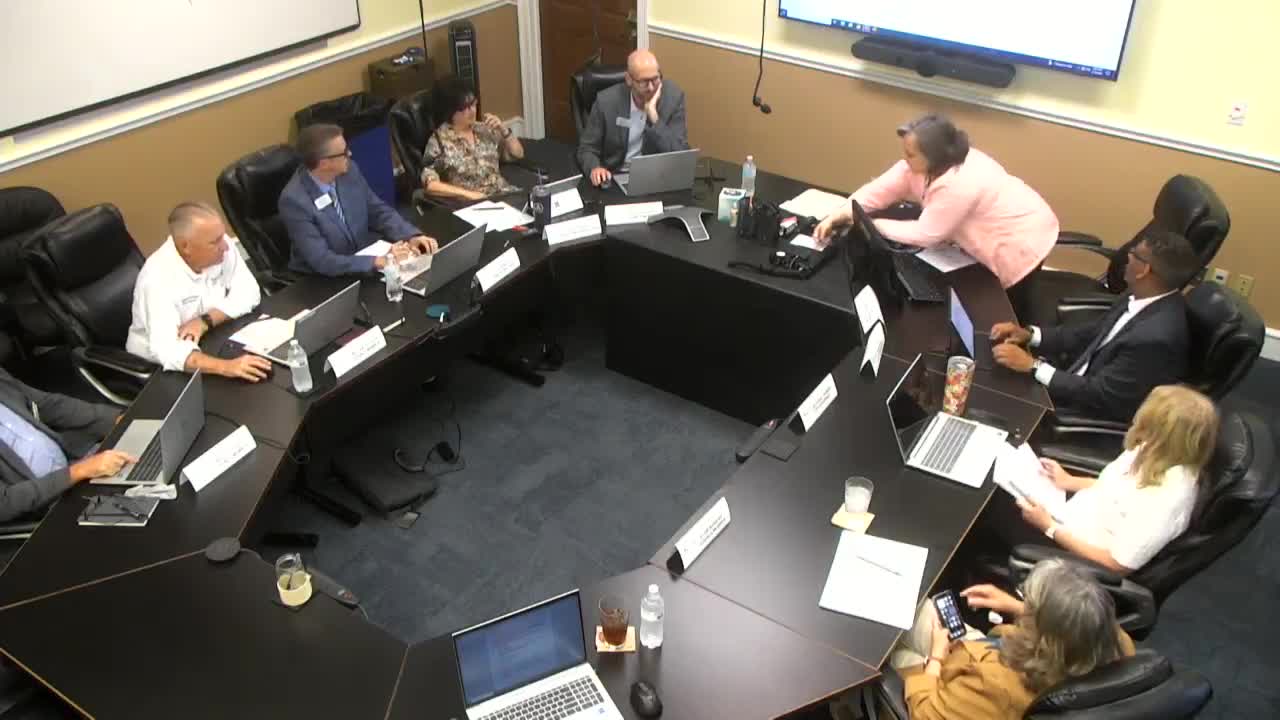
Deputy Mayor Pro Tem Schindler led a work‑session discussion of proposed revisions to Rowlett’s parks rules on Monday, May 19, asking staff and council members to identify ambiguous provisions and to route recommended changes to the Parks Advisory Board before any ordinance is drafted.
Deputy Mayor Pro Tem Schindler led a work‑session discussion of proposed revisions to Rowlett’s parks rules on Monday, May 19, asking staff and council members to identify ambiguous provisions and to route recommended changes to the Parks Advisory Board before any ordinance is drafted.
The discussion grew from complaints about watercraft launches at Paddle Point Park and a review of the parks rules and regulations that were last substantially revised in 2009 (the presenter noted initial adoption in February 1999 and a later revision in February 2009). Schindler said the original concern was “the jet ski launches at PaddlePoint Park,” and urged the council to consider whether launches of personal watercraft or other motorized craft should be restricted from park property or specifically designated areas.
Council members discussed how some rules apply to park land while lake use is controlled by other authorities. A council member observed that Lake Ray Hubbard usage and wake enforcement may require action by Dallas or other agencies and that changing local park rules alone might not stop motorized craft on the water. The council noted a related ordinance section (cited in the discussion as section 42‑132) that states boats must be launched only at designated boat‑launching points; speakers said that provision applies to Lake Ray Hubbard.
The review covered multiple specific code sections and operational issues:
- Archery (discussed as section 42‑84): Council members agreed the current language (“except in areas specifically designated for such”) should be clarified and to add an explicit reference to arrows so permitted lessons or designated ranges are clearly allowed. Pecan Road Park was cited as a location that has hosted archery lessons.
- Grilling and open flame controls (section discussed as 42‑87): Members noted more portable propane stoves and tabletop grills are now in use and discussed limiting grills to permanent, concrete‑mounted units or otherwise specifying where portable units may be used to reduce fire and obstruction risks. No change was adopted at the meeting; the council directed staff to gather feedback from the Parks Advisory Board before recommending infrastructure changes.
- Drones and radio‑controlled aircraft (section discussed as 42‑88): Council members favored a targeted approach—allowing certain small recreational drones in designated park areas while leaving other parks for RC‑aircraft use. The council asked staff to research how peer cities regulate drones, and a council member volunteered to contact the local RC flying club for input. Schindler specifically proposed allowing drones below 249 grams for general use and requiring licensed operators for heavier aircraft as one possible approach to consider.
- Horses and trail language (section discussed as 42‑93): Members flagged ambiguous wording about “designated driveways, parking lots, and bridle paths” and decided to leave the provision intact for enforcement clarity while asking staff to consider rephrasing to reduce ambiguity about where horses are permitted.
- Park hours and signage: Council members agreed on a uniform closing time of 11 p.m. for all parks to reduce enforcement confusion; they also asked staff to continue improving signage and the accuracy of QR code links that point to park rules (staff reported larger signs and QR fixes had recently been installed in response to prior inaccuracies).
- Gathering permits and special events: Members asked staff to clarify language that now reads “gatherings which will attract more than 100 persons” and to make the intent clearer about what requires a special permit versus organized, permitted activities.
- Weapons provision: Council members identified a parks code paragraph (discussed as section 42‑107 in the packet) that conflicts with state preemption on weapons; staff was asked to note that conflict and consider removing or redrafting the section in consultation with the city attorney.
Council members and staff emphasized enforcement practicality: “If you have rules that you can’t enforce, that creates a situation where people feel like… the rules don’t matter,” Schindler said. Several members urged changes that are enforceable and requested the Parks Advisory Board review the recommended language before a formal ordinance is drafted.
Next steps: staff (Victoria) was asked to compile the council’s feedback, research how neighboring cities handle drones and RC aircraft, and meet with the Parks Advisory Board. One council member volunteered to contact the RC flying club to solicit their input. The council indicated these items will return for a subsequent work session after the Parks Advisory Board provides recommendations. No ordinance changes were adopted at the meeting.
Materials referenced at the meeting included the City’s existing parks rules and regulations (noted as last revised in 02/2009) and multiple numerical code citations discussed by council members. The council explicitly limited immediate action on infrastructure changes (for example, adding more permanent grills) pending further study and Parks Advisory Board input.