Get Full Government Meeting Transcripts, Videos, & Alerts Forever!
Get email alerts on the Fire District Fee topic
No spam. Unsubscribe anytime.
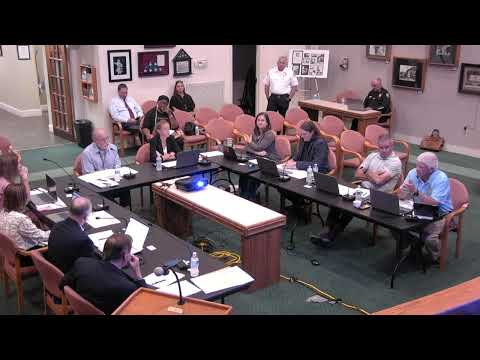
Oviedo council discusses fee‑funded fire district study; no vote to proceed
Summary
City staff proposed that the council authorize a technical study to set a fee for the existing Oviedo fire special assessment district to create a dedicated revenue stream for fire suppression and capital, but council members stopped short of approving the study and asked staff to bring more information if state legislative activity requires action.
City staff proposed that the council authorize a technical study to set a fee for the existing Oviedo fire special assessment district to create a dedicated revenue stream for fire suppression and capital, but council members stopped short of approving the study and asked staff to bring more information if state legislative activity requires action.
Why it matters: a fee‑funded fire district could create a dedicated source to pay for fire suppression and capital costs and potentially offset some ad valorem funding, but staff said the fee would not be allowed to fund ambulance/paramedic services and could not fully replace property tax revenue.
At a work session the staff presentation noted the city previously created a fire special assessment district but never funded it. “We thought we would see if there's interest in doing the technical study to determine a possible, fire impact a fire district fee,” a city staff member said. The staff member described the study as an intensive process requiring an RFP and data work from the fire department; the last study took about six to eight months, and staff estimated a new study would likely be a complete, fresh analysis.
Staff described the study’s likely scope: evaluate methodology options (staff said consultants previously proposed about six different methods), calculate an appropriate fee, and determine which fire functions could be funded. The staff member said a fee could fund fire suppression, operations and capital, but that emergency ambulance/paramedic services generally could not be funded through the fee method used in the previous exercise. Council members sought clarity: one councilmember asked whether a millage approach could fund the district instead; staff replied that the city cannot create a separate millage for the district like the county’s MSTU and that any funding by millage would be part of the operating millage rather than a separate levy.
Questions from council focused on cost, timing and statewide uncertainty. Staff said a study would likely cost more than $100,000 and take six to eight months; it would require a consultant, an RFP and extensive data collection on calls and costs. Staff said that if the council moved forward the fee could be implemented on a schedule that would show on the TRIM (Truth in Millage) notice and could be in place by the October 1, 2026 implementation cycle, but that the city would have to start procurement and meet TRIM deadlines to hit that timetable.
Several council members said they were not ready to proceed now given uncertain state action on property‑tax proposals and consumption of staff time and money for the study. “I don't get the feeling that there is really a plan,” one councilmember said, noting uncertainty in Tallahassee about how the state would restructure local funding. Another councilmember asked whether the fee, if adopted, would permit a millage reduction and staff said any millage offset would not be dollar‑for‑dollar and the fee would not completely replace ad valorem revenue.
No formal motion or vote was recorded. Staff characterized the request as a preliminary inquiry to see whether the council wanted to authorize the study and said it would not start procurement if the council was not interested. Councilmembers suggested revisiting the option later in the year if the state legislature produces changes that materially affect local revenue.
Less‑critical details: staff said the existing district would likely need ordinance updates to account for annexations and that the underlying data for a new study should be current because older data would require starting a fresh analysis.
Next steps: no study was authorized at the session; staff said it will revisit the idea if legislative action or a council directive creates a need to pursue the fee and can return with a scope and estimated cost if requested.