Get Full Government Meeting Transcripts, Videos, & Alerts Forever!
Get email alerts on the Emergency Management topic
No spam. Unsubscribe anytime.
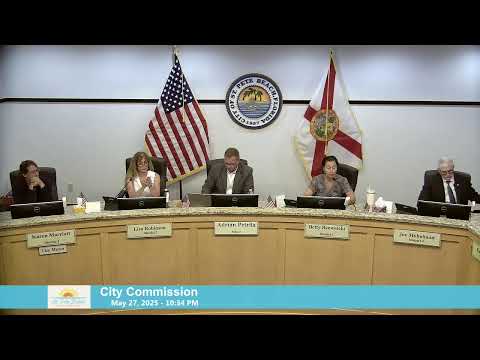
St. Pete Beach reviews hurricane after-action report, advances damage-assessment plan
Summary
City staff presented after-action findings from last year’s storms, proposed pre-storm procurement, improved communications, and a new Substantial Damage Administrative Procedures (SDAP) to speed damage assessment and recovery.
St. Pete Beach officials on Tuesday outlined lessons learned from last year’s storms and described steps the city is taking to speed response and recovery before this hurricane season.
City staff said the after-action work focused on internal department debriefs and a recovery task force of residents and business owners; the central aims are clearer communications, streamlined procurement for pre‑contracted services, and a new substantial damage administrative procedures plan to standardize post‑storm damage assessments.
Assistant City Manager Adam Poyer told the commission that departments used SWOT analyses to identify shortfalls in procurement, resource management, communications and staffing and that the fire department led consolidation of those findings. He said the city will pre‑issue more RFPs/RFQs for items such as debris removal, temporary facilities and food service to shorten procurement timelines after a storm. Poyer said the city also plans tabletop drills with Pinellas County Emergency Management and expanded ICS training for staff ahead of the season.
Community Development Director Laura Canary described the Substantial Damage Administrative Procedures plan — the SDAP — the city has begun drafting using a FEMA template. Canary said the city purchased a Forerunner substantial‑damage estimator software with a public GIS interface to make damage assessments more transparent and to allow residents to view color‑coded damage layers during recovery. The SDAP, she said, will cover pre‑disaster planning, immediate post‑disaster coordination, damage assessment methods and appeals and will be presented to the commission as an informational item during later meetings.
Commissioners pressed staff on where the city’s “master SOP” or comprehensive emergency plan will reside and how continuity will be preserved across leadership changes. Poyer said the Comprehensive Emergency Management Plan (CEMP) is the city’s overarching SOP and that each department is expected to maintain department‑level continuity of operations plans tied to the CEMP. He said the city will review plans annually and run exercises to eliminate single points of failure.
Several commissioners raised communication failures during the prior storms, noting county messaging sometimes conflicted with local messages about beach openings and bridge access. Poyer said the county is re‑vising meeting cadences and message coordination; staff said they will expand text messaging options and other channels and will share planned communication improvements with commissioners.
The commission directed continued work on the SDAP, more pre‑storm contracting for critical post‑storm services, and regular tabletop exercises. Staff said many after‑action tasks are still in process and that some items are contingent on county or state partners and further after‑action findings.
Ending: Staff said they will bring a draft SDAP and the Forerunner tool demonstration to the commission once documents are in a form the city attorney and departments can adopt. The commission scheduled tabletop drills with county partners and said it expects periodic updates as the city refines its emergency operations plans.