Get Full Government Meeting Transcripts, Videos, & Alerts Forever!
Get email alerts on the Trails And Recreation topic
No spam. Unsubscribe anytime.
Troy Council Approves Parcel Swap to Secure 10 Acres of Green Space and Close Trail Gap
Summary
Council approved a land exchange with a private owner that would preserve nearly 10 acres of green space and complete a long‑planned trail connection to Long Lake, with design and funding work planned before construction.
Troy City Council on May 19 approved a proposal to exchange city parcels for privately owned land to secure approximately 10 acres of green space and enable a continuous trails‑and‑pathways connection from existing segments north to Long Lake.
The agreement with developer Gary Abathera swaps several small city remnant parcels (four along John R. and others) in exchange for a roughly 10‑acre parcel he will convey to the city and preserve as green space. Public Works Director Kurt Bovancey summarized the decade‑long effort to complete the trail network and said the parcel swap resolves a key gap that had been blocked by prior land‑use changes involving the school district and other owners.
“What's being proposed is Mr. Abathera is willing to swap the City of Troy for approximately 10 acres and preserve that area as green space,” Bovancey said in his presentation. He described earlier segments of the pathway (Phase 1 and 2) and underlined that the new parcel would allow a safe, continuous route to Long Lake and to the planned 8‑foot pathway along Rochester Road once that road is widened.
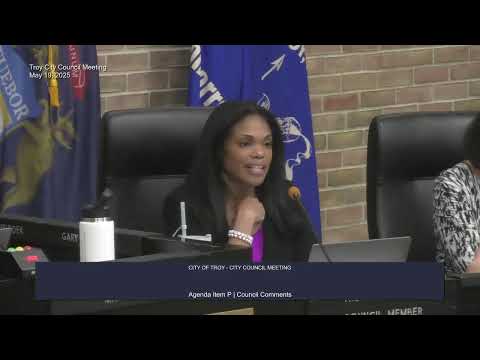
Councilmembers praised the negotiated swap as a practical, community‑driven solution. Councilmember Chamberlain Krianga said the exchange preserves green space residents have repeatedly requested in parks and recreation surveys and helps interconnect multiple trail segments. Councilmember Hodorick noted the parcel exchange helps meet longstanding resident expectations after years of planning and public engagement.
Bovancey and staff noted next steps: pursue funding and design. The city will pursue federal Transportation Alternatives Program (TAP) grant opportunities (typical funding structure is 80/20 state/local match) and also consider including the project in a future bond, which could make construction funding available in fiscal year 2027. Design work and grant preparation will proceed pending funding decisions.
The council voted to approve the exchange and directed staff to continue grant and design work; the motion passed unanimously. The deed conveying the 10‑acre parcel to the city will contain restrictions aimed at preserving the parcel in a natural state; one of the larger remnant parcels the city will convey back will be deed‑restricted to single‑family residential uses to avoid future subdivision that might compromise the green‑space trade.
Councilmembers said they will continue outreach to neighbors and pursue engineering and permitting; wetland avoidance and route alignment were noted as design considerations. The project remains contingent on grant or bond funding before construction procurement.