Get Full Government Meeting Transcripts, Videos, & Alerts Forever!
Get email alerts on the School Budget Transportation topic
No spam. Unsubscribe anytime.
Fall River schools say transportation costs pushed operating request higher; redistricting and pre‑K growth cited
Summary
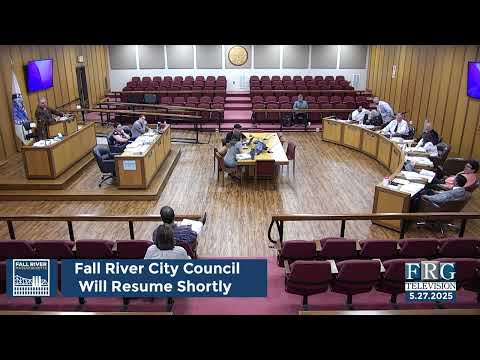
Fall River Public Schools Superintendent Tracy Curley and Chief Financial Officer Kevin Almeda presented the district’s FY26 operating budget to the City Council Committee of Finance on May 27 and said transportation pressures and enrollment shifts have pushed the district’s request higher.
Fall River Public Schools Superintendent Tracy Curley and Chief Financial Officer Kevin Almeda presented the school district’s FY26 operating budget and answered questions from the City Council Committee of Finance on May 27.
Curley said the district’s operating budget presented in April was roughly $274 million and that the city’s contribution reflected about a $2.5 million increase over last year. She told the council the transportation line in the budget is about $13.1 million; the school committee voted to retain current policy language after state guidance required measuring walking distance along city blocks rather than “as the crow flies,” and Curley said that vote — which rejected proposed language changes that would have limited new eligibilities — increased transportation needs by an estimated $750,000.
Curley said the policy language remains: elementary students outside one mile and secondary students outside one and a half miles are eligible for transportation, but the way distance is measured has changed. She said the board discussed “grandfathering” students but voted to keep the current policy text; applying the new measurement standard to the existing language expands the number of eligible students and would require additional buses, she said.
The superintendent and CFO also discussed an “unassigned school budget” of $500,000 the school committee approved to fund positions or needs identified after budget submission; Curley said roughly $117,000 remained unassigned after committee allocations. She said some requested positions were treated as “wish‑list” enhancements and that the committee prioritized certain additions (for example, some environmental or CTE roles) while leaving others unfunded.
Curley described growth in pre‑K enrollment (she said the district is roughly 100 students higher than a year earlier and currently has about 880 pre‑K‑age students in district programs) and noted space constraints. The district has rented space off site (Conley) for several pre‑K classrooms and is considering partnerships, including with Bristol Community College, to secure additional program space.
On redistricting, Curley said the district began a redistricting process mid‑year and is meeting weekly to examine scenarios intended to reduce long bus runs and better align neighborhood enrollment with school capacities. She said some schools have programmatic seats that draw students from across the city and that planners are considering whether to relocate programs or redraw lines to reduce transportation burdens.
Kevin Almeda answered questions on budget mechanics, saying the district’s increase in its operating request included a previously disclosed $750,000 transportation rise and that the transportation total has since increased by about $750,000 due to a school‑committee decision. He also said the district moved nearly 100 positions from grant funding into the FY25 operating budget but that he did not expect similar position movements for FY26.
Councilors pressed on transportation trends and long‑term sustainability; several said ongoing year‑over‑year growth in transportation costs is not sustainable and urged the district and city to prioritize redistricting, route consolidation and other changes. Curley and Almeda said those steps are underway and will be part of further planning this summer and into FY26.
The school department presentation set up detailed budget conversations to continue in subsequent meetings; no appropriation decisions were taken by the council that night.