Get Full Government Meeting Transcripts, Videos, & Alerts Forever!
Get email alerts on the Community Development topic
No spam. Unsubscribe anytime.
Holland council approves 2025–30 consolidated plan and 2025–26 CDBG action plan
Summary
The Holland City Council voted to adopt the five-year consolidated plan and the city2025262026 annual action plan for Community Development Block Grant funds, prioritizing home repairs and homelessness services.
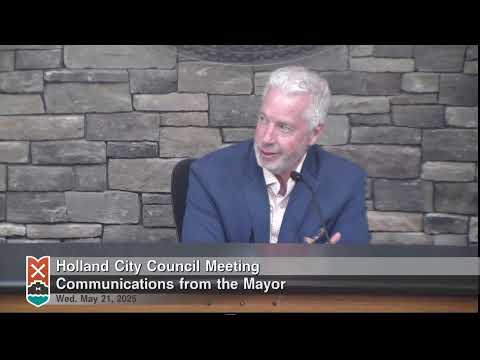
The Holland City Council on May 21 approved the city20252030 consolidated plan and the 202526262026 annual action plan for the Community Development Block Grant (CDBG), voting to adopt the documents after a public hearing and staff presentation.
City staff said the CDBG plan focuses most funding on the city27s existing home-repair program and preserves funds for public services aimed at homelessness prevention. Mark, community development staff, told the council that the grant "primary objective ... is the development of viable urban communities," and that all activities must principally benefit low- and moderate-income residents.
The plan guides how the city will spend federal CDBG funds administered by the U.S. Department of Housing and Urban Development over five years and sets the first-year (July 1 to June 30) allocations. Staff reported 54 people attended outreach meetings and 59 respondents completed an online survey; survey respondents ranked housing as the top priority and homelessness services as the leading use of the public-services cap.
City staff proposed maintaining a large share of funding for the home-repair program to respond quickly to urgent needs such as failing roofs, furnaces and sewer repairs. The staff presentation said the home-repair program typically uses about 65% of the city27s CDBG allocation; staff proposed roughly 12% of next year27s funds for public services, approximately $41,000, and a placeholder of $50,000 in the five-year plan for potential public-infrastructure work if funds become available later in the multi-year period.
Councilmembers asked how staff triages repair funds and whether the people most in need know about the program. Mark said the program scales assistance by household income (larger percentages of project cost covered for lower-income bands) and that the city partners with organizations such as HomeCor to fill remaining gaps. He said code-enforcement referrals and 2-1-1 are regular sources of client referrals.
After the public hearing produced no comments, Councilmember Corbin moved to approve the consolidated plan and annual action plan; Councilmember Shea supported the motion. A roll-call vote recorded yes votes from Rowan, Shea, Freeman, Corbin and Mayor Nathan Box; the motion carried.
The approved plan takes effect with the next program year beginning July 1, 2025, and directs staff to proceed with the subrecipient selection process for public-service funds in accordance with the priorities in the plan.