Get Full Government Meeting Transcripts, Videos, & Alerts Forever!
Get email alerts on the Dangerous Buildings Demolition topic
No spam. Unsubscribe anytime.
Detroit panel sends dozens of properties back for repairs, withdraws some from demolition list and approves select demolitions
Summary
A Detroit building-safety hearing on dangerous and fire-damaged properties resulted in a mix of withdrawals, demolition orders and continuances; owners were frequently given until June 16 to show repairs and to submit photos and permits to city inspectors.
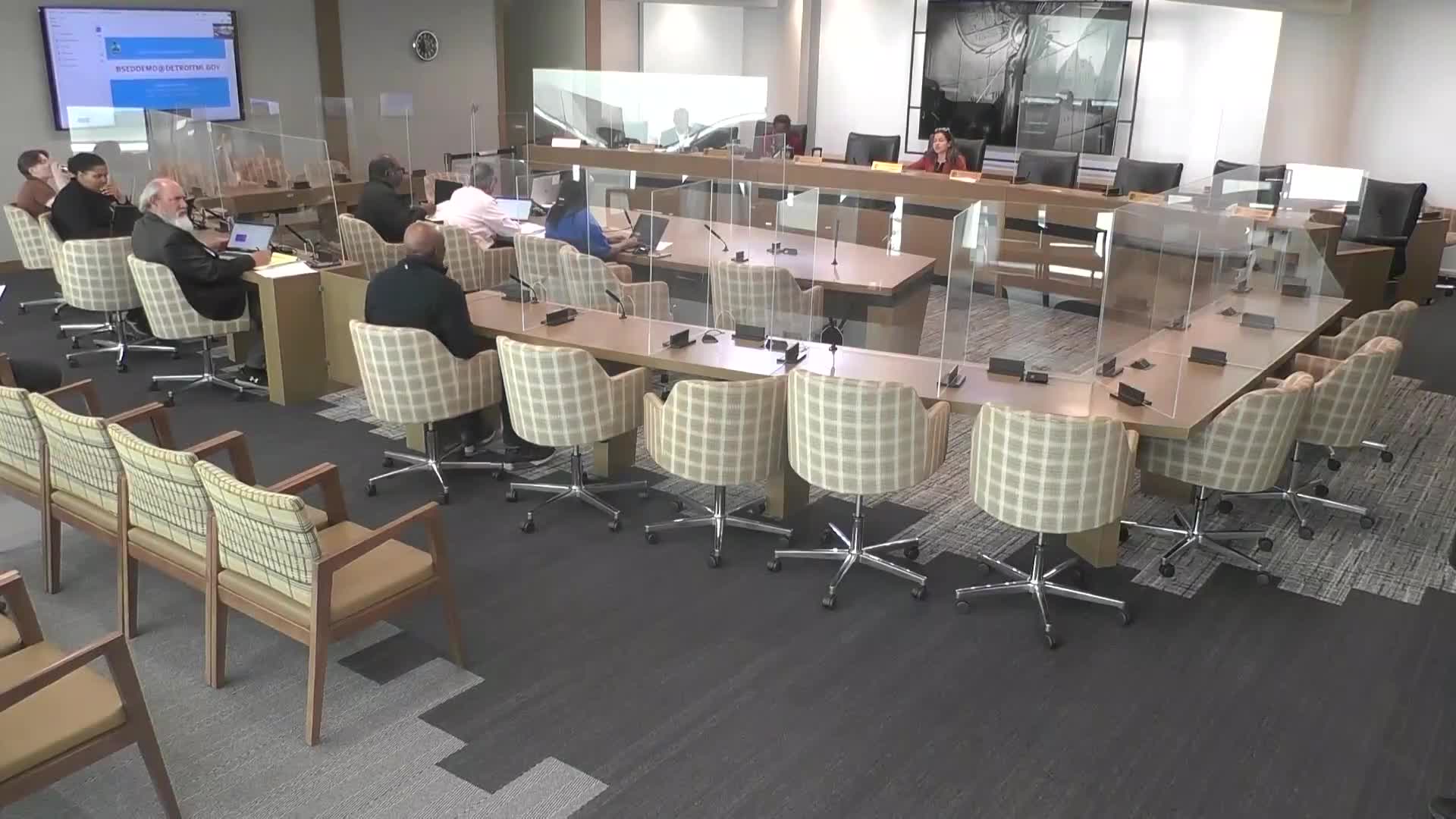
A Detroit committee hearing on dangerous and fire‑damaged buildings on May (hearing date) resulted in a flurry of decisions: several properties were withdrawn from the demolition list after owners demonstrated work, some were ordered demolished, and many were sent back to city inspectors with a June 16 deadline to show repairs.
The hearing, chaired by the committee chair, focused on whether individual properties were dangerous to the neighborhood and whether owners were taking measurable steps to secure or repair them. “This is a race that we want you to win,” the committee chair told owners who said they were pursuing repairs or demolition on their own.
Why it matters: properties judged unsafe can be demolished by the city and placed as liens on the owner’s tax records; conversely, owners who secure openings, remove debris and provide permit documentation can avoid city demolition and retain the site. Inspectors repeatedly urged owners to register vacant properties, apply for permits for major repairs and email before/after photos to the department so staff can re‑inspect.
Top outcomes from the hearing included withdrawals from the demolition list for owners who demonstrated work: 1845 Twentieth Street and 12821 Schaefer were formally withdrawn after owners showed repairs and permits or promised follow‑up. Owners who said they had contractors, permits in progress or had boarded and tarped roofs were generally given time and told to send photos to the city’s building unit for re‑inspection.
At the same time, committee members approved demolition orders in cases where inspectors found extensive, continuing hazards. The hearing record shows the panel agreed to demolish 5093 Underwood after staff reported the building remained open to elements and unsafe. For other addresses the panel voted to return the case to building inspectors so staff could verify repairs and permits before the next hearing.
Inspectors repeatedly described the most common compliance items: secure all window and door openings; board or tarp exposed roof areas pending permanent repair; remove trash and overgrowth; and submit photographs of all four sides of the property to the department email listed by staff. Inspector Patel, summarizing several inspections, said the typical findings were “open to trespass and elements,” missing meters or collapsed roofs and “yard not maintained.”
Owners raised practical obstacles. Linda Jarrell, who identified herself as the owner of 12837 Wade Street, said she purchased the property from Wayne County in September 2024 and told the panel, “I believe they should have not been sold. It was condemned and unrepairable.” The committee did not change code enforcement law but returned the case to staff for further coordination and gave Jarrell time to seek county remedies.
Several owners asked about cost and process. The chair advised that major roof or structural repairs require permits and that temporary tarps are acceptable short‑term measures but are not permanent solutions. Owners were told that larger roof projects will require permits; tarps can be used while a permit application is pending. The panel urged owners to register vacant properties when they will remain unoccupied to show a responsible party is on record.
On practical next steps, staff asked owners to email photos and documentation to the building unit (staff displayed the departmental email during the hearing) and to schedule or pull permits where indicated. Multiple property owners were explicitly given until June 16 to complete immediate securing actions (boardings, tarps, trash removal) and to provide photo evidence before the panel’s next scheduled hearing.
The hearing also highlighted neighborhood and administrative friction points: owners reported repeated illegal dumping on newly acquired parcels and slow pickup of bulk items under the city’s contracts; others said they bought properties at county auctions without a full view of structural damage and sought help to contact Wayne County or the Detroit Land Bank over sale disclosures.
What’s next: properties will return to building inspectors for follow‑up and many will appear again at the committee’s hearing on June 16. Owners who complete the steps requested by staff and submit photos and permit documentation generally had properties removed from the demolition list; those who do not will face further enforcement or city‑initiated demolition with associated lien exposure.
The hearing record and decisions are administrative and based on city inspections; formal demolition work or lien placement will follow the city’s code processes and any required court steps.