Get Full Government Meeting Transcripts, Videos, & Alerts Forever!
Get email alerts on the Transportation Safety And Grants topic
No spam. Unsubscribe anytime.
Roswell committee adopts citywide safety action plan, approves Vision Zero resolution and moves to pursue federal and state safety grants
Summary
The Roswell committee approved a citywide safety action plan and a Vision Zero resolution, authorized staff to pursue Federal Highway Administration SS4A implementation grants that require a 20% local match, and approved submitting a GDOT LMIG application for up to $400,000 with a 30% local match.
The Roswell committee on May 27 approved a citywide safety action plan and adopted a Vision Zero resolution, and it authorized staff to pursue federal and state implementation funding to carry out traffic-calming and safety projects.
The committee approved the safety action plan and Vision Zero resolution on a motion by Councilmember David Johnson, seconded by Councilmember Sarah Beeson; the motion passed unanimously. The committee then endorsed staff pursuing U.S. Department of Transportation/Federal Highway Administration implementation grants under the Safe Streets and Roads for All (SS4A) program, and later approved submitting a Georgia Department of Transportation Local Maintenance and Improvement Grant (LMIG) application for up to $400,000 with a required 30% local match.
The safety action plan was produced with a $200,000 USDOT planning grant; staff said the $50,000 local match for the planning phase was paid by North Fulton CIB. "It's a requirement for future. Basically, we have to have the safety action plan to go after the stuff that you put on the ground," said Transportation staff Dana, who presented the items to the committee. The plan includes an analysis of existing conditions and crash trends focusing on fatalities and serious injuries, a consultant-generated list of the city's top priority locations (about 13), and a range of countermeasures from short-term low-cost changes to longer-term infrastructure projects.
Councilmember David Johnson said the plan validated locations staff already had identified. "A lot of the places that came up in the recommendations are places we are already looking to attack," Johnson said. He told the committee the plan's findings corroborated the city's internal data and ongoing projects.
On federal funding, staff described the SS4A implementation grants as competitive and sizable: awards range from about $2.5 million to $25 million and require a 20% local match. "If we go after $2.5 million, the local match would be about $500,000; at $25 million, the match would be about $5 million," Transportation staff Dana said. Staff told the committee they have identified potential local match sources and will refine project cost estimates if the committee endorses pursuing the grant; FHWA review of the plan is ongoing.
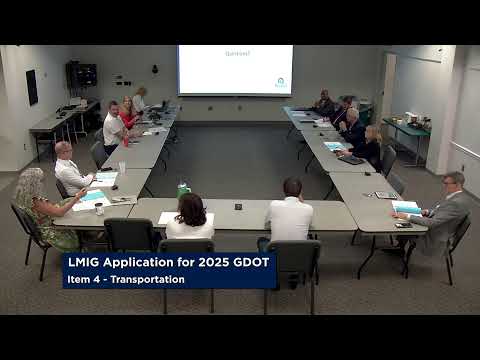
Separately, the committee approved applying for GDOT LMIG funding of up to $400,000 to support near-term safety improvements that staff said could be in place by the end of the year. "Once it's received by GDOT, those funds become immediately available to us," said Staff member Bennett, who presented the LMIG item. The LMIG award requires a 30% local match; city staff said $120,000 is available from the bicycle/pedestrian bond program to meet that match. Examples included better striping, raised pavement markers, rumble strips, rectangular rapid flashing beacons (RRFBs) and pedestrian hybrid beacons (PHBs) at high-demand crossings such as Riverside Drive and near Roswell High School.
All three related motions — adopting the safety action plan and Vision Zero resolution, endorsing pursuit of SS4A implementation funding, and submitting the GDOT LMIG application — passed unanimously at the committee meeting. Committee members and staff emphasized that the plan and the grants are intended to provide a toolbox of engineering and infrastructure options to reduce serious injuries and fatalities, and that larger implementation funding decisions would depend on competitive grant outcomes and the availability of required local matches.
The committee directed staff to finalize the plan documents, complete grant applications, and return to the full council for final approvals where required.