Get Full Government Meeting Transcripts, Videos, & Alerts Forever!
Get email alerts on the Language Access topic
No spam. Unsubscribe anytime.
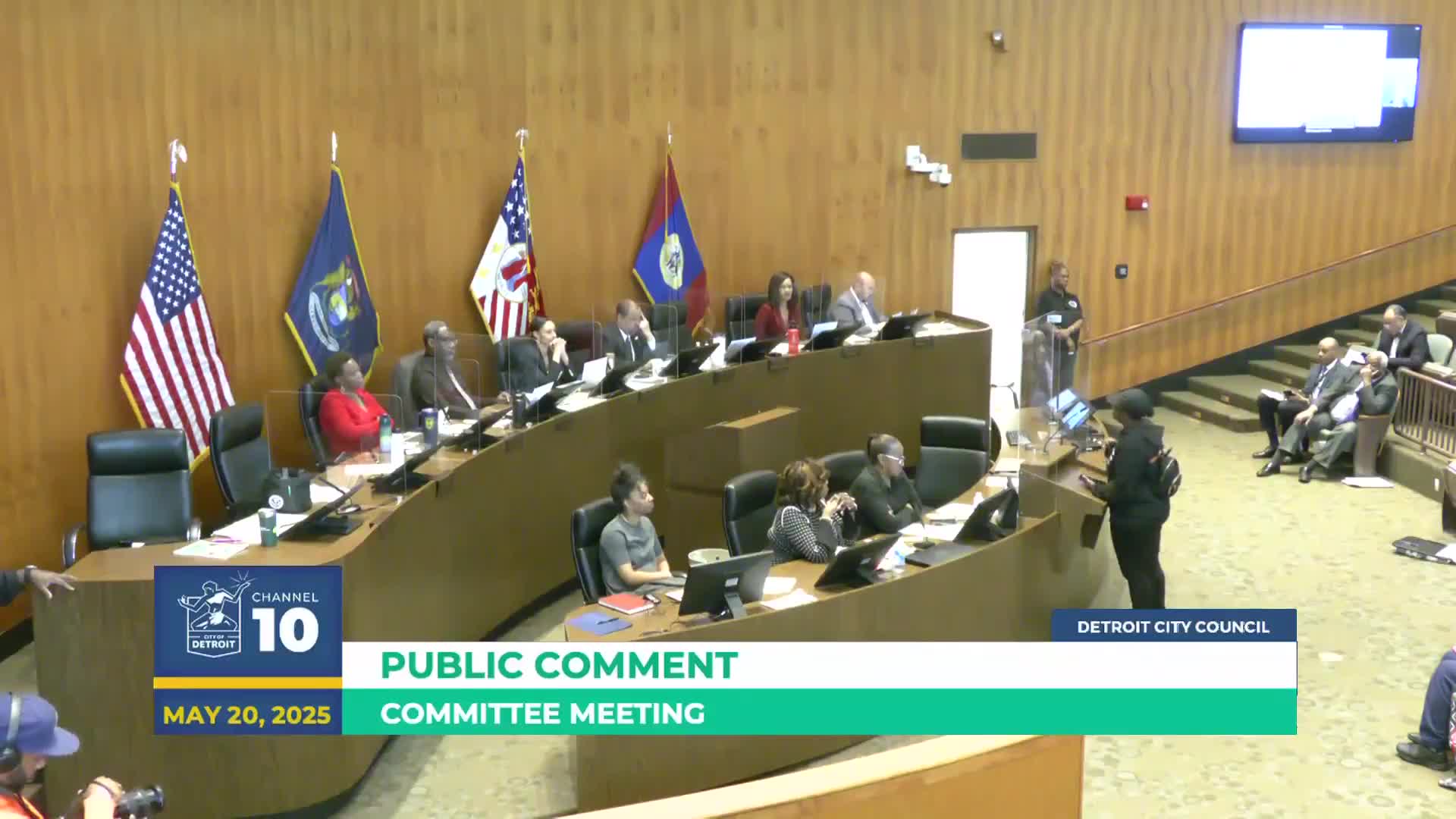
Detroit Council approves citywide language-access policy after debate over cost and timeline
Summary
The Detroit City Council voted to adopt a citywide Language Access Ordinance requiring departments to file plans and provide translation and interpretation for limited-English speakers; implementation timelines and potential fiscal costs were highlighted in committee debate.
The Detroit City Council on Tuesday approved a citywide Language Access Ordinance that requires city departments to prepare language-access plans, name a department liaison and make certain “vital” public documents available in other languages when requested.
The ordinance, introduced and carried by Councilmember Gabriela Santiago Romero, was amended in committee to extend the deadline for departments to file plans so the city can hire staff and stage implementation. Council members and city budget staff warned that translation obligations carry an indeterminate fiscal cost beyond the staff already budgeted for the city’s civil-rights office, CREO.
CREO Deputy Director Anthony Zander told the council the office already runs language services including 24/7 telephonic interpretation, video remote interpretation and contractor relationships able to handle hundreds of languages. “We do provide ASL, we have online interpretation services, and a contractor that can provide up to 350 different languages and dialects,” Zander said during the debate.
But the city’s budget office cautioned that the ordinance could trigger a larger translation workload when departments identify which documents qualify as “vital public documents” (for example, benefits applications, eligibility notices and written rights). Deputy Budget Director Johnny Johnson said those requirements create an “indeterminate negative fiscal impact” because some departments maintain many public-facing forms and annually changing materials such as tax tables and permit paperwork.
Councilmembers added implementation safeguards. The ordinance was amended so departments must submit plans within a longer, staged timeline tied to the fiscal year and to the new staff CREO expects to add: the committee extended the initial 60-day deadline to a later timeframe to allow hiring and coordination. The council also asked the chief financial officer’s office to produce a more detailed fiscal analysis of likely translation costs.
Councilmember Santiago Romero said the ordinance largely codifies current practice and creates accountability. “We are not reinventing the wheel here,” she said. “We’re simply asking that we codify what we’re already doing and hold the administration accountable.”
The ordinance passed on a roll call vote after the amended timeline was adopted; CREO and the budget office will continue coordination with departments to refine cost estimates and the staging plan.
Implementation and next steps include CREO-led department training, a public complaints process inside the human-rights chapter and annual reporting requirements so council can track progress and budgetary needs.