Get email alerts on the Insurance Costs topic
No spam. Unsubscribe anytime.
Casper faces insurance and workers’ compensation premium increases; staff explain drivers and mitigation
Summary
Risk staff and the city’s representative at the Wyoming Association of Risk Management said liability and workers’ compensation costs are rising because of higher repair costs, claims experience and broader market pressures; the city mitigated some increases by using pooled resources and investment income.
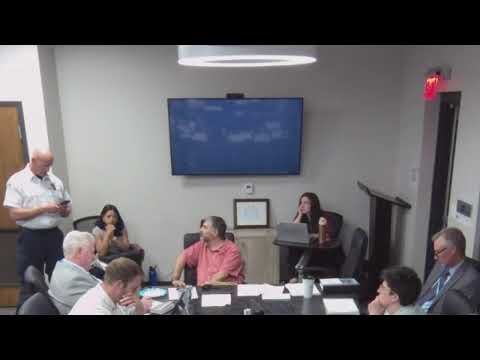
City risk staff and the city’s representative to the Wyoming Association of Risk Management (WARM) briefed council on insurance and workers’ compensation changes reflected in the FY26 draft.
The nut graf: staff said they originally faced larger premium increases but worked with the WARM pool and used investment earnings to offset underwritten rate rises; staff also said workforce‑services rate changes and prior, high‑cost claims pushed workers’ compensation calculations higher for the city.
Allison Ballard, the city’s recently hired risk manager, told council the city had been quoted significantly higher liability and property increases but ultimately achieved net premium increases closer to about 7% after WARM adjustments and use of investment earnings. "We got a net of about 7%," Ballard said, and explained that marketwide increases in replacement and repair costs have driven insurers’ pricing decisions.
On workers’ compensation, staff said a combination of high‑cost historical claims (including serious injury and a death) and statewide rate trends pushed the city’s experience factor upward. Staff said workforce services signaled average increases of roughly 6% across entities and that the city expects some high‑cost claims to fall off the rolling look‑back period, which should moderate rates over time. The city’s WARM board representative noted the pool is receiving new applicants as private insurers narrow market participation, and that WARM used investment returns to blunt premium growth for member governments.
Councilors asked for line‑item detail on which departments drove the largest increases and for a followup showing trends by department; staff agreed to provide that information to the council’s finance committee.
AI generated
The text on this page is AI generated. Summaries, highlights, analysis, and video transcripts are all produced from the original source material.
AI can make mistakes, so if you spot one, and we will fix it for everyone.
Note: the source content is unaltered by us. Any content source we link to, be it a video, an audio recording, or a document, is presented exactly as its publisher released it. That publisher is usually a government body, sometimes an individual official or another organisation.