Get Full Government Meeting Transcripts, Videos, & Alerts Forever!
Get email alerts on the Tax Budget topic
No spam. Unsubscribe anytime.
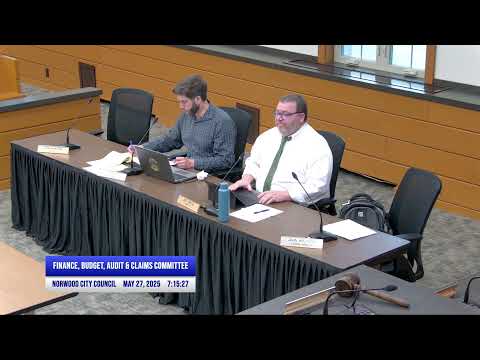
Norwood finance committee begins work on 2026 tax budget, aims for first reading June 10
Summary
The Norwood Finance, Claims, Budget and Audit Committee began drafting the 2026 tax budget, using figures from the city—s Financial Recovery Plan (FRP). Staff circulated a working spreadsheet, identified data and formula gaps, and set a tentative schedule to reach a first reading by June 10.
The Norwood Finance, Claims, Budget and Audit Committee on Tuesday began drafting the 2026 tax budget, with staff circulating a working spreadsheet that uses the Financial Recovery Plan as its initial revenue and expenditure source and the committee setting a tentative goal of a first reading at the June 10 council meeting.
On Saturday, Mary, a staff member, "sent everybody, the current version of the tax budget," and said she had uploaded the FRP and started populating the spreadsheet: "I uploaded the FRP, and I started copying and pasting in all the applicable tabs." Mary told the committee some revenue categories still need breakdowns and that Excel formulas linking multiple tabs are causing extra review work.
The committee discussed process and timing. Members noted the tax-budget instruction sheet requires public notice of the draft about 10 days before passage, which would put an approximate public-notice date in late June if the committee pursues a June 10 first reading. Committee members agreed staff should proceed by transposing existing FRP numbers into the required exhibits for the county submission and then refine revenue estimates as new data arrives.
Committee members and staff described how the spreadsheet is organized: exhibits in the PDF submission align with labeled tabs in the workbook, and color coding distinguishes material that will be printed and submitted to the county from internal input sheets that flow into the printed exhibits. Mary said she focused first on expenditures because those tabs and formulas were easier to trace, while revenues remain a work in progress because the FRP provides totals without full category breakdowns.
Brett Schwartz, a member of the Financial Recovery Plan Planning Commission, joined early-stage conversations to help align the FRP figures with the tax-budget format. Committee members said involving the FRP commission earlier helps avoid surprises when the FRP becomes the basis for the tax budget the commission will later receive.
The committee scheduled tentative follow-up meetings to refine revenues and finalize exhibits, including a possible finance-committee meeting before the June 10 council meeting and an additional draft review before the council—s second June meeting. Staff said they will circulate updated drafts as they work with departments and will present near-final versions to the committee rather than incremental drafts to avoid micromanaging the technical work.
The committee emphasized accuracy over speed: members asked for third-party review of formulas and invited other eyes on the spreadsheet as staff populate tabs, to reduce the risk of misplaced formulas or misallocated revenue categories.
Next steps: staff will continue populating the workbook with FRP totals, work with department leads to allocate revenues into the required categories, and circulate a near-final draft for committee review ahead of the public-notice deadline.