Get Full Government Meeting Transcripts, Videos, & Alerts Forever!
Get email alerts on the Vegetarianism Animal Welfare topic
No spam. Unsubscribe anytime.
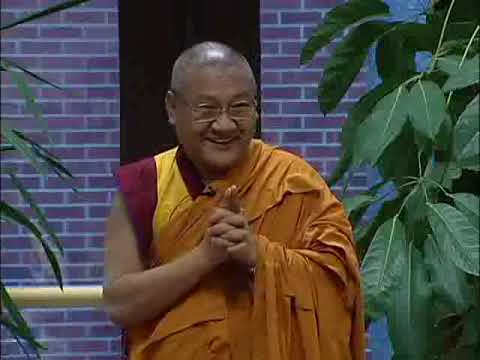
Tibetan teacher recounts decades-long push for vegetarianism in monasteries, urges practical steps for Western audiences
Summary
Geshe la described his personal conversion to vegetarianism after witnessing slaughterhouse conditions, detailed steps taken to reduce meat consumption in Gelugpa monasteries and encouraged Western attendees to begin by eliminating meat.
Geshe la recounted a decades-long campaign to reduce meat consumption in Tibetan monastic communities and urged practical, incremental steps for Western audiences to reduce harm to animals.
He said his commitment began after visiting a local slaughterhouse in the 1980s and that initial steps included persuading an abbot to ban meat inside the main temple. "He made the announcement that from today on, that is not permitted. He said, no meat inside and around the temple," Geshe la told the audience.
He described carrying the issue to the International Gelug (Gelugpa) leadership and to a national religious conference in Dharamsala, where he said a resolution passed calling for monasteries and nunneries to cease meat consumption; he told the Missoula audience that "many" Gelugpa monasteries and nunneries adopted vegetarian practices while "some are not yet" vegetarian.
On advice for Western audiences, Geshe la said eliminating meat is a "big step" and welcomed stronger measures such as avoiding dairy and eggs but framed them as additional, voluntary steps. He noted options such as "free range" or organic eggs as less problematic.
Geshe la also linked his advocacy to personal and religious teachings, citing Buddhist concepts of karma and compassion toward "all sentient beings," and described sustained public writing and campaigning since 1984 to shift cultural norms in Tibetan communities.
The talk included questions from audience members about practicalities such as insect life on vegetables; Geshe la said intent matters and encouraged people to try their best without adopting an extreme stance that prevents everyday functioning.
The remarks describe past non-governmental and religious resolutions and local monastery practices; no municipal policies or legal actions were proposed during the Missoula event.