Get Full Government Meeting Transcripts, Videos, & Alerts Forever!
Get email alerts on the Family History topic
No spam. Unsubscribe anytime.
Granddaughter uses grant to document Kalispell family history and immigrant experience
Summary
A filmmaker received a grant to produce a documentary tracing three generations of a Kalispell family, recording interviews, songs and archival recollections about immigration, life on Flathead Lake and World War II service.
Lindsay Walters Christian, a filmmaker and the granddaughter of family elders featured in the recordings, said she received a grant in February (year not specified) to make a documentary about her family’s history in and around Kalispell, Montana.
The project aims to examine the intersection of private family memory and public history, preserve stories the narrator called "untold," and explore why the family settled near Kalispell and Flathead Lake. "What I did know is that I had an interest in family history, a passion for filmmaking, and a window of opportunity to combine the two," Lindsay says in the recording.
Nut graf: The recording documents three generations of one family and mixes personal recollection, songs and filmed interviews to show how immigrant experience, small‑town life and wartime service shaped one Montana family. The work produced more than 16 hours of footage and prompted conversations among relatives that expanded the project’s scope.
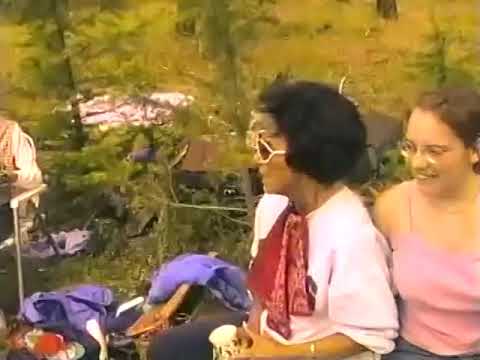
Lindsay described several recurring themes in the tape: immigrant roots in a town the narrator called "Bolson, Austria" (the recording notes the town is now Bolzano, Italy); the practical life of homesteading and small‑town business ownership; summers at the family cabin on Flathead Lake; and military service during World War II. She recorded interviews and filmed scenes at the family cabin on the West Shore of Flathead Lake and at family gatherings.
The recordings include songs performed by Dan Korn Sr., known in family accounts as "Rocca," which Lindsay says were recorded in the summer of 1970 at a Korn family reunion. The narration also recounts that some family members spent time running a hotel in Kalispell, that relatives cultivated extensive gardens and smokehouses, and that at least one branch of the family homesteaded for five years before selling the land in the 1920s.
Lindsay said she spent the summer researching and shooting at the family cabin and that the project’s urgency grew from a wish to capture elders’ memories before they were lost: "This might be our last chance to make this movie," she said in the recording. She also described practical research steps: consulting local history books, watching documentaries for craft guidance, taking notes on family papers and letters, and conducting interviews with three core family members while recognizing the limits of covering a wider family history.
The tape includes first‑hand recollections of military service and homecoming. In the recording a family member describes being selected for infantry service at age 19, landing at Omaha Beach and serving through the winters in Europe; the narrator attributes the family receiving knitted socks and packages in the mail during the war to a grandmother named Derry.
Lindsay said the oral history process revealed more stories as relatives responded to the interviews, increasing the number of recollections and clarifications and narrowing the documentary’s immediate focus to three generations. She noted archival materials in the family collection, including letters and outlines showing how one relative used careful planning and schooling to advance from Flathead High School to a scholarship at the University of Chicago.
The recording mixes personal memory with local history: it summarizes Kalispell’s late‑19th century growth, the arrival of long‑distance telephone service and national television in the mid‑20th century, and everyday life details such as gardens, smokehouses, and community hospitality. Lindsay said the work seeks not to claim an absolute truth but to offer the family’s version of events and to prompt further questions and preservation in other branches of the family.
The project’s next steps and public presentation schedule were not specified in the recording. The February grant and the volume of recorded material suggest the project is in production; Lindsay and relatives described a continuing process of collecting and arranging interviews.