Get Full Government Meeting Transcripts, Videos, & Alerts Forever!
Get email alerts on the Transit Investment topic
No spam. Unsubscribe anytime.
Wake Transit officials present 10‑year investment strategy; Ben Howell says plan balances BRT, regional rail and local service
Summary
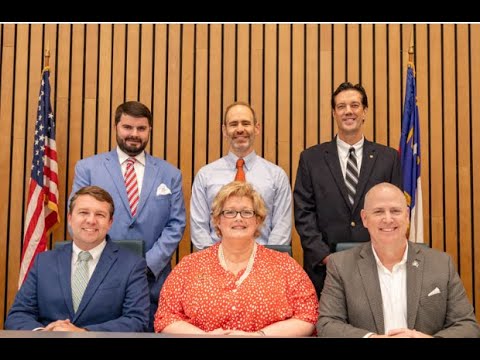
Wake Transit staff briefed the Wendell board on the draft Wake Transit 2035 investment strategy, explaining revenue assumptions, proposed bus rapid transit corridors, regional rail emphasis and engagement results.
Wake Transit staff on Tuesday presented a draft 10‑year investment strategy to the Wendell Town Board, outlining how roughly $3.3 billion in anticipated revenues could be allocated to regional rail readiness, bus rapid transit (BRT), frequent bus service, expanded hours and community funding areas.
Ben Howell, Wake Transit program manager for CAMPO, told the board the plan update is built around four priorities — “connect regionally,” “connect all Wake County communities,” “create frequent reliable urban mobility” and “enhance access to transit.” Howell said the agency has reached the public several times during the plan update and that the draft strategy reflects that input.
On revenue, Howell said, “we're expecting approximately $3,300,000,000 in revenue over the next 10 years,” and noted the plan also counted on $750,000,000 raised to date and an additional $700 million to $1 billion expected over the next decade. He cautioned that two revenue lines — vehicle rental tax and farebox revenue — have uncertainties: the regional agency GoTriangle is discussing retaining vehicle rental tax receipts that historically have been shared with the Wake Transit program, and fare revenue collection is being reconsidered now that two of three providers have resumed charging fares.
Howell described trade‑off choices used during public engagement. He said roughly 76% of online survey respondents favored investing in regional rail over a commuter rail build, and about 70% supported using BRT to serve the I‑40 corridor between Raleigh and Durham. The draft plan proposes a core BRT network with extensions toward RTP and Clayton, a new I‑40 BRT line, and an expanded frequent bus network defined as mostly 15‑minute service during most of the day.
When Wendell elected officials asked about local rail that bisects the town, Howell said the plan’s “connect all communities” element is the piece that focuses on service to Wendell, Knightdale, Zebulon and other municipalities; he noted the “connect the region” elements center on higher‑capacity regional links between Raleigh, RTP and Durham.
Howell said the draft strategy includes roughly $250 million set aside for rail‑ready projects such as stations or track improvements, funds to expand the BRT network and an increase in the Community Funding Area program from $40 million to $60 million to support local services (Wake Transit’s North/Northeast Wake smart ride was cited as an example). The public comment period for the draft strategy was open through the end of the week; Howell said the final draft would be circulated this summer with adoption targeted this fall by the CAMPO executive board and the GoTriangle board of trustees.
Board members asked questions about the rail line through Wendell and were told staff will continue outreach and planning that could affect future connectivity to Wendell.
No board vote or formal action on the Wake Transit plan was taken at the meeting.