Get Full Government Meeting Transcripts, Videos, & Alerts Forever!
Get email alerts on the Public Safety Human Trafficking topic
No spam. Unsubscribe anytime.
Panel advances bill to expand inspections, background checks and penalties for illicit massage businesses
Summary
Senate Bill 221 would allow unannounced inspections after complaints, require criminal-background checks for applicants who seek to open establishments, ban the use of licensed premises as sleeping quarters and direct reporting from the Board of Massage Therapy on complaint responses.
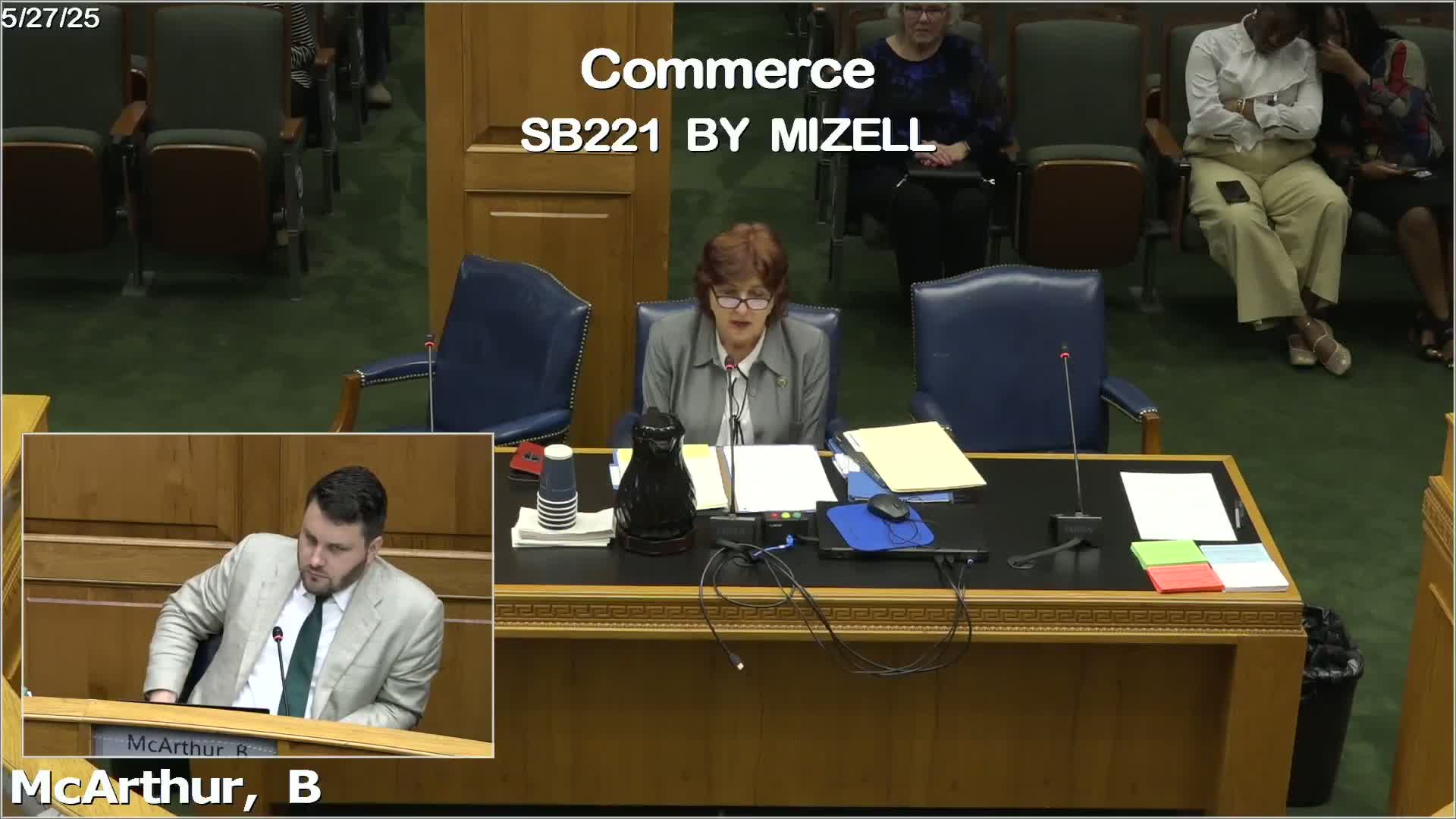
The House Commerce Committee reported Senate Bill 221 on May 27 after lawmakers debated measures aimed at limiting illicit activity in businesses advertising as massage establishments.
Senator Mizell, the bill sponsor, told the committee the measure was drafted after law enforcement raised concerns about facilities that operate as brothels or trafficking fronts. “The actions of the bill, it allows for unannounced inspections once a report is received by the Board of Massage Therapy,” the senator said, and added that the board must respond to such complaints within 10 days.
The bill’s main features
- Unannounced inspections: The bill authorizes the Board of Massage Therapy to conduct unannounced inspections when it receives a complaint alleging illicit sexual activity or other conduct inconsistent with a licensed massage establishment. The committee adopted language requiring the board to respond within a 10‑day window.
- Background checks and licensing limits: SB 221 would require criminal background checks during the application process for any party seeking to open an establishment and make clear that licensed premises may not be used as sleeping quarters.
- Location restrictions after substantiated illicit activity: As amended in the Senate, the bill prevents a new massage license from being issued at a site that has had verified reports of illicit massage activity; sponsors said the change aims to stop the pattern of repeatedly reopening the same address under a new business name.
Committee discussion and concerns
Members pressed for clarity on how long a premises would remain ineligible for a massage license and how the bill would avoid penalizing legitimate businesses or landlords who lease properly zoned space. Representative Newell and others suggested a time-limited prohibition (citing Jefferson Parish’s “one year and one day” local ordinance as an example) to avoid taking a property “out of commerce” indefinitely while still disrupting repeat bad actors.
Law enforcement coordination
Witnesses and committee members discussed gaps in current enforcement: deputies described locked doors, altered contact numbers and other tactics traffickers use to conceal activity. Several members urged the bill’s sponsors to pursue coordination mechanisms so the Board of Massage Therapy’s inspections and findings are quickly shared with local law enforcement and human‑trafficking task forces.
Outcome
The committee adopted technical amendments and reported SB 221 with amendments by unanimous voice action. Sponsors said they intend to track the board’s complaint data and return with further statutory changes if enforcement gaps remain.