Get Full Government Meeting Transcripts, Videos, & Alerts Forever!
Get email alerts on the Affordable Housing topic
No spam. Unsubscribe anytime.
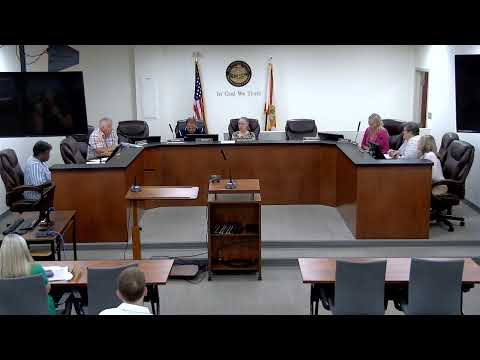
Walton County LHAB reviews community land trust, HUD waiting list and ADU, density and fee tools to expand affordable housing
Summary
At a regular meeting of the Walton County Local Housing Advisory Board, members reviewed a new community land trust, discussed a HUD report showing about 1,200 households on the waiting list, and debated tools including density incentives, mobility‑fee waivers and accessory dwelling unit rules; the board set a follow‑up meeting for June 17.
Walton County Local Housing Advisory Board members on Tuesday discussed multiple strategies to expand affordable housing, including creating a community land trust, using density and mobility‑fee incentives for affordable units, and reconsidering accessory dwelling unit (ADU) size limits amid state legislative changes.
The board’s discussion came after Teresa Jones, a board member, said the Walton County Community Land Trust has completed articles of incorporation and expects 501(c)(3) tax status by September. "We are now done with the Walton County Community Land Trust," Jones said, and described the trust as a nonprofit vehicle to hold surplus public land for low‑ and moderate‑income housing.
The Nut Graf: Board members said the land trust, local development incentives and ADU policy together could help address a housing shortage identified in the HUD agent activity report in the meeting packet. The report, summarized by staff and attributed to Tom Baker, notes the voucher application process is closed and "vouchers are being reissued to families on the waiting list," and a board member said the total families on the agency waiting list is about 1,200 — a figure the board described as sobering.
Board discussion, most of it led by board members and staff, focused on the practical details of using local land and regulatory tools to expand long‑term rentals and small owner‑built units. Members reviewed how Walton County’s density incentives work: under a general commercial land‑use category a density bump can allow up to 17 units per acre with 20% of units required to be affordable; a "live local" designation can require 40% of units be affordable. Speakers said the county can incentivize workforce affordability (commonly targeted at 80% of area median income) by waiving mobility fees — charges tied to square footage that fund projects on the Department of Transportation (DOT) five‑year plan. A board member explained that mobility‑fee reductions are applied to the square footage identified as affordable; developers must identify the affordable units and, where appropriate, sign affidavits if an accessory dwelling unit is to be rented at an affordable rate.
Members also debated ADU policy. One board member said Walton County currently caps ADUs at 800 square feet. "We currently have a limit on the size of an ADU in Walton County. It's 800 square feet or less," Melissa [last name not specified], a board member, told the group. Several members urged the board to consider whether larger ADUs — for example a percentage of a primary dwelling’s size — would better serve families and older residents seeking small, long‑term rental options.
State legislative developments were a further focus. Board members discussed Senate Bill 180, which they said aims to protect post‑hurricane rebuilding rights by limiting local adoption of new, arguably restrictive land‑use or code language for a defined period after an event. Speakers raised concerns that the bill’s language is broad and could complicate local efforts to manage redevelopment and to preserve neighborhood character, and that the bill could require additional variance procedures or cost‑benefit analyses for local code changes. The board agreed to track the bill and bring it up for more detailed discussion at a future meeting.
Procedural outcome: the board voted unanimously to hold an additional meeting on June 17 at 10 a.m. to hear a presentation on proposed single‑family home amendments for owners (item D) and the related item E, and to seek an update on the Orange Street project from Planning Director Chris Wallace or a written outline if he cannot attend.
The board also reviewed several related items raised in public comment: a speaker noted pending state funding proposals (referred to as the "Renaissance bill") that could change SHIP allocations statewide; another participant emphasized ADUs as a leading local strategy to increase affordable units for older residents and young adults.
Board members asked staff to circulate paperwork and sales reports ahead of the June meeting and to draft a memo clarifying how mobility‑fee calculations and density bonuses work in Walton County so stakeholders can see how incentives would be applied.
Ending: The board closed the meeting after approving meeting minutes and several procedural motions. Members said they will return at the June meeting to continue the discussion of the community land trust, ADU rules and the implications of the pending state legislation.