Get Full Government Meeting Transcripts, Videos, & Alerts Forever!
Get email alerts on the Public Safety Emergency Services topic
No spam. Unsubscribe anytime.
Mesquite explores no‑cost contract with Acadian to handle non‑emergency ambulance calls
Summary
Mesquite Fire Chief pitched a one‑year agreement with Acadian Ambulance to take ‘code 1’ (non‑emergency) transports so city medics can remain available for high‑acuity calls; council gave consensus to move forward with contract negotiations and legal review.
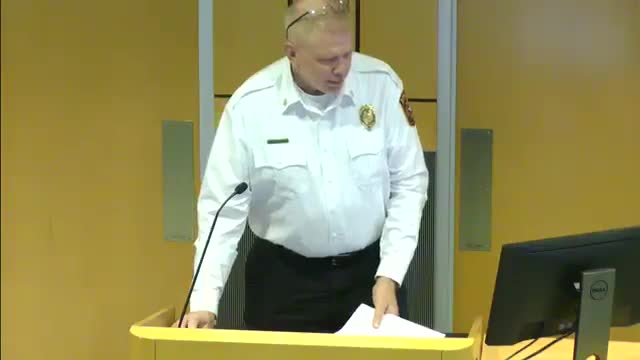
Chief Keith Hopkins told the Mesquite City Council on May 20 that the fire department is proposing a one‑year agreement with Acadian Ambulance Service to handle many non‑emergency ("code 1") ambulance calls as a no‑cost alternative to adding a city ambulance.
"What we want to bring to you is something that provides you and us a no cost alternative and to give it a try for about a year," Hopkins said, explaining that Acadian already serves as Mesquite’s backup provider and operates to the same Advanced Life Support (ALS) protocols used by the city. "This is a no cost to the city issue."
Hopkins described rising demand for ambulance service: he said Mesquite’s call volume grew 21% since 2020 and code‑1 calls rose 57% over five years. He noted that in 2024 Mesquite ambulances were dispatched on roughly 90% of the fire department’s calls and that average transports can tie up a unit for an hour or more, sometimes substantially longer for farther transports.
The chief recounted a recent school incident in which six children were transported from Lawrence Elementary and six ambulances were used: "We had 6 Children that got transported ... by 6 ambulances in our city. We only have 8," he said, adding that at one point the department had only one available ambulance and then lost that unit to a code‑1 dispatch. Hopkins said Acadian would take many code‑1 calls to free city medics for higher‑acuity responses.
Council members pressed for operational parameters. Hopkins said emergency medical dispatch will determine which calls are code 1 and that specifics such as acuity thresholds would be negotiated with the contractor: "We haven't quite ironed the details of that out," he said. He also said the city will set a minimum threshold so that if the city has only four ambulances available, Acadian will take code‑1 calls until they cannot.
Council members sought assurances on continuity and mutual aid. Hopkins said Acadian would not replace the city's mutual‑aid responsibilities and that Acadian crews would be ALS‑capable and billed separately to insurers; the city would not remit money to Acadian. Mayor Pro Tem and other councilmembers urged clear termination and performance clauses in the contract, and the city manager confirmed council consensus to proceed to finalize contract language and present the agreement at upcoming council meetings.
Hopkins and the city manager also confirmed the city will add one full‑time ambulance at Station 8, and that legal had reviewed a draft contract before staff sat down with Acadian to finalize details. Hopkins said staff will return to council with the formal contract and that the arrangement can be stopped if it fails to deliver the expected operational relief.