
Committee adopts compromise requiring at least half of medical school coursework be A–F or equivalent
Get AI-powered insights, summaries, and transcripts
Subscribe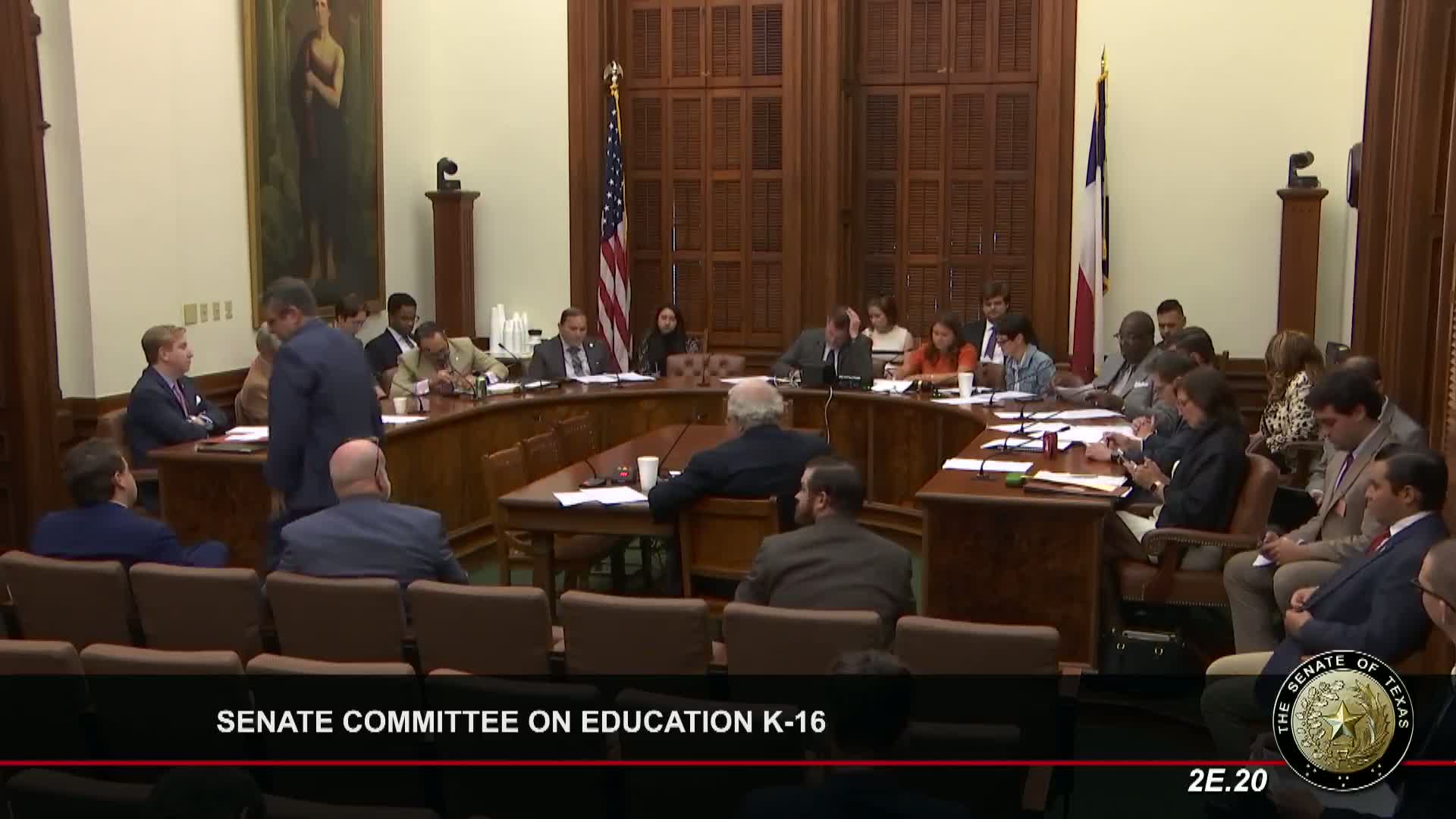
Summary
A committee substitute for House Bill 5294 was adopted and reported 9‑2. The substitute requires medical schools to grade at least 50% of coursework using a traditional A–F scale or another four-tier system, moves implementation to fall 2026, and grandfathers currently enrolled students.
The Senate Committee on Education K‑16 adopted a committee substitute for House Bill 5294 and reported it to the full Senate by a 9‑2 vote, setting a statewide minimum grading standard for Texas medical schools.
Sponsor Sen. Creighton described the substitute as a compromise reached after consulting medical schools statewide. The engrossed version had required all medical coursework be graded A–F and prohibited pass/fail; the substitute requires at least 50 percent of coursework be graded using a traditional A–F letter scale or another grading scale that uses at least four tiers. The substitute also shifts the implementation date to fall 2026 and grandfathers students already enrolled under existing grading structures.
Sen. Bittencourt asked whether major medical schools had been consulted; Creighton said institutions across Texas provided input and that UT Southwestern—s current policy aligns with the compromise. Sen. Menendez asked whether the bill—s nondiscrimination language on the basis of race, color, ethnicity or national origin would affect admissions diversity; the sponsor said the language is consistent with Supreme Court rulings and with earlier legislation and would not bar legally permissible diversity efforts.
The committee substitute was adopted without objection and the bill was reported to the full Senate with 9 ayes and 2 nays. The committee record reflects continued engagement with institutions to align grading practices rather than impose a monolithic standard.
If enacted, the change would codify a minimum standard designed to preserve grade differentiation in at least half of medical coursework and allow institutions time to implement changes starting in fall 2026 while protecting students already in programs.