
Senate concurs with House on bill criminalizing obscene images depicting minors, including AI-generated depictions
Get AI-powered insights, summaries, and transcripts
Subscribe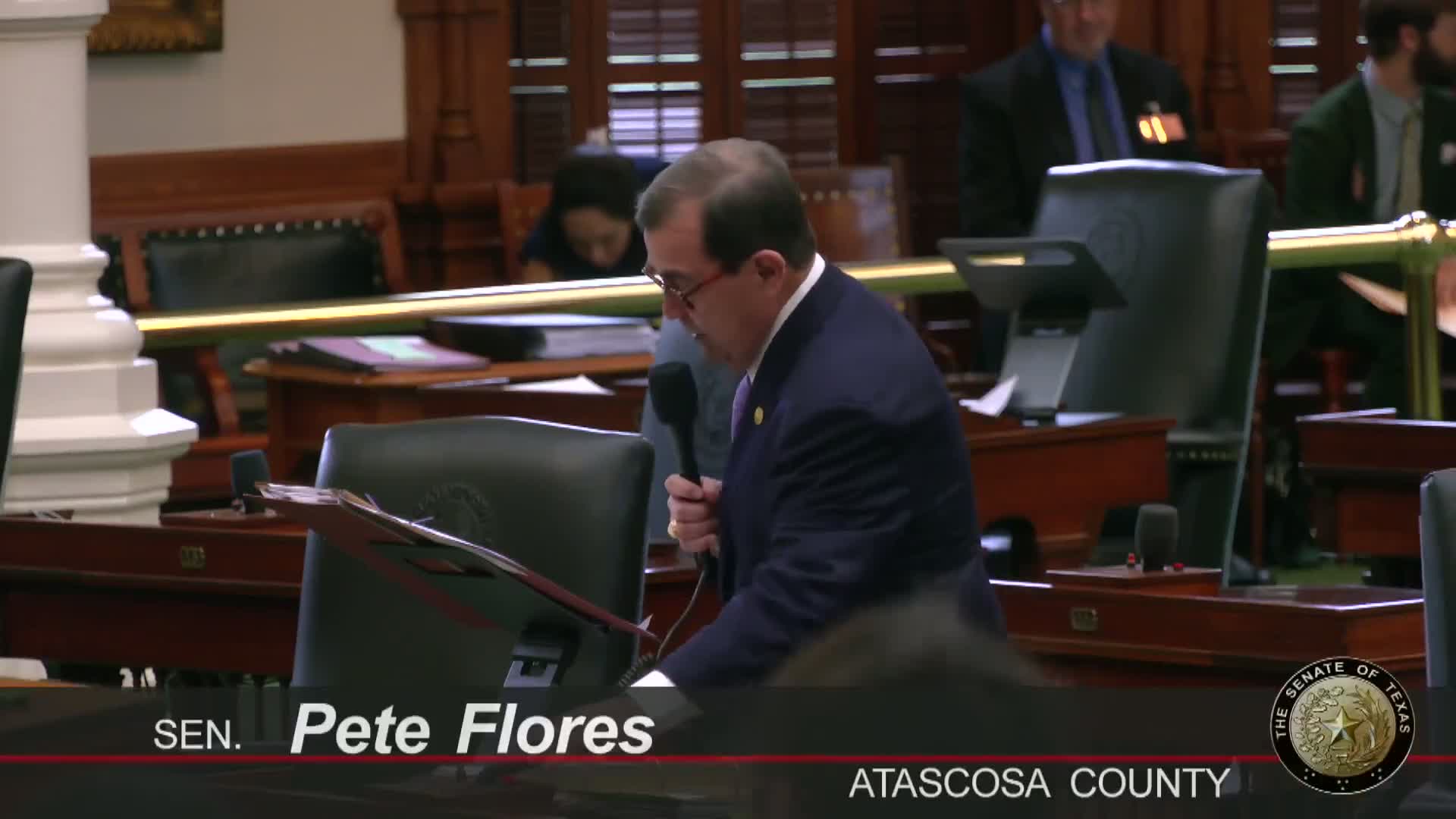
Summary
The Texas Senate on May 26 concurred in House amendments to Senate Bill 20, creating a new criminal offense aimed at possession or promotion of obscene visual material that appears to depict a minor, and adding an amendment barring use of images of children to train AI models for such imagery.
AUSTIN, Texas — The Texas Senate on Monday moved to concur in House amendments to Senate Bill 20, a measure creating a new criminal offense for possession or promotion of obscene visual material that appears to depict a child and covering depictions made with animation or artificial intelligence. Senator Flores moved the concurrence; the motion carried and the Senate adopted the house amendments.
The bill “creates a new criminal offense for the possession or promotion of obscene visual material that appears to depict a child,” Senator Flores said on the floor, adding the measure “specifically targets visual depictions of minors and obscene activities regardless of whether the depiction is of an actual child, cartoon animation, or an image created using artificial intelligence or other computer software.”
A House amendment the Senate concurred in bars using an image of an actual child younger than 18 to train an AI model to produce material that would meet the bill’s definition of prohibited imagery, a change Flores credited to Representative Capric Leone. Flores described that amendment as closing “an additional loophole” and said it strengthened the bill.
The Senate’s concurrence was approved by voice and roll call in a largely unanimous action; the clerk recorded 31 ayes and 0 nays on the concurrence motion. The procedural motion means the chamber agreed to the House’s edits so SB 20 can proceed to enrollment and, ultimately, to final passage procedures.
Discussion versus action
Senator Flores’ remarks on the Senate floor were the primary substantive discussion recorded in the transcript: he described the scope of the new offense, how it would apply to depictions produced with software or AI, and the specific amendment added in the House. The transcript does not record additional floor debate on constitutional or enforcement issues during the concurrence vote.
What happens next
By concurring in the House amendments, the Senate sent the modified bill on the standard path toward final enactment (enrollment and transmission to the governor) if it clears remaining procedural steps. The transcript records the concurrence vote; it does not record final signature or effective date language for the underlying statute.