
Senate committee advances bill expanding civil liability for student abuse by school employees
Get AI-powered insights, summaries, and transcripts
Subscribe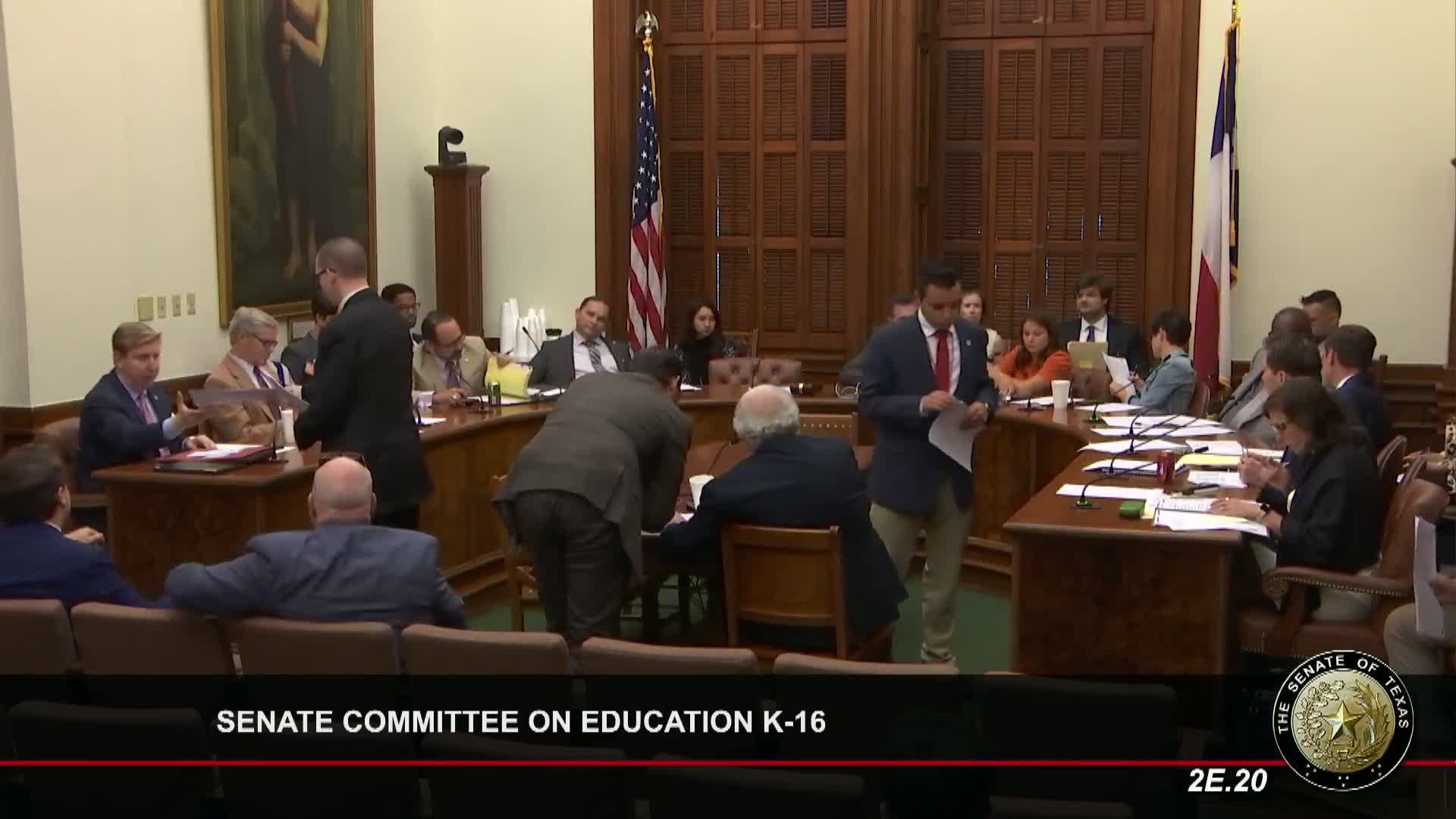
Summary
The Senate Committee on Education K‑16 unanimously advanced a committee substitute for House Bill 4623 that would allow civil claims against Texas public schools and professional school employees for certain student abuse, align damages and standards with the Tort Claims Act, and add guardrails intended to limit frivolous suits.
A Senate committee on education advanced a committee substitute for House Bill 4623 on a unanimous vote, creating a new path for civil claims against Texas public schools and professional school employees in cases of certain misconduct involving students.
The substitute, explained by sponsor Sen. Jane Paxton, narrows the new cause of action to acts occurring after the bill—s effective date, aligns liability with Tort Claims Act standards and first-responder gross negligence, limits joint-and-several liability, adds two-way recovery of attorney—s fees for meritless claims, and preserves a $500,000 damage cap per claimant.
The change matters because it would permit civil suits in circumstances the committee heard were "unthinkable and beyond egregious," while attempting to balance victims— access to remedies with protections against frivolous litigation, Paxton said. The substitute changes how liability would attach to schools and employees and sets procedural and substantive guardrails the sponsor said mirror existing Tort Claims Act practice.
Committee members pressed the sponsor on several points. Sen. West asked whether the bill considered extending statute-of-limitations periods and pre-suit procedural hurdles under the Tort Claims Act; Paxton said she had not included a limitations change in the substitute and invited follow-up conversations. Sen. Menendez asked whether the bill—s inclusion of "failure to report suspected child abuse or neglect under section 261.101 of the Family Code" was sufficiently defined; members agreed to review that section to avoid creating vague new claims.
Paxton described four principal substitute changes: reciprocal attorney-fee recovery for claims deemed without merit; removal of joint-and-several liability when a school is not negligent and has exercised due diligence; retroactivity limitations so only acts after the effective date are covered; and adoption of a gross-negligence standard consistent with first-responder law, described in the hearing as equating to actual knowledge by school administration. The substitute retains the $500,000 damages cap but clarifies that cap applies per claimant rather than per incident.
The committee adopted the substitute without objection and then voted to report the bill to the full Senate under the committee—s usual motion: the clerk recorded 11 ayes, 0 nays. The sponsor and other members said they would continue to refine statutory references and procedural details before floor consideration.
If enacted, the bill would affect public school districts, professional school employees and students in Texas going forward; the substitute as adopted applies only to misconduct occurring on or after the bill—s effective date. The committee—s action sends the substitute to the full Senate for further consideration.