
Senate adopts amendment letting AG's open records unit assist on Open Meetings Act probes and requiring prosecutors to post nonprosecution reasons
Get AI-powered insights, summaries, and transcripts
Subscribe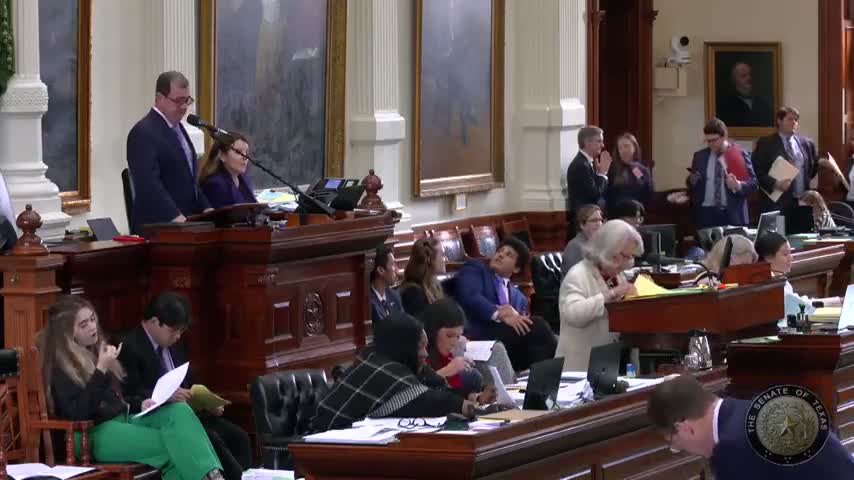
Summary
The Texas Senate passed a committee substitute to House Bill 3711 to clarify how the attorney general's Open Records Division may assist local prosecutors investigating alleged Open Meetings Act violations and, by amendment, requires certain local prosecutors who decline to prosecute to post their reasons on a public website for one year.
The Texas Senate on Monday passed a committee substitute to House Bill 3711 to create a clearer process for local prosecutors to request investigative assistance from the attorney general's Open Records Division in alleged violations of the Texas Open Meetings Act and adopted an amendment that requires certain prosecutors to post, on their websites for at least one year, their decision not to prosecute and the stated reasons.
The bill's sponsor, Senator Sarah Milton, said HB 3711 "promotes transparency in local government, providing additional tools to investigate violations of the Texas Open Meetings Act," and described the measure as permissive: the Open Records Division may assist at the request of local law enforcement or prosecutors but does not prosecute. Senator Middleton offered a floor amendment restoring language from the House-engrossed bill that requires public posting when a prosecutor decides not to pursue an Open Meetings Act allegation; the amendment was adopted without recorded objection.
Supporters told colleagues the Open Records Division already has expertise with open-records exemptions and requested the clarified coordination so investigations can draw on that expertise. During floor questioning, Senator Eckhardt and others pressed the sponsor on what was new in the bill given existing practice; Milton said the bill creates a specific framework for how assistance is requested and coordinated.
The amendment drew sharp questions from several senators who said requiring a public explanation for not prosecuting could set a different transparency standard than other types of criminal matters. Senator Middleton argued that Open Meetings Act offenses "go to the public trust" and that posting the reasons for not prosecuting was analogous to notification requirements tied to exemptions in the Public Information Act. Critics asked whether singling out these cases created an unequal treatment compared with more serious crimes; Milton and supporters responded the measure applies only where local prosecutors chose to investigate and is narrower than a blanket open-records duty.
The Senate voted to suspend the regular order to take up the committee substitute, adopted the Middleton floor amendment, and later approved final passage. The roll calls recorded 29 ayes and 2 nays on the bill's passage in the Senate.