
Residents press Dunedin officials on pickleball court noise, lights and storage of court chemicals; city staff vows mitigation
Get AI-powered insights, summaries, and transcripts
Subscribe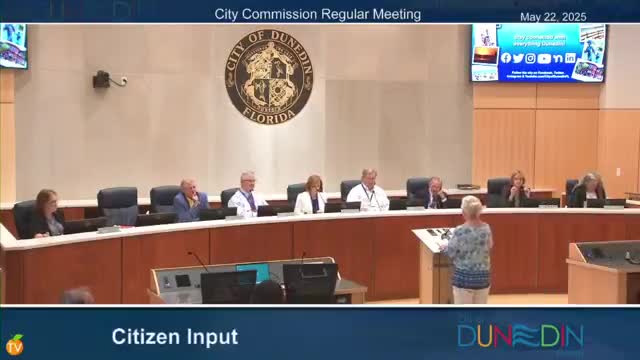
Summary
Residents near Eagle Scout Park and Heather Lakes told commissioners barrels of a court-coating chemical were stored too close to homes and raised complaints about late-night hours, parking and noise. City staff described steps including light shields, signage, directed patrols and stakeholder meetings.
At a packed City Commission meeting on May 22, residents from Heather Lakes and nearby neighborhoods urged commissioners to restrain pickleball operations at Eagle Scout Park and address chemical storage near homes.
Joanne Holiday, a nearby resident, told commissioners that barrels of a court-coating chemical had sat "less than 80 feet from my bedroom windows" and said she understood the containers "are highly toxic, cancer causing." The barrels were present while maintenance work was ongoing; staff said they are removed when not in active use.
Multiple neighbors also complained about evening hours, loud play late into the night, overflow parking and lack of direct communication from city staff. "There is no quiet enjoyment," Heather Lakes resident Vicki Stevens said, asking the commission to enforce an 8 p.m. curfew for the courts.
City staff and the city manager described specific mitigation steps under way. Staff said they have ordered four shields for the court lights closest to Heather Lakes and will deploy them to reduce light spill. The city has also directed patrols to monitor hours, is manufacturing signage asking players to be respectful of neighbors, and is exploring additional landscaping and mature trees to provide sound buffering.
"We're gonna put [the shields] on, see how they perform, and then make adjustments as necessary," the city manager said. Staff also offered to meet directly with Heather Lakes leaders and other stakeholders and to add interested residents to a distribution list to keep them informed as plans are refined.
Officials emphasized the need to balance neighborhood livability with public access to popular recreation facilities. The parks director said many city parks remain open with lights until 10 p.m. and that the city is attempting to limit hours at sites adjacent to residences while coordinating with user groups. Staff said acoustical barriers were unlikely to be effective but that a combination of landscaping, light shields, signage and patrols should reduce impacts.
Commissioners asked staff to follow through quickly with the neighbors and to return with a stakeholder plan. No formal policy or ordinance was enacted that night; staff were directed to continue outreach and to report back.