Dunedin commission approves first reading of water, sewer rate increases to shore up utility fund
Loading...
Summary
On first reading the City Commission approved an ordinance to raise water, sewer and reclaimed-water rates after a Raftelis study found rising operating costs, deferred capital needs and new regulatory requirements made the utility fund financially unsustainable without rate action.
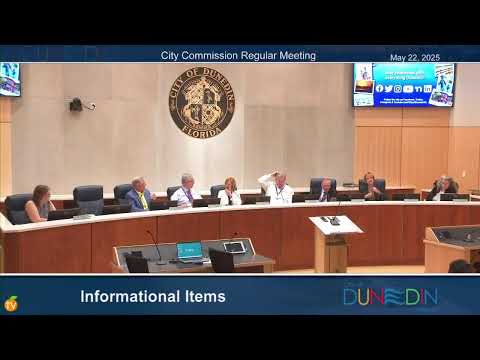
The Dunedin City Commission voted unanimously on May 22 to approve Ordinance 25-04 on its first reading, a plan to raise water, sewer and reclaimed-water rates through fiscal 2030 to stabilize the city's utility enterprise fund.
A consultant from Raftelis told the commission the utility's revenues have not kept pace with operating-cost inflation, major capital needs and the regulatory changes that will limit surface-water discharges. "We need to take more immediate action to raise rates to fully fund the cost of operations," said Terry Bilvary, vice president at Raftelis.
The study, commissioned last year, sized a shortfall driven by higher-than-expected electricity, repair and construction costs, workforce-market pressures and an upcoming timeline to reduce or eliminate certain surface-water discharges under Senate Bill 64. Raftelis presented a multi-year financial plan that mixes phased rate increases with targeted debt (including State Revolving Fund loans) and pay-go funding to rebuild capital reserves and meet projected debt-service obligations.
Nan Bennett, utilities operations manager, said the fund had dipped into a negative net position under the current rate structure and that the Board of Finance and a May 6 workshop with commissioners had reviewed the consultant's recommendations. "The water and sewer fund operates as an enterprise fund. We operate independent. We don't get taxes," Bennett said, explaining why the utility must cover its own capital and operating needs.
Under the proposal commissioners approved on first reading, rates would be phased in beginning Oct. 1, 2025, with larger increases in the first two years and smaller steps thereafter; the city would revisit results annually through the budget process. Raftelis and staff said the plan tries to balance the immediate need to avoid technical defaults on debt with mitigation of bill impacts for customers.
The consultant also recommended raising the reclaimed-water (purple-pipe) price closer to its cost of service. That recommendation is intended to reduce cross-subsidies between potable and reclaimed customers and to better reflect the infrastructure costs of treating and storing reclaimed water, while still keeping reclaimed irrigation cheaper than potable irrigation.
Commissioners pressed staff on bill impacts and equity. Several requested additional analysis of rate structure options (including whether an added high-use tier might better protect low-usage or fixed-income households) and asked staff to return with clearer bill-impact tables and an affordability plan. "We have to make sure our financial position is solvent," Commissioner Walker said, adding that the commission also must continue to pursue grants and low-cost debt.
The ordinance passed on first reading by unanimous roll-call vote (Commissioner Walker, Vice Mayor Gall, Commissioners Dugard and Sandberg and Mayor Freaney all voted Aye). A second reading and final vote is scheduled for the June 5 commission meeting. Until then the ordinance's exact effective dates and the final tariff schedule remain subject to that final vote.