
Lawmakers Press for High-Level U.S. Envoy, Consider Blocking UAE Arms Sales to Curb Sudan Violence
Get AI-powered insights, summaries, and transcripts
Subscribe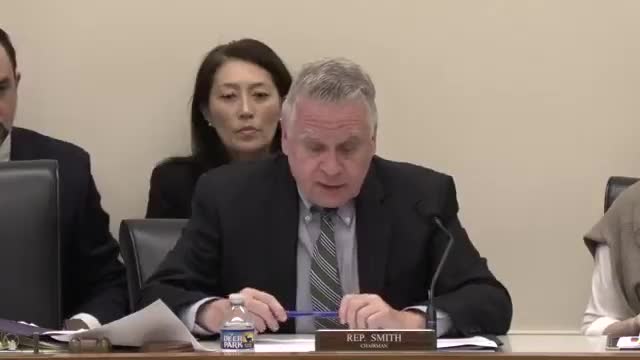
Summary
At a House Foreign Affairs Subcommittee hearing, members and witnesses recommended a U.S. high-level envoy with direct White House access and discussed joint resolutions aimed at blocking proposed U.S. arms sales to the United Arab Emirates while that country is accused of supplying the RSF.
Members of the House Foreign Affairs Subcommittee on Africa and witnesses urged stronger U.S. diplomatic engagement on Sudan, including appointment of a high-level special envoy with direct access to the president. Chairman Smith and witnesses described previous successful envoy-led diplomacy in Sudan’s past and emphasized that such an envoy must have “gravitas” and direct White House access to be effective.
Ranking Member Jacobs and other members criticized the Trump administration’s cuts to foreign assistance and said the administration had delayed or declined decisive action on sanctions targeting Sudanese actors. Jacobs said she and others had introduced joint resolutions of disapproval to block proposed arms sales to the United Arab Emirates, asserting that U.S. weapons and continued UAE support to the RSF risk fueling atrocities.
Witnesses advised a pragmatic U.S. approach: active diplomacy to de-escalate regional patronage networks; employing U.S. leverage in bilateral relationships (including arms sales) to press allies such as the UAE to suspend support for belligerents; and establishing predictable humanitarian funding. Cameron Hudson recommended engaging regional states and acknowledged the U.S. has an existing Middle East envoy apparatus that could be tasked to prioritize Sudan-region deconfliction.
Committee members discussed potential legislative options — joint resolutions of disapproval to block arms sales and bills to condition or halt transfers until external actors stop supporting armed groups — but the hearing did not include any formal vote. Members asked witnesses about the likely diplomatic effectiveness of such measures and the balance between a punitive approach and a realistic, leverage-based engagement strategy.