
House Panel Highlights UAE, Regional States and Gold Trade as Fuel for Sudan’s War
Get AI-powered insights, summaries, and transcripts
Subscribe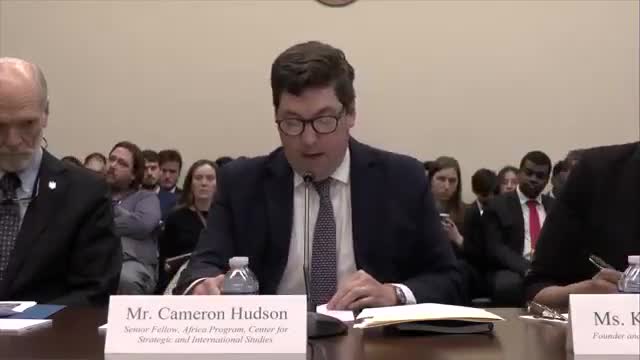
Summary
Witnesses told the House subcommittee that outside actors — notably the United Arab Emirates, regional states, and foreign arms flows — have transformed Sudan’s war into a regionalized conflict and that gold exports are financing armed groups.
Cameron Hudson, senior fellow at the Center for Strategic and International Studies, told the House Foreign Affairs Subcommittee on Africa that the Sudan conflict “has fully transformed into a battle for influence among a host of local and regional actors” and pointed to drone strikes, long-range aerial operations, and foreign-supplied weapons.
Multiple witnesses singled out the United Arab Emirates as a major external actor that has supplied weapons and other support to the Rapid Support Forces (RSF). Testimony and questioning in the hearing cited reporting and flight-tracker evidence of arms and material transits through regional hubs and asserted that those flows have amplified the war’s lethality and reach. Hudson told lawmakers there is “a UN arms embargo that exists, that is nearly 20 years old, on weapons transfers into Darfur,” and he said available reporting suggests violations of those restrictions.
Witnesses also detailed how conflict revenues, particularly gold, have financed the fighting. Hudson and other witnesses cited official export data and field reporting indicating large increases in Sudan’s gold exports since the war began and described supply chains that funnel gold through regional intermediaries to markets such as Dubai. Ken Isaacs said that cutting the RSF’s access to gold routes — including through the UAE — would be crucial to reducing their capacity to buy weapons.
Members questioned whether the United States should continue arms sales to partners such as the UAE while that country is reported to be supporting an armed group implicated in mass atrocities. Witnesses advised a combination of diplomatic pressure on regional actors, targeted sanctions, tracking and tracing of weapons where possible, and a broad approach that addresses both outside political support and internal revenue streams.
Testimony stressed the regionalized nature of the conflict: witness statements and committee discussion raised roles for Egypt, Turkey, Saudi Arabia, Iran, Russia, Chad, Kenya and others as providers of tactical support, transit, or commercial opportunity tied to the war. The witnesses recommended that U.S. diplomacy engage these actors in a de-escalatory dialogue and use leverage — including arms sales and bilateral relationships — to encourage a halt to military support to belligerents.
No formal committee vote or binding action on arms transfers or sanctions was taken during the hearing; several members discussed pending or recently introduced joint resolutions of disapproval to block proposed U.S. arms sales to the UAE.